
Bogong moth
Dasygaster padockina
Description
How to identify
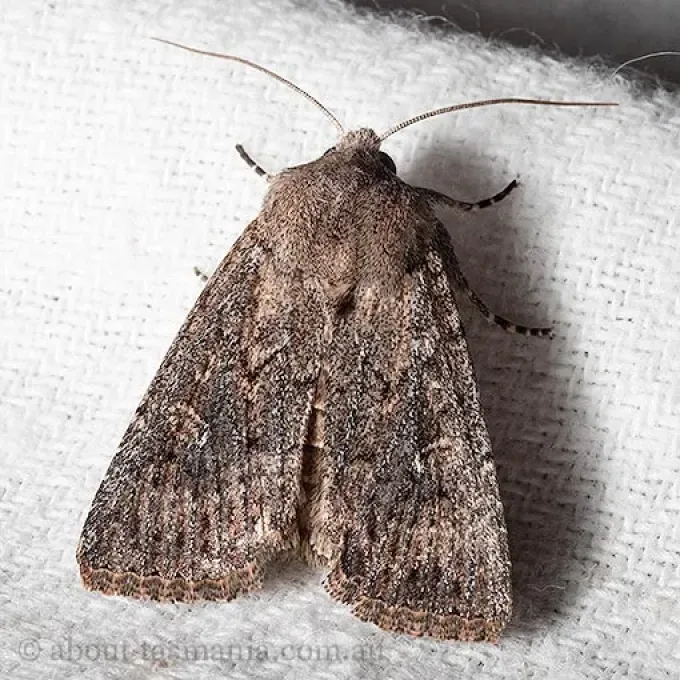
Dasygaster padockina, commonly known as a type of bogong moth or cutworm, belongs to the Noctuidae family. The adult moth has a wingspan of approximately 35–45 mm with mottled brown and grey patterns, providing excellent camouflage against soil and bark.
The larvae, commonly referred to as cutworms, are earthy-grey or brown in color. They feature a smooth, granulated skin texture and can grow up to 50 mm in length when fully mature.
Pupae are found in the soil, protected by a cell made of hardened earth. They are shiny, reddish-brown, and usually located in the top 10–15 cm of the soil layer.
The life cycle undergoes complete metamorphosis, including egg, larva, pupa, and adult stages. The larval stage is the one that causes direct damage to agricultural crops.
These moths are highly nocturnal, remaining hidden during the day under surface debris or inside the soil, making them difficult to detect during standard daytime field scouting.
What it damages
This species is a generalist feeder, affecting a wide variety of crops including cereals, sunflower, potato, and various vegetable species. The larvae are notorious for their aggressive feeding habits.
Early-stage larvae feed on the foliage, causing small holes and windowing effects on leaves. This reduces the photosynthetic efficiency of the plant during its critical growth phase.
The most severe damage occurs when larvae reach later stages and begin "cutting" the stems of young seedlings at the soil surface, causing the plants to collapse entirely.
In large infestations, these pests can destroy entire stands of crops, leading to significant yield losses and often necessitating complete re-sowing of affected fields.
Drought stress increases the intensity of the damage, as larvae seek out juicy plant tissues to satisfy their moisture requirements, leading to rapid destruction of crop stems.
When it appears
Adult moths typically emerge in late spring and early summer. Mating and egg-laying activity are heavily influenced by local temperature and moisture conditions in the soil.
Larval development primarily takes place during the summer months. During this time, they move through several instars, increasing their appetite as they grow larger.
A second generation may appear in late summer or autumn, depending on the geographic region, posing a significant risk to newly planted winter grain crops.
As temperatures begin to drop, larvae move deeper into the soil to prepare for winter dormancy, effectively surviving the colder months in the soil profile.
Monitoring for adults with light traps is essential to predict the timing and intensity of the subsequent larval outbreaks in the field.
Signs of infestation
The presence of cutworms is often first signaled by the sudden wilting of individual plants or small groups of plants, which appear to have been severed at the base.
If you inspect the soil around the base of a damaged plant, you will typically find the larvae curled up in a "C" shape just beneath the soil surface.
Small dark pellets of frass (excrement) scattered around the base of the plant are a clear indication of active larval feeding in the immediate vicinity.
Thinning of crop stands or the formation of bare patches in the field is a classic sign of a heavy cutworm infestation that has gone unnoticed in the early stages.
Checking the field at night with a flashlight can reveal the larvae actively feeding on the stems, providing a clear visual confirmation of the pest's activity.
Control measures
Effective management includes deep plowing in late autumn, which disturbs the soil and exposes pupae and larvae to predators and harsh weather conditions.
Weed control is a vital preventive measure, as cutworms often thrive on weeds in and around fields before moving to the primary crop as it emerges.
Chemical control using insecticides (such as pyrethroids) is most effective when applied in the evening, as this aligns with the nocturnal activity of the larvae.
Biological control options, such as the release of Trichogramma wasps, can be highly effective at reducing the population by parasitizing the moth's eggs.
- Crop rotation to break the pest cycle.
- Use of insecticidal seed treatments.
- Regular field scouting during early growth stages.
- Installation of pheromone traps for timing applications.
Taxonomy
- Latin name
- Dasygaster padockina
- Order
- Lepidoptera (butterflies)
- Family
- Noctuidae
- EPPO code
- DASGPA
Discussion
No discussions yet — be the first.