
Dasygaster
Dasygaster
Description
How to identify
Dasygaster belongs to the family Noctuidae (owlet moths) within the order Lepidoptera. These are medium-sized nocturnal moths that possess a protective coloration typical of Noctuids, allowing them to remain camouflaged among plant debris or soil during the day.
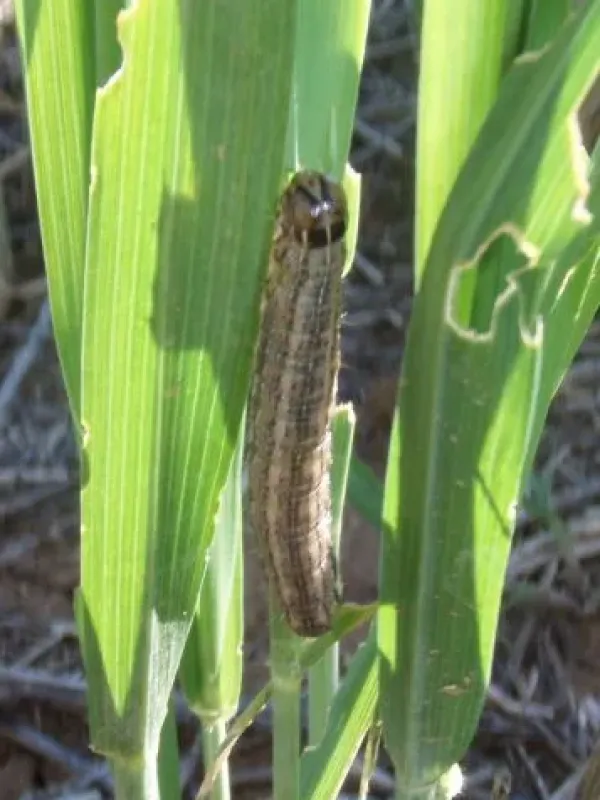
The larvae of this genus have a body structure typical of most cutworms. They possess developed chewing mouthparts, enabling them to effectively feed on both above-ground plant parts and subterranean structures, depending on the stage of development and species.
To identify adults, specialists use light traps or pheromone monitors, as spotting individual specimens in open fields is nearly impossible. The forewings usually exhibit grey-brown patterns, featuring lines and spots characteristic of this moth family.
The larval stage is characterized by high population density in breeding hotspots. The body of the caterpillars may be colored in earthy or brownish tones, serving as an adaptation to their secretive lifestyle within the topsoil layer.
The insect's life cycle is closely linked to regional climatic conditions. Pupation generally occurs in the soil, which makes them less vulnerable to direct insecticide applications during certain periods of the growing season.
What it damages
The pest primarily affects cereal crops, including wheat, barley, and other small grains. Depending on the species, Dasygaster can cause significant damage to both winter and spring crops, drastically reducing yield potential during early growth stages.
The greatest damage is caused by middle-instar larvae. They can sever young seedlings at the base, leading to thin crop stands and necessitating the reseeding of fields in cases of severe infestation.
In addition to cereals, some species of the genus can feed on wild grasses, which serve as an infection reservoir and breeding ground before the pest migrates to cultivated crops. This complicates population control limited only to field boundaries.
Damage to the root system or the basal stem area disrupts the plant's nutrient and water uptake. As a result, affected plants show stunted growth, yellowing, and frequent mortality, which is particularly critical for weakened crops.
The economic threshold of damage depends on the stand density of the crop. With a high caterpillar population, yield losses in cereals can reach critical levels, necessitating immediate action from agricultural specialists.
When it appears
Adult Dasygaster flight occurs primarily during the warmer months, with activity peaks often occurring at night. Favorable conditions for reproduction are associated with moderate soil moisture and optimal temperature ranges.
The main period of harm coincides with the tillering and jointing stages of the crops. During this time, the larvae feed actively, preparing for pupation, and consume significant amounts of plant biomass.
Overwintering occurs as pupae or late-instar larvae in the soil at varying depths. In early spring, as the soil warms up, the pests become active and begin feeding on germinating seeds and young sprouts.
Monitoring for the pest should begin as early as the seed germination phase, especially if high adult populations were observed in the fall. Population development forecasts are based on soil sampling to check for overwintering stages.
Summer moth generations can trigger a new cycle if weather conditions allow for full development before the onset of cold weather. Understanding the dynamics of generations is essential for timing pesticide applications.
Signs of infestation
The first sign of crop infestation is the appearance of bare patches or gaps in the crop rows. Upon inspecting these areas under soil clods or near the base of the stems, larvae can often be found.
Damaged stems often wilt and pull out of the ground easily because their base has been gnawed. During the day, caterpillars usually hide under plant residue or in the soil, so inspection is most effective during early morning or evening hours.
Leaf damage may appear as rough edge-feeding or irregular holes. If the pest focuses on the roots, the top of the plant begins to curl and develop a chlorotic appearance.
The presence of caterpillar frass on the soil surface near a damaged plant is an indirect sign of active feeding. This allows for an assessment of the infestation scale even without directly spotting the insects.
The presence of moths in light traps serves as a trigger to start monitoring the fields. Massive trapping of adults requires increased vigilance regarding field conditions over the following 10–14 days.
Control measures
Management of Dasygaster is based on an integrated approach, combining agrotechnical and chemical protection methods. Crop rotation plays a crucial role in preventing the build-up of the pest in the soil.
Deep fall plowing helps destroy a portion of the overwintering pupae by exposing them to the surface, where they become prey for birds or perish due to adverse temperature exposure.
Application of systemic and contact insecticides is effective when population thresholds are exceeded. Treatments are best performed in the evening when larvae emerge from the soil to feed on the above-ground parts of plants.
It is important to control weeds in fields and surrounding areas, as they serve as a food source for larvae in the absence of crops. Mechanical cultivation between rows helps destroy young larvae.
- Timely treatment of crops with insecticides during early development stages.
- Use of seeds treated with insecticidal dressings for seedling protection.
- Adherence to optimal planting dates to avoid peak emergence periods of the pest.
Taxonomy
- Latin name
- Dasygaster
- Order
- Lepidoptera (butterflies)
- Family
- Noctuidae
- EPPO code
- DASGSP
Discussion
No discussions yet — be the first.