
Common stingray
Dasyatis pastinaca
Description
How to identify
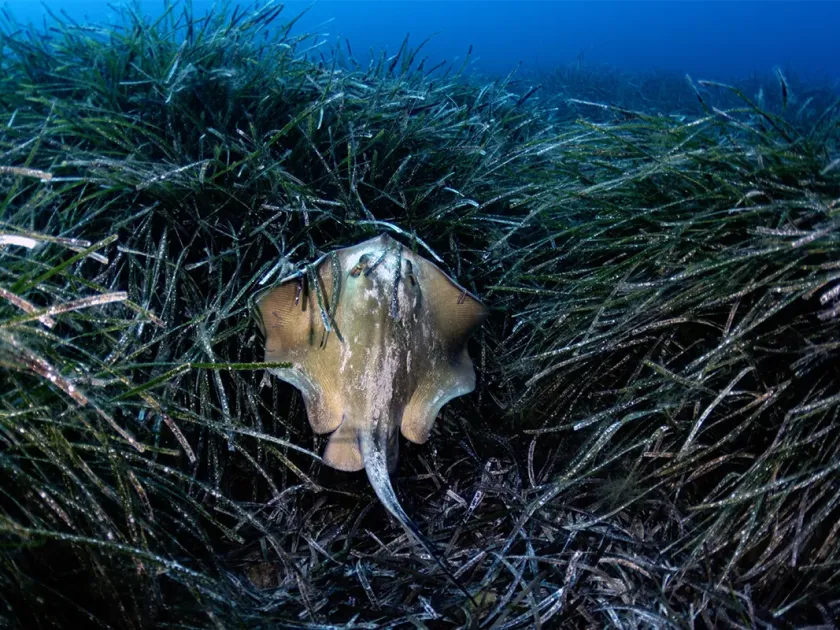
The Common stingray (Dasyatis pastinaca) is a cartilaginous fish belonging to the family Dasyatidae. It is widely distributed throughout the North-East Atlantic, the Mediterranean, and the Black Sea.
This species is characterized by its flattened disc-like body and a long tail armed with a serrated, venomous spine. This spine is a defensive mechanism used when the fish feels threatened by predators.
Common stingrays inhabit sandy and muddy seabeds, where they spend a significant portion of their time buried in the sediment. They are exclusively marine creatures.
From an agronomic perspective, it is vital to state that the Common stingray is **not a plant pest**. It has no biological connection to crop development, soil management, or horticultural systems.
This species is a benthic predator that feeds on small crustaceans and mollusks, playing a role in the marine food web rather than posing a threat to vegetation.
What it damages
There is no evidence of damage caused by Dasyatis pastinaca to agricultural crops. As a carnivore, it lacks the biological equipment and behavioral incentive to feed on or damage plant life.
Because these animals live in saline environments, they cannot interact with agricultural fields, orchards, or greenhouse crops in any way.
There is no impact on crop yield, plant health, or agricultural infrastructure. The stingray poses no danger to the agroecosystem.
Labeling this species as a pest is scientifically inaccurate and contradicts established ecological facts regarding the feeding habits of rays.
Any concerns regarding crop loss should be attributed to genuine plant pests, such as insects or pathogens, rather than marine wildlife.
Control measures
No pest control measures are required for the Common stingray in the context of agriculture. Application of any pesticides or agricultural chemicals against this species is not only useless but ecologically harmful.
In cases of incidental capture in fishing nets, standard safety protocols should be followed to prevent injury from the venomous spine, and the animal should be returned to the water.
Agricultural management plans should focus on monitoring real threats such as aphids, mites, or soil-borne diseases, ignoring species that do not interact with the crop cycle.
- Maintain safety when working near coastal areas.
- Respect marine biodiversity.
- Prioritize evidence-based pest management.
If you encounter marine wildlife in or near your facility, prioritize environmental conservation and consult with marine biologists if necessary.
Taxonomy
- Latin name
- Dasyatis pastinaca
- Family
- Dasyatidae
- EPPO code
- DSYAPA
Discussion
No discussions yet — be the first.