
Dastarcus helophoroides
Dastarcus helophoroides
Description
How to identify
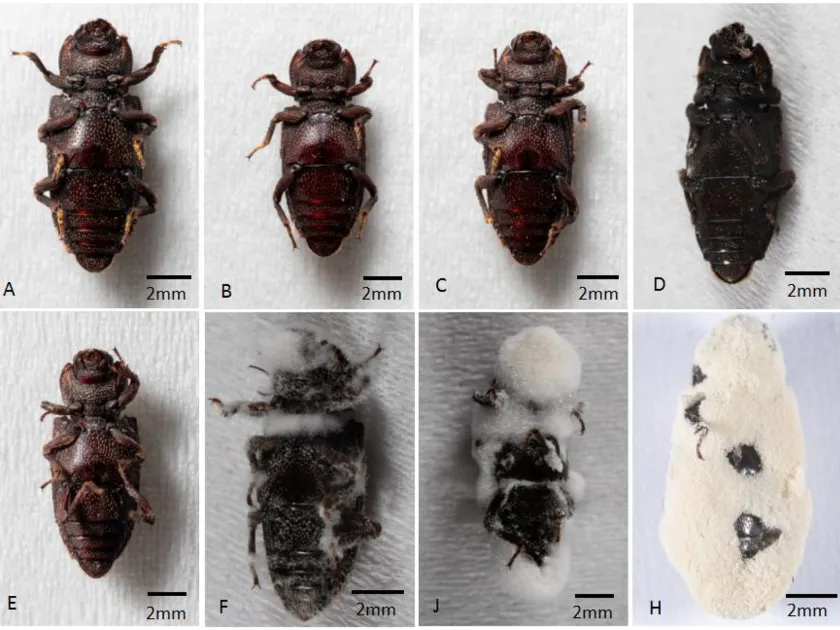
Dastarcus helophoroides is a beetle species belonging to the order Coleoptera and the family Bothrideridae. These beetles typically feature an elongated, flattened body structure, usually dark brown in color, which is well-adapted for life in narrow spaces under tree bark.
Adult beetles possess robust elytra with distinct longitudinal ridges and pitting. The larvae are typically pale, cream-colored, and are specialized to survive within the confined tunnels they create or occupy beneath the bark of host trees.
The biology of this species is complex, as it often displays parasitic behavior toward other wood-boring insects, such as longhorn beetles or bark beetles, making it a significant player in forest entomological dynamics.
The life cycle progresses through eggs, larvae, pupae, and adults. Females typically deposit their eggs near the feeding sites of host insects, ensuring that the emerging larvae can immediately access their food source.
Developmental rates are heavily dependent on environmental variables such as ambient temperature and the moisture content of the wood, which dictate the success rate of each generation within the forest ecosystem.
What it damages
This pest primarily infests stressed or weakened deciduous and coniferous trees. Common hosts include species of oak and pine, which are particularly susceptible when their natural defenses are compromised.
Damage occurs primarily in the subcortical tissue, where the larvae and adults feed and move. This activity destroys vital vascular tissues, effectively disrupting the flow of nutrients and water within the tree.
By causing physical damage beneath the bark, the beetle creates pathways that allow secondary pathogens, such as fungi and bacteria, to infect the tree, accelerating the decline of the host plant.
Economic damage is observed through the degradation of timber quality, significant reductions in annual growth rates, and the eventual mortality of individual trees or entire stands within infested areas.
During outbreaks, the cumulative damage can cause widespread forest dieback, necessitating immediate intervention to prevent the loss of valuable timber and preserve the ecological health of the area.
Signs of infestation
The most visible signs of infestation are the presence of small, circular exit holes in the bark, which appear once the adult beetles emerge from the wood after completing their maturation process.
Physical inspection of the area under the bark reveals intricate larval galleries or tunnels, often packed with boring dust—a mixture of shredded wood fibers and insect excrement.
Direct observation of larvae or adults beneath the bark during a survey confirms an active infestation. In many cases, fragments of host insect larvae, which served as food, can also be identified.
Visible decline in the tree crown, characterized by premature yellowing of leaves or needles, as well as the death of individual branches, serves as a major symptom of severe vascular damage caused by the beetles.
Piles of frass (wood dust) accumulating at the base of the tree or on the surface of the bark during the warmer months are reliable indicators that the tree is currently being colonized by the pest.
Control measures
The primary method of managing Dastarcus helophoroides involves strictly enforced sanitary logging, which removes infested and deadwood from the forest to eliminate breeding grounds for the pest.
Pheromone traps are employed as part of an integrated pest management strategy to monitor population levels, assess the risk of outbreaks, and trigger timely interventions in at-risk zones.
Biological control, focusing on the encouragement of natural predators and parasitoids, is highly recommended to maintain ecosystem balance and reduce the reliance on chemical treatments in forestry.
Promoting general forest health through thinning, selective harvesting, and ensuring proper species selection for specific soil types can significantly reduce the tree's vulnerability to future infestations.
Chemical applications are considered a last resort and are typically restricted to specialized nurseries or the protection of high-value individual ornamental trees, avoiding wide-scale use in natural forest stands.
Taxonomy
- Latin name
- Dastarcus helophoroides
- Order
- Coleoptera (beetles)
- Family
- Bothrideridae
- EPPO code
- DASRHE
Discussion
No discussions yet — be the first.