
Wheat head armyworm
Dargida albilinea
Description
How to identify
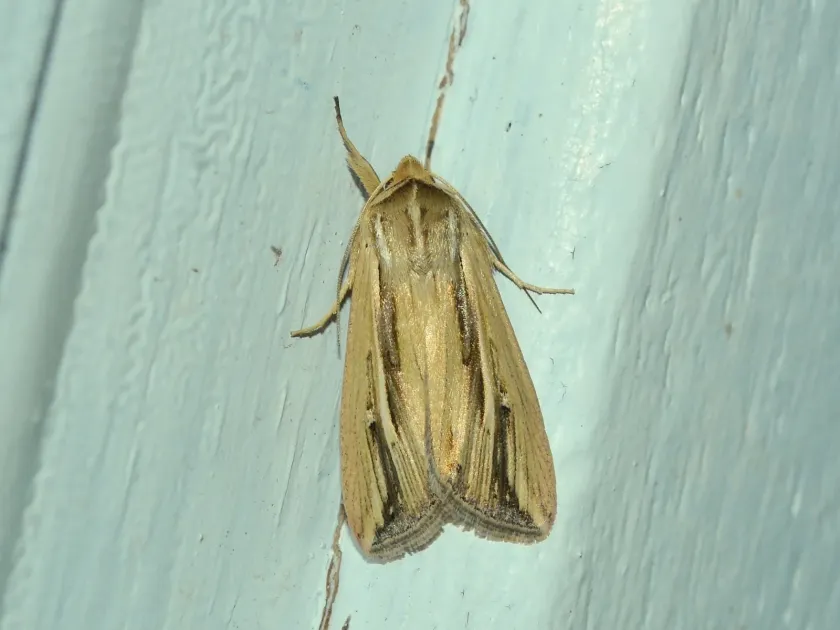
The wheat head armyworm, Dargida albilinea, is a moth species with a wingspan of approximately 35-40 mm. Its forewings are pale tan or ochre with distinct light-colored veins.
The larvae are typical armyworms, reaching lengths of up to 35 mm. They display a range of colors from greenish-gray to brown, usually featuring prominent dark longitudinal stripes along their sides.
Pupation occurs in the soil, where the insect remains as a dark brown, shiny pupa. This stage allows the pest to overwinter effectively at depths of several centimeters.
The lifecycle consists of a single generation per year. Adult moths emerge in the spring, triggered by rising temperatures, and begin laying eggs on the leaves of host plants.
Larval development progresses through several instars. The insects are primarily nocturnal, spending daylight hours hidden near the base of plants or in soil cracks to avoid predators.
What it damages
This pest targets small grains, including wheat, barley, rye, and oats. In the absence of primary hosts, it may also infest native grasses surrounding agricultural fields.
Young larvae feed on leaf tissue, creating irregular patches. As they mature, they consume larger portions of the foliage, potentially skeletonizing the leaves if populations are high.
The most severe damage occurs when larvae feed on the developing grain heads. They chew into the kernels, leaving the ears looking ragged and resulting in significant yield loss.
Infested crops may suffer from reduced grain quality and test weight. Furthermore, feeding wounds serve as entry points for secondary pathogens and fungal infections that further damage the plant.
Economic losses are cumulative; during outbreaks, fields may show extensive areas of missing kernels or completely stripped heads, severely impacting harvest profitability.
Signs of infestation
Early warning signs include ragged leaf margins or small holes in the foliage during the vegetative stage. These are indicative of early instar activity in the lower canopy.
The most obvious sign in mature crops is the presence of damaged or empty grain heads. Observing chewed glumes and exposed kernels in the spike is a diagnostic indicator.
Large amounts of larval frass (excrement) deposited on leaves or accumulated at the base of the plant provide clear evidence of active feeding colonies.
Plants appearing stunted or showing localized discoloration often harbor larvae deep within the canopy. Checking the heads at night often reveals the larvae feeding in the open.
Uneven ripening or the presence of "white heads" that result from stem feeding or grain consumption suggests that the armyworm has been active in the area.
Control measures
Cultural control practices include deep plowing after harvest. This disrupts the soil and exposes pupae to harsh weather conditions and avian predators, significantly reducing the next season's population.
Maintaining weed-free field margins is crucial. Removing host grasses reduces the alternative food sources that larvae rely on before migrating into the primary crop.
Chemical control should be implemented based on scouting results. Applying insecticides during the early larval stages is most effective before they move into the protected grain heads.
Biological control, including the encouragement of natural predators like parasitic wasps and predatory beetles, can help regulate armyworm numbers throughout the season.
Integrated Pest Management (IPM) programs rely on consistent monitoring using pheromone traps to time applications correctly, ensuring that economic thresholds are met before interventions.
Taxonomy
- Latin name
- Dargida albilinea
- Order
- Lepidoptera (butterflies)
- Family
- Noctuidae
- EPPO code
- FAROAL
Discussion
No discussions yet — be the first.