
Cyphoderus albinus
Cyphoderus albinus
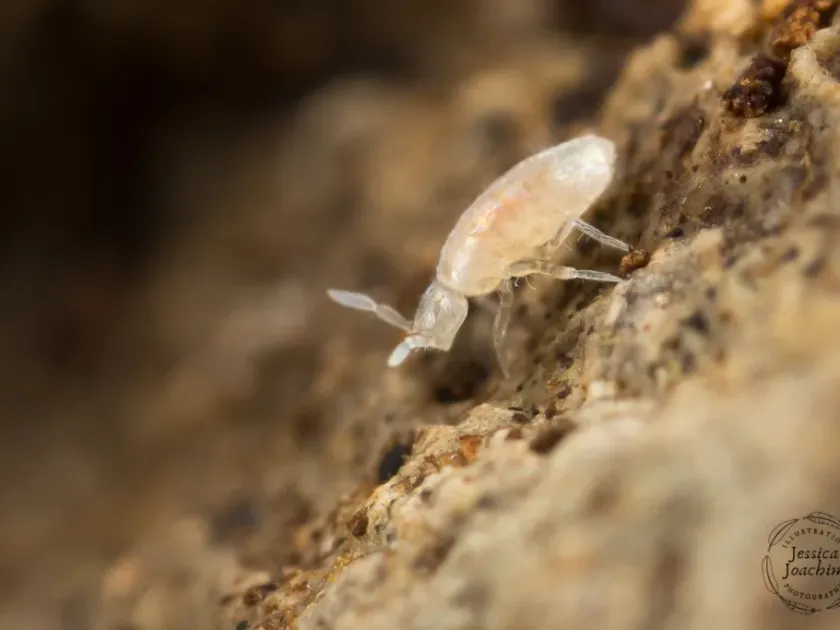
Description
How to identify
Cyphoderus albinus is a species belonging to the order Collembola, commonly known as springtails, within the family Paronellidae. These are tiny, primitive arthropods often found in organic-rich soils.
Adult specimens measure between 1 to 2 millimeters in length and are typically whitish or translucent. A distinct feature of this family is the presence of fine scales covering their bodies.
They are known for their ability to jump using a specialized forked organ called the furcula, located on the underside of the abdomen, which is why they are colloquially called springtails.
Their development is ametabolous, meaning they do not undergo metamorphosis. Nymphs resemble miniature versions of adults, and they grow by molting several times throughout their life cycle.
They thrive in moist habitats, including forest litter, compost piles, and particularly in greenhouse substrates that are kept constantly damp.
What it damages
In their natural environment, these organisms function as saprophages, breaking down decaying plant matter, fungal hyphae, and soil bacteria, contributing to nutrient cycling.
However, in agricultural settings, high population densities can lead them to feed on living plant tissues, specifically the roots and tender stems of seedlings.
They pose the greatest threat to young plants growing in peat-based substrates or potting mixes that maintain high moisture levels.
Feeding damage to the root system can cause nutrient deficiency, chlorosis, and stunted growth, effectively weakening the plant's overall vigor.
In severe cases, the lesions on the stems created by these pests act as entry points for pathogenic fungi, which may lead to damping-off diseases and seedling loss.
When it appears
The activity and reproduction of Cyphoderus albinus are primarily governed by soil moisture levels and ambient temperatures within the cultivation area.
Populations tend to surge during the spring when nursery operations begin and irrigation frequencies are high, providing ideal conditions for their development.
In climate-controlled greenhouses, they can remain active throughout the year, making them a persistent issue for indoor plant production.
The critical window for damage coincides with the germination phase and the early seedling stage, when young plants lack the protective tissue to withstand feeding.
Environmental conditions that favor drying of the soil surface are naturally antagonistic to these pests, significantly reducing their movement and reproductive rate.
Signs of infestation
The most noticeable sign of infestation is the appearance of numerous tiny, white, jumping organisms on the soil surface shortly after irrigation.
Closer inspection of the plant base may reveal superficial grazing or tiny pits on the stem epidermis where it meets the moist growing medium.
Sudden wilting or lack of growth in seedlings, despite adequate water and light, often points to hidden damage caused by soil pests at the root level.
A fine, dusty-looking residue consisting of shed scales and excrement may accumulate on the surface of the soil in areas of high pest density.
In advanced cases, plants may show signs of yellowing lower leaves due to the impaired root system's inability to uptake sufficient water and minerals.
Control measures
The primary control strategy involves moisture management, specifically allowing the top layer of the substrate to dry out between watering sessions.
Cultural practices such as top-dressing the soil with a thin layer of fine, dry sand can create a hostile barrier that prevents the pests from reaching the surface.
When necessary, professional growers may apply soil-applied insecticides, provided they are labeled for use on the specific crop and greenhouse environment.
Biological control agents, such as predatory mites (e.g., Stratiolaelaps scimitus), are highly effective at suppressing collembola populations naturally.
Maintaining strict hygiene by disinfecting greenhouse benches, containers, and tools helps prevent the introduction and spread of this pest into new growing cycles.
Taxonomy
- Latin name
- Cyphoderus albinus
- Family
- Cyphoderidae
- EPPO code
- CYHDAL
Discussion
No discussions yet — be the first.