
Cyclops strenuus
Cyclops strenuus
Description
How to identify
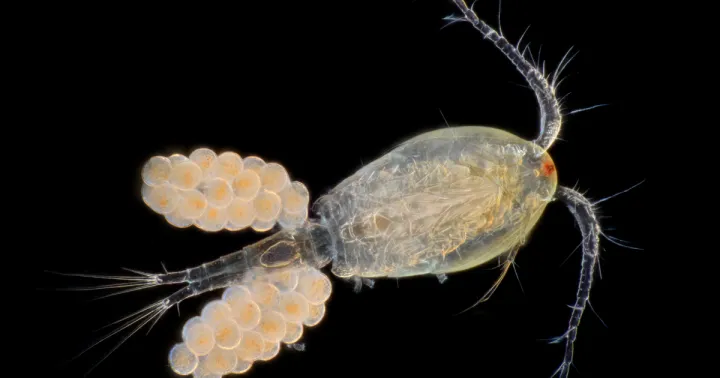
Cyclops strenuus is a small copepod crustacean belonging to the order Cyclopoida and the family Cyclopidae. The adult specimen has a pear-shaped body approximately 1.5–2 mm in length with a well-defined abdomen.
A distinctive feature of this genus is the presence of a single median eye, which is the origin of its common name. The color ranges from greyish to greenish or reddish depending on their diet and environment.
These organisms move through the water with characteristic sharp, jerky jumps using their powerful swimming legs. They inhabit both pelagic and benthic zones in standing or slowly flowing water bodies.
Cyclops are known to be intermediate hosts for various fish and bird parasites. Their presence in high densities in fish farms is considered a significant risk for the health of young fish.
Reproduction occurs sexually, with females carrying two egg sacs on the sides of their abdomen. The life cycle includes nauplius and copepodite stages, allowing them to rapidly colonize new water areas.
What it damages
The primary damage caused by cyclops occurs in fish ponds during the early growth stages of fish larvae. They compete for food with fish fry and can even prey on the smallest individuals.
During mass outbreaks, cyclops can physically harm fish larvae by biting and damaging their skin. This leads to weakened immunity in the fish fry and significantly reduces overall pond productivity.
Furthermore, these crustaceans serve as vectors for dangerous fish helminths, such as diphyllobothriasis. By consuming infected cyclops, fish become infested with parasites, which slows their growth rate.
In closed-cycle aquaculture systems, an overabundance of cyclops can clog filtration equipment. This necessitates frequent maintenance and additional labor costs to ensure system functionality.
Additionally, their active consumption of microalgae can cause fluctuations in dissolved oxygen levels. This negatively impacts the general hydrochemical balance of the pond water.
When it appears
Cyclops activity begins in early spring, immediately after the ice melts, when water temperatures exceed 4–5 degrees Celsius. They are cold-tolerant and often dominate the plankton community early in the season.
Population density typically peaks during the spring and summer months when warmer water accelerates their metabolism. During this time, several generations of these crustaceans can succeed one another.
While high summer temperatures may slightly slow down reproduction rates, the overall population density remains high. In the autumn, as temperatures drop, the life cycle often becomes more active again.
During the winter, part of the population enters a state of diapause, burying themselves in bottom sediments as resistant cysts. This allows them to survive harsh conditions until warmer weather returns.
Total population dynamics depend heavily on the pond's nutrient levels and the presence of natural predators. In ponds without fish, densities can reach thousands of individuals per cubic meter.
Control measures
The primary method for control is the complete drainage and disinfection of pond bottoms during the off-season. Liming the pond bed is highly effective in reducing the survival of cysts and adults.
Biological control is achieved by stocking ponds with fish species that actively feed on planktonic crustaceans. Early stocking of fish fry helps keep the cyclops population below critical levels.
When necessary, specific fishery-approved chemicals that target crustaceans may be used, although their application must strictly adhere to safety regulations and environmental guidelines.
Maintaining optimal hydrochemical conditions prevents mass reproduction outbreaks. It is crucial to monitor and limit the amount of organic matter entering the pond to restrict the available food source.
Regular monitoring of plankton populations allows for early detection of threats, enabling proactive measures. An integrated management approach provides the best protection for juvenile fish.
Taxonomy
- Latin name
- Cyclops strenuus
- Family
- Cyclopidae
- EPPO code
- CYCSST
Discussion
No discussions yet — be the first.