
Southern house mosquito
Culex quinquefasciatus
Description
How to identify
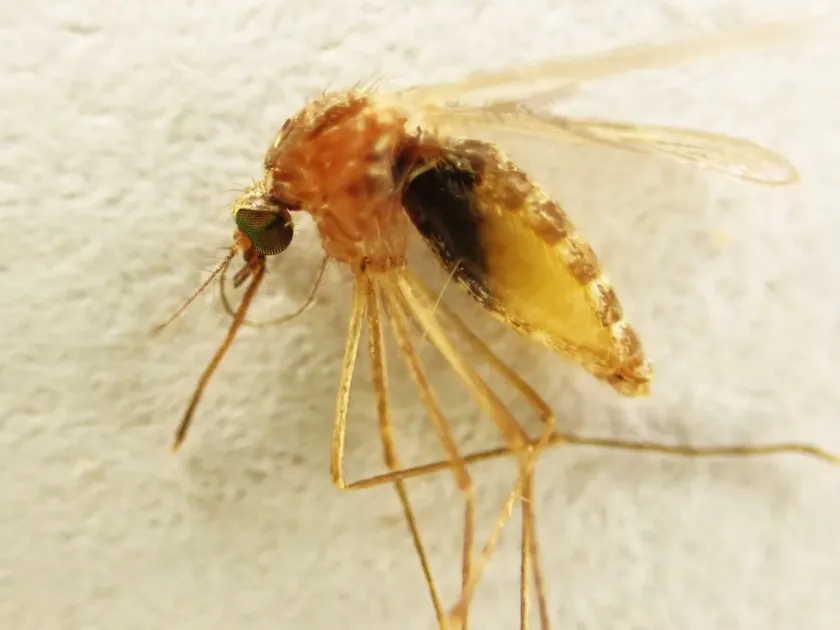
The Southern house mosquito, Culex quinquefasciatus, is a member of the Culicidae family within the order Diptera. These mosquitoes are typically brown or yellowish-brown in color, measuring approximately 4 to 5 mm in length.
Adults possess thin, delicate bodies with long legs and wings covered in fine scales. They are characterized by a proboscis designed for piercing and feeding, which is used by females to acquire blood meals necessary for egg production.
Larval development takes place in stagnant water bodies, such as barrels, irrigation ditches, and slow-moving streams. Larvae hang from the water surface using a respiratory siphon, taking in oxygen from the air above the water.
Pupae are active and mobile, distinguishing them from many other insect pupae that remain dormant. When disturbed, they perform rapid swimming motions in the water to escape potential predators.
Identification is usually confirmed by examining the terminal segments of the male abdomen. In agricultural settings, their presence is often noted by the distinct humming sound and their tendency to gather in dark, humid corners of structures.
What it damages
While Culex quinquefasciatus does not feed on plant tissues, it is considered a pest in agricultural environments primarily due to its impact on operations and workforce efficiency. Their constant presence disrupts daily activities within greenhouse facilities.
In intensive farming, high populations of this mosquito create a stressful environment for workers, leading to decreased efficiency in crop monitoring and maintenance tasks. This indirectly affects overall crop management and productivity.
Furthermore, these insects act as potential vectors for various pathogens. Their excrement and presence on plants in humid greenhouse conditions may facilitate the spread of secondary infections among crop plants.
The accumulation of mosquitoes in greenhouse reservoirs often signals poor sanitation practices, such as exposed water sources. This situation often coincides with the development of other, more destructive greenhouse pests that thrive in similar conditions.
Management of this species is essential for maintaining proper sanitary standards in modern greenhouses and ensuring a safe working environment for agricultural staff.
When it appears
The seasonal activity of the Southern house mosquito is highly dependent on temperature and humidity. Warm, tropical and subtropical climates provide an ideal habitat, allowing for year-round development in many regions.
Peak population levels typically occur during the warmer months, where the duration from egg to adult can be as short as one week. This rapid reproductive cycle allows populations to explode in a very short amount of time.
As temperatures drop, adult females may seek shelter in protected areas, including heated greenhouses or storage buildings, where they can survive the winter months and remain active in warmer indoor climates.
Spring activity resumes once water temperatures in outdoor breeding sites rise above the 15°C threshold. This timing coincides with the beginning of the crop planting season, making early prevention crucial.
Because they are capable of breeding in almost any container that holds water, they remain active throughout the entire growing season, provided that moisture levels remain consistent.
Control measures
Controlling Culex quinquefasciatus centers on eliminating breeding grounds. The most effective strategy involves removing any stagnant water sources, such as clogged gutters, uncovered barrels, and depressions in the soil.
Biological control using Bacillus thuringiensis israelensis is highly recommended for aquatic habitats. This bacterium targets mosquito larvae specifically, posing no threat to the environment or the crops being cultivated.
Structural modifications to greenhouses, such as installing high-quality mosquito netting over windows and doors, are essential for preventing immigration of adults into the growth area.
Trap systems utilizing CO2 or specific chemical attractants can be deployed in larger facilities to keep mosquito numbers below the nuisance threshold without relying on broad-spectrum synthetic pesticides.
- Drain stagnant water sources regularly.
- Apply biological larvicides.
- Screen greenhouse vents and doors.
- Monitor potential larval habitats frequently.
Taxonomy
- Latin name
- Culex quinquefasciatus
- Order
- Diptera (flies)
- Family
- Culicidae
- EPPO code
- CULXFA
Discussion
No discussions yet — be the first.