
Shark moth
Cucullia umbratica
Description
How to identify
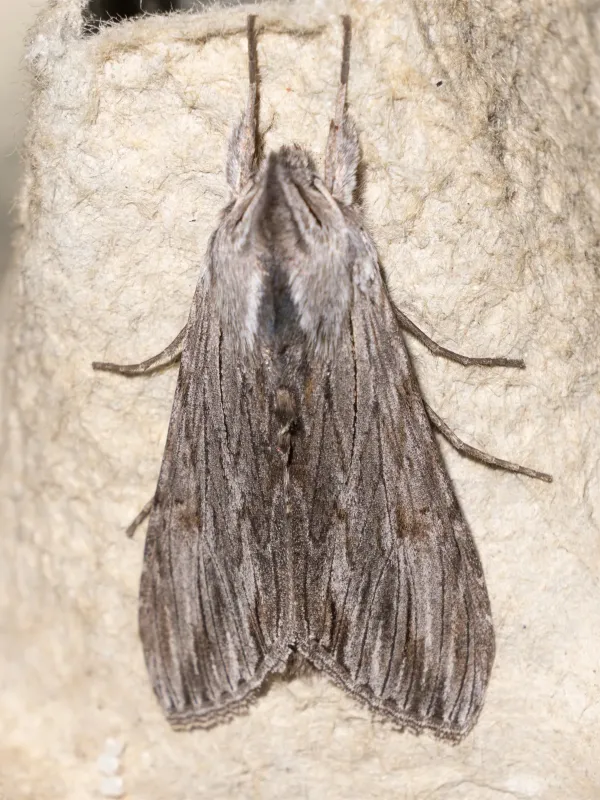
The Shark moth (Cucullia umbratica) is a nocturnal moth belonging to the Noctuidae family, easily recognized by its greyish, bark-like patterned forewings that provide excellent camouflage.
The adult moth typically has a wingspan ranging from 50 to 60 mm and is most active from late spring to summer, often resting on wooden surfaces or dry vegetation during the day.
The larvae, known as caterpillars, are robust and can grow up to 50 mm in length, displaying a dark coloration with subtle patterns that help them blend into the foliage.
Pupation occurs within the soil, where the insect constructs a sturdy cocoon to survive the winter months, protecting the developing moth from cold and predators.
Its life cycle is strictly regulated by seasonal shifts, with the emergence of adults often synchronized with the flowering period of their primary host plants.
What it damages
This pest is known to feed on a variety of plants, particularly favoring species within the Asteraceae family, making them a common issue in flower gardens and wild meadows.
Caterpillars cause extensive damage by chewing on the foliage, which can leave plants weakened and susceptible to further stress or secondary disease infections.
Heavy infestations can result in the total consumption of leaves, leaving behind only the veins, which significantly impairs the plant's ability to photosynthesize effectively.
Beyond the leaves, caterpillars may also attack buds and flowers, directly reducing the decorative value of ornamental plants and affecting potential seed production.
In large-scale gardening, if left unmanaged, the Shark moth can cause noticeable decline in plant health, particularly in young or recently transplanted vegetation.
Signs of infestation
The most reliable sign of an infestation is the presence of frass (caterpillar droppings) on the leaves or the soil surface underneath the infested plants.
Irregularly shaped holes or chewed leaf margins serve as a clear indicator that caterpillars are present and feeding on the vegetation during the night.
Sudden wilting or damaged flower stems suggest that a larva might be feeding on the succulent parts of the plant, often causing the top growth to droop.
Gardeners may observe the moths themselves near light sources during the night, providing an early warning that egg-laying is likely occurring nearby.
Autumn soil preparations may reveal empty or intact pupal cocoons, indicating that a population of Shark moths has successfully completed its cycle in the area.
Control measures
Cultural control measures, such as thorough soil cultivation in late autumn or early spring, are highly effective in disrupting the pupation cycle of the moth.
Sanitation practices, including the removal of weeds and plant debris, are crucial to reducing potential hiding spots and food sources for the developing larvae.
Biological control, such as applying Bacillus thuringiensis, offers an environmentally friendly solution that specifically targets the larvae while preserving beneficial insects.
Chemical applications should be reserved for serious outbreaks and must be timed to coincide with the most vulnerable larval stages to ensure maximum efficacy.
- Handpicking caterpillars in the evening hours when they are most active.
- Using light traps to monitor population levels and reduce adult numbers.
- Encouraging natural predators like birds and parasitic wasps in the garden.
- Ensuring robust plant health through proper fertilization and irrigation.
Taxonomy
- Latin name
- Cucullia umbratica
- Order
- Lepidoptera (butterflies)
- Family
- Noctuidae
- EPPO code
- CCULUM
Discussion
No discussions yet — be the first.