
Lettuce Shark
Cucullia lactucae
Description
How to identify
The Lettuce Shark (Cucullia lactucae) is a moth species belonging to the family Noctuidae. The adult moth has a wingspan of approximately 45–50 mm, with greyish-brown forewings featuring patterns that resemble the shape of a cowl or hood.
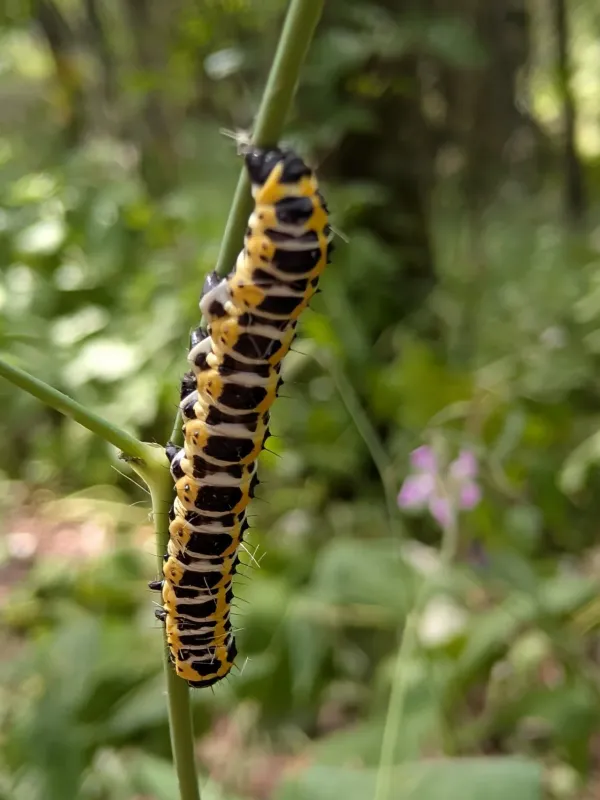
The larva is a distinctive caterpillar reaching 40–50 mm in length. Its body displays a striking color pattern with black transversal stripes and yellow spots, serving as a warning to potential predators.
The life cycle consists of four stages: egg, larva (five instars), pupa, and imago. The insect typically overwinters as a pupa, enclosed in a tough cocoon located within the soil or debris.
Adult moths emerge in late spring or early summer. They are nocturnal insects, making them difficult to spot during daylight hours, while their feeding cycle is tied to dusk and night.
The pupation process occurs in the soil, where the protective cocoon shields the insect from extreme winter temperatures and moisture, ensuring survival until the next generation.
What it damages
The primary damage is caused by the caterpillars, which are highly voracious feeders. They specialize in plants within the Asteraceae family, with lettuce (Lactuca sativa) being a preferred host.
In addition to cultivated lettuce, these larvae consume various wild relatives of the Asteraceae family, which often act as reservoirs for the pest population in nearby fields.
Larvae consume large sections of leaf tissue, starting from the edges or creating significant holes throughout the leaves, which ruins the appearance and quality of the crop.
Mass infestations can lead to total defoliation of the plants, effectively stunting their growth or causing them to perish before they reach harvestable maturity.
Secondary infections are a common consequence of larval feeding; open wounds on leaves become susceptible to various fungal pathogens and soft rots that destroy the remaining tissue.
When it appears
Adult moths of the first generation emerge in May and June. During this period, females search for host plants to deposit their eggs on the undersides of the leaves.
The larval stage is most active throughout the summer months. Peak damage is typically reported during June and July, coinciding with the rapid growth phase of lettuce crops.
Depending on the climatic zone, a second generation may develop later in the season, extending the risk period for late-planted vegetable crops into the autumn months.
By late autumn, the larvae complete their development and burrow into the soil to undergo pupation, preparing for the winter diapause.
The overall seasonal activity is heavily influenced by ambient temperature, as warmer conditions accelerate the reproductive rate of the moth population.
Signs of infestation
The presence of frass (caterpillar droppings) on the leaves is a primary indicator of larval activity, often visible before the caterpillars themselves are noticed.
Notched or ragged leaf edges are characteristic signs that indicate the presence of larvae. Unlike some other pests, they consume substantial amounts of leaf mass quite quickly.
Larvae can often be found by inspecting plants at night using a flashlight, as they are nocturnal feeders that prefer to remain hidden during the day.
Wilting of individual leaves or a hollowed-out center in the lettuce rosette are clear signs that the pest has been feeding on the primary growth points of the plant.
The discovery of pupal cocoons in the soil during tilling or weeding activities provides evidence of the presence of the insect in the local ecosystem.
Control measures
Cultural control is essential. Practicing crop rotation helps break the life cycle, ensuring that host plants are not grown in the same spot for multiple consecutive seasons.
Sanitation plays a crucial role; removing wild Asteraceae weeds from the garden perimeter reduces the available food sources for the larvae, limiting their population growth.
Deep autumn plowing or tilling of the soil exposes the pupae to birds and harsh weather conditions, significantly reducing the number of moths that will emerge in the spring.
Hand-picking larvae early in the morning or at dusk is an effective management tactic for small-scale garden plots where the use of chemical pesticides is discouraged.
If chemical intervention becomes necessary, utilize biological pesticides or targeted insecticides, ensuring that all safety guidelines and harvest waiting periods are strictly followed.
Taxonomy
- Latin name
- Cucullia lactucae
- Order
- Lepidoptera (butterflies)
- Family
- Noctuidae
- EPPO code
- CCULLA
Discussion
No discussions yet — be the first.