
Ctenoplusia vittata
Ctenoplusia vittata
Description
How to identify
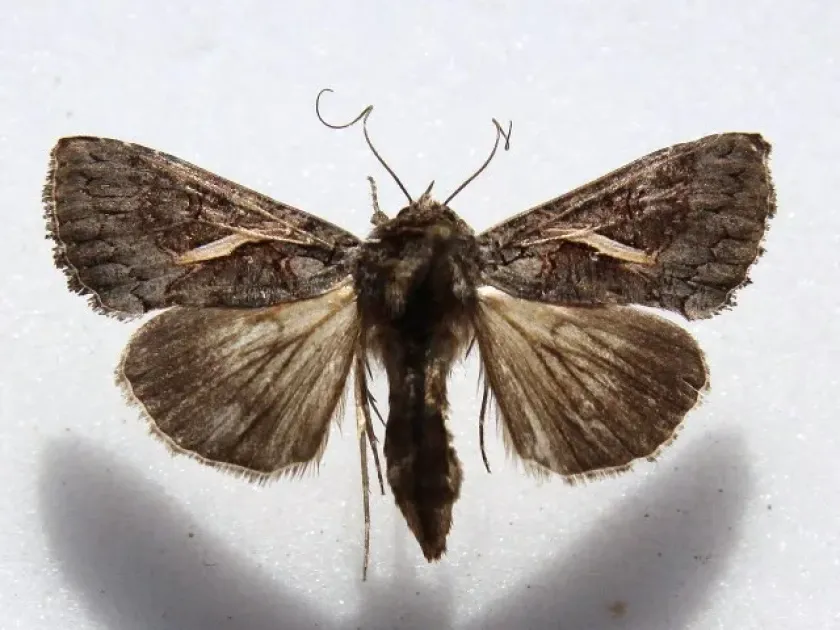
Ctenoplusia vittata belongs to the Noctuidae family, order Lepidoptera. Adult moths typically have a wingspan of 30–35 mm, characterized by distinctive metallic-patterned forewings with light-colored longitudinal stripes.
The larvae, or caterpillars, are usually green, providing excellent camouflage against host plant foliage. They exhibit a characteristic "looping" movement, typical of the Plusiinae subfamily, due to the reduction of prolegs.
The pupae are typically encased in a loose, silken cocoon, which is usually spun on the underside of a leaf or within debris. The adults are nocturnal, showing high activity during dusk and nighttime hours.
The life cycle encompasses four stages: egg, larva, pupa, and imago. Population density is heavily influenced by ambient temperature and relative humidity throughout the plant's growing season.
While definitive identification often requires genital analysis, field identification relies on observing the specific feeding damage patterns and the presence of frass on the leaf surface.
What it damages
The primary damage is caused by the larval stage, which feeds on the foliage of a wide array of agricultural and ornamental plants. Their host range is broad, covering both leafy vegetables and flowering crops.
Asteraceae species, including sunflowers and various ornamentals, are particularly susceptible to infestation. They are also commonly found on legumes, potatoes, and cruciferous vegetables.
Early-stage larvae graze on the epidermis of the leaves, creating translucent "windows," while mature larvae are capable of consuming entire leaf tissues, leaving only the primary veins intact.
Mass infestations can result in significant defoliation, which severely reduces the plant's photosynthetic efficiency and leads to substantial yield losses in affected fields.
Beyond physical consumption, the feeding wounds create entry points for secondary pathogens, such as bacterial soft rots and fungal infections, further compromising the health of the crop.
When it appears
Activity commences as soil temperatures rise in the spring, triggering the emergence of overwintering adults. The number of generations per year depends heavily on the regional climate.
Caterpillar peak activity generally occurs in mid-summer, coinciding with the optimal thermal conditions and the availability of sufficient host foliage for rapid larval development.
As autumn approaches, the final generation of larvae will seek refuge in the soil or plant litter to pupate and overwinter. Successive years may see varying population densities based on seasonal weather patterns.
Pest monitoring should begin as soon as the first true leaves emerge. The use of pheromone traps is highly recommended to detect the presence of adults before egg-laying begins.
Hot and arid conditions often lead to population spikes, as these conditions may temporarily reduce the effectiveness of natural predatory enemies that keep the species in check.
Signs of infestation
The initial sign of infestation is the appearance of irregular, ragged holes in the leaves, which expand rapidly as the larvae grow and their food requirements increase.
The presence of dark, granular frass on the leaves or the ground beneath the plant is a definitive indicator of an active feeding population inhabiting the foliage.
Careful inspection of the underside of leaves often reveals young caterpillars, which exhibit a rapid escape response or drop to the ground when they sense vibrations or disturbances.
Leaf edges that appear folded or bound together with thin, silken webbing often indicate that the larva is preparing to pupate or seeking shelter from the heat during the day.
General plant wilting, chlorosis, and premature leaf drop in the absence of obvious disease symptoms are often secondary indicators of severe infestation by foliage-feeding insects.
Control measures
Effective management requires an Integrated Pest Management (IPM) approach that combines cultural, biological, and chemical strategies to mitigate economic damage.
- Deep plowing in autumn to disturb and expose overwintering pupae to predators and environmental stress.
- Removal of host weeds in and around fields to eliminate alternative food sources for larvae.
- Application of biological insecticides containing Bacillus thuringiensis during the early larval instars.
- Judicious use of selective insecticides based on strict economic threshold levels for the specific crop.
- Enhancement of natural enemy populations through the planting of nectar-rich border strips to support predatory wasps and spiders.
Taxonomy
- Latin name
- Ctenoplusia vittata
- Order
- Lepidoptera (butterflies)
- Family
- Noctuidae
- EPPO code
- CTNUVI
Discussion
No discussions yet — be the first.