
Ctenoplusia
Ctenoplusia
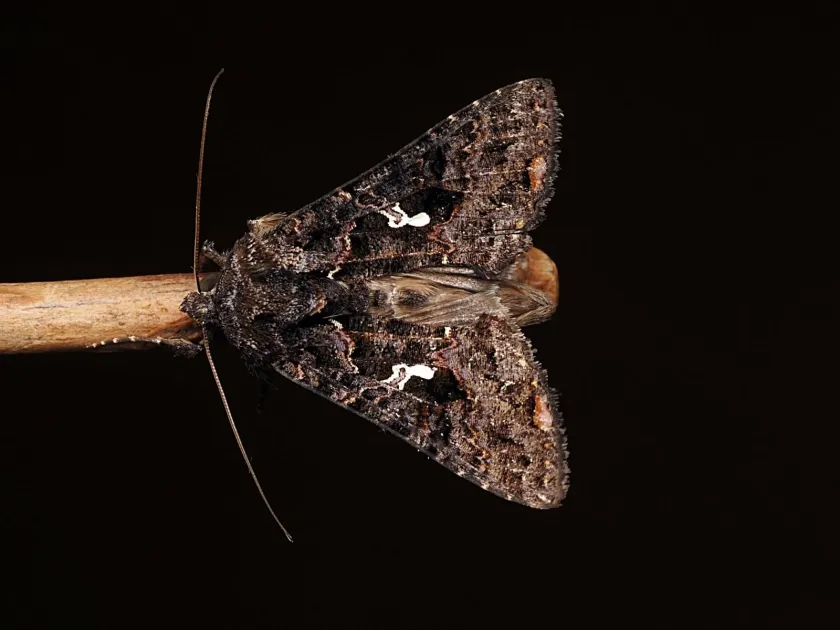
Description
How to identify
Ctenoplusia belongs to the family Noctuidae, order Lepidoptera. Morphologically, these moths exhibit typical characteristics of the Plusiinae subfamily: a robust body and a wingspan of approximately 30–40 mm. The forewings display gray-brown tones with a distinct metallic sheen.
The larvae, known as loopers, are easily identified by having only three pairs of prolegs. This physical trait causes the larvae to move in a characteristic looping motion, which is diagnostic for this group of moths.
The coloration of the larvae typically ranges from light to bright green, often accented with white or yellowish longitudinal stripes along the body. The skin is covered in sparse hairs emerging from small tubercles.
The pupa is usually contained within a loose, whitish silk cocoon spun on the underside of a leaf or amongst crop debris. The pupa itself is dark brown or nearly black in color.
Adult moths are primarily nocturnal or crepuscular, making them difficult to detect in fields without using light traps or pheromone monitoring systems.
What it damages
This pest is a polyphagous insect causing significant economic losses to various agricultural and ornamental crops. Common hosts include tomatoes, potatoes, beans, and various Brassica species.
The pest successfully thrives on many weeds belonging to the Asteraceae and Lamiaceae families, allowing local populations to persist even in the absence of primary commercial crops.
Larval feeding is the most destructive stage. The larvae consume leaf tissue, typically beginning at the lower canopy and gradually moving upward toward the growing tips of the plant.
Under conditions of high population density, larvae can skeletonize leaves, leaving only the primary veins, which leads to a critical reduction in photosynthetic area and weakened plant vitality.
Fruit damage (such as in tomatoes) is less frequent but remains a significant threat, as larval feeding wounds provide entry points for secondary fungal and bacterial infections.
When it appears
Activity begins in the spring as soon as stable, warm temperatures allow overwintering pupae to emerge as adults. In warmer climatic regions, the pest can complete 2–3 generations per season.
Peak population levels typically occur in mid-summer, when environmental conditions are optimal for the development of all life stages, from egg to pupa.
Females deposit eggs primarily on the undersides of leaves, either singly or in small clusters. Embryonic development takes approximately 5–7 days at 20–25 degrees Celsius.
Generations frequently overlap throughout the season, meaning that all life stages can be found simultaneously in the field, necessitating consistent and frequent crop scouting.
As autumn approaches, development slows, and the final generation of pupae enters diapause in the soil or under plant debris to survive until the following spring.
Signs of infestation
The earliest signs of infestation are characteristic "windowpane" marks on young leaves, where early-instar larvae consume the epidermis without piercing the lower leaf cuticle.
Another sign is the presence of frass (larval excrement) on leaf surfaces, appearing as small dark pellets, which often accumulate in leaf axils or at the base of the plant.
During plant inspections, growers may notice leaves that are curled or bound together with silk webbing, which the larvae use as protective shelters for molting or pupation.
The presence of moths flying at dusk indicates the start of egg-laying activity, which serves as a crucial warning for initiating preventive protection measures.
- Irregularly shaped holes in the leaves.
- Skeletonized leaf veins.
- Presence of white silken cocoons within folded leaves.
Control measures
Agronomic control measures include rigorous weed management to eliminate alternative hosts and deep fall plowing to destroy overwintering pupae in the soil.
Biological control involves the use of products based on Bacillus thuringiensis, which are effective against early-instar larvae and safe for beneficial predatory insects.
Chemical control is implemented via insecticides with contact and stomach action once the economic injury threshold is reached, typically set at 2–3 larvae per 10 plants.
It is vital to rotate insecticides from different chemical groups to prevent the development of resistance, as Noctuids are known for their rapid adaptation to pesticides.
Pheromone traps are highly recommended to monitor adult flight patterns, enabling precise timing of insecticide applications to maximize efficacy and minimize unnecessary spraying.
Taxonomy
- Latin name
- Ctenoplusia
- Order
- Lepidoptera (butterflies)
- Family
- Noctuidae
- EPPO code
- CTNUSP
Discussion
No discussions yet — be the first.