
Gooseberry aphid
Cryptomyzus cynosbati
Description
How to identify
The gooseberry aphid (Cryptomyzus cynosbati) belongs to the family Aphididae. These small insects, measuring about 2 mm, are typically pale green or yellowish, allowing them to blend in with young foliage.
The life cycle includes both apterous (wingless) and alate (winged) forms. The winged adults are essential for the dispersal of the colony to other parts of the garden or different host plants during the summer months.
They overwinter as eggs, which are deposited in the bark crevices or near the buds of gooseberry plants. These eggs are hardy and withstand harsh winter conditions until spring temperatures trigger hatching.
Upon hatching, the fundatrices (founder females) begin feeding on the sap of emerging leaves, initiating the rapid reproduction cycle that characterizes the aphid species.
Morphologically, they possess specialized mouthparts known as stylets, designed to penetrate leaf tissue and extract essential nutrients, which disrupts the host plant's physiology.
What it damages
The primary hosts of this aphid are plants within the Grossulariaceae family, particularly gooseberries and currants. They prefer the succulent, fast-growing tissues at the tips of new shoots.
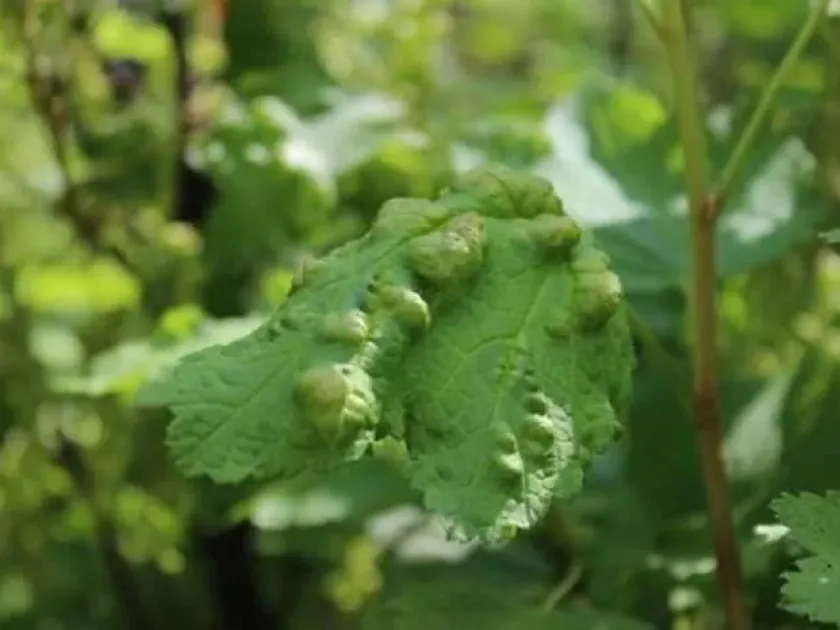
By constantly feeding on the sap, the aphids cause the young leaves to curl, blister, and become severely deformed. This process stunts the growth of the infested branches.
Infested foliage often loses its green color, turning yellow, and eventually dropping prematurely. This loss of photosynthetic surface area significantly weakens the bush and reduces next season's crop yield.
The aphids act as vectors for various plant viruses, which can lead to long-term health issues for the berry bushes, potentially requiring the removal of infected plants.
They also excrete honeydew, a sticky substance that promotes the growth of sooty mold, a fungus that covers leaves in a black layer and further inhibits the plant's ability to undergo photosynthesis.
When it appears
The aphid activity commences in early spring, synchronized with the bud burst of gooseberries. This is the period when the overwintered eggs hatch into the first nymphs.
Population growth accelerates throughout May and June as environmental conditions become optimal for asexual reproduction, leading to the formation of dense colonies.
During the mid-summer period, winged migrants may move to secondary hosts, a behavior typical for many aphid species that helps them avoid local competition or deteriorating host quality.
As autumn approaches, the aphids return to the primary host plants to lay eggs for the winter season, ensuring the survival of the species until the following spring.
Developmental rates are temperature-dependent; warmer weather significantly shortens the duration of each generation, leading to explosive population increases.
Signs of infestation
The most noticeable sign is the curling of young leaves at the branch tips. These leaves often look stunted and develop a characteristic wrinkled, distorted appearance.
Observing the underside of these curled leaves will usually reveal dense clusters of pale green aphids, often accompanied by their shed white skins (exuviae).
A high density of ants patrolling the branches is a strong indicator of aphid presence, as ants protect the aphids to harvest the sugary honeydew they produce.
The presence of a sticky, shiny film on the leaves and stems—the honeydew—is a clear indication that a significant aphid population is currently feeding on the plant.
General loss of vigor, slow growth, and the yellowing of foliage in spring are secondary signs that an infestation has been present for some time.
Control measures
A successful management strategy involves combining cultural practices with targeted interventions to minimize plant stress and aphid density.
- Pruning back infested tips early in the season to remove the initial colonies.
- Encouraging natural predators such as ladybirds, lacewings, and hoverflies in the garden.
- Using horticultural oils or insecticidal soaps as early intervention measures.
- Maintaining plant health through proper fertilization and watering to improve natural defenses.
Systemic insecticides should be reserved for severe infestations and applied according to local regulations, ensuring that no residues remain during the berry harvesting period.
Monitoring the undersides of leaves weekly during the spring is crucial for identifying an outbreak before it spreads throughout the entire gooseberry plantation.
Discussion
No discussions yet — be the first.