
Dun-bar moth
Cosmia trapezina
Description
How to identify
The Dun-bar moth (Cosmia trapezina) is a member of the Noctuidae family, order Lepidoptera. The adult moth has a wingspan of 30–40 mm, with forewings typically ranging from grayish-brown to yellowish-brown, featuring distinctive darker cross-lines that form a trapezoidal shape.
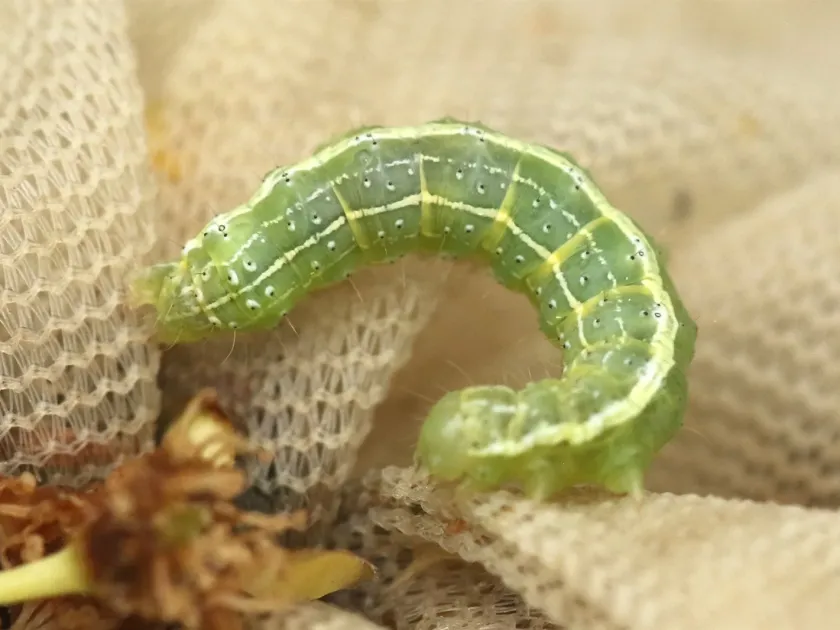
The larvae, or caterpillars, reach about 30–35 mm in length. They are generally green with thin light longitudinal stripes and dark spots, making them well-camouflaged among foliage. Their head is usually light brown or green.
A unique biological trait of this species is its facultative predation. While younger larvae feed exclusively on leaves, older larvae are known to hunt and consume the caterpillars of other moth species, acting as temporary entomophages.
The life cycle is univoltine, meaning there is one generation per year. The species overwinters in the egg stage, with eggs laid on the bark or twigs near dormant buds, hatching in the spring as vegetation begins to emerge.
Pupation takes place either in the soil or within leaves that are spun together with silk. Adult moths emerge in mid-summer, typically between July and August, and are known to be attracted to light and sugar baits.
What it damages
The larvae primarily damage deciduous trees and shrubs. Common hosts include oak, lime, birch, and elm, as well as fruit trees such as apple, pear, and cherry, making them a concern in both forestry and horticulture.
Damage typically involves skeletonizing or consuming the leaf blades. Early-stage larvae bore small holes, while late-stage larvae can cause severe defoliation of the canopy if populations are high.
Early spring feeding is the most damaging phase. Larvae target opening buds, destroying them before they can fully leaf out, which significantly impacts the tree's health, photosynthetic capacity, and overall vigor.
While the larvae exhibit predatory behavior towards other pests, this benefit is often outweighed by the direct damage they cause to crops in high-density outbreak years, necessitating careful monitoring.
Severe infestations can lead to reduced fruit yield and stunted tree growth, making it important to detect the presence of the pest early in the season when the larvae are still small.
Signs of infestation
The first sign of an infestation is the presence of damaged or non-opening buds in spring. Close inspection often reveals the small, dark excrement pellets typical of young caterpillars.
Rolled or curled leaves held together by thin silk threads are another indicator. If you unroll these leaves, you will likely find a caterpillar hiding inside, as they are mostly nocturnal or seek cover during the day.
Visual observation of the canopy in late spring can reveal skeletonized leaves. Significant loss of green leaf surface area is a clear sign that intervention may be required to protect the crop.
During the summer months, light traps or pheromone-based monitoring systems can be used to detect the presence of adult moths and estimate the potential population size for the next season.
Checking twigs for egg clusters during the winter pruning season is a proactive way to assess the level of the upcoming infestation and implement control measures before spring hatching.
Control measures
Biological control using Bacillus thuringiensis (Bt) is highly effective against younger larvae and is a preferred method for integrated pest management due to its selectivity and low impact on beneficial insects.
In cases of severe economic threshold breach, localized application of selective insecticides may be necessary. It is crucial to follow regional regulations and application timing to maximize efficacy.
Cultural practices include proper pruning and orchard sanitation. Removing and destroying infested twigs and maintaining healthy trees can significantly reduce the overwintering success of the pest.
The use of sticky bands around trunks in early spring can help limit the movement of larvae, particularly in young orchards or nurseries where the trees are more susceptible to early bud damage.
Encouraging natural predators, including insectivorous birds and parasitic wasps, can help keep the population of the Dun-bar moth in check through natural mortality factors, reducing the need for chemical intervention.
Taxonomy
- Latin name
- Cosmia trapezina
- Order
- Lepidoptera (butterflies)
- Family
- Noctuidae
- EPPO code
- CALYTR
Discussion
No discussions yet — be the first.