
Pear moth (Cosmia pyralina)
Cosmia pyralina
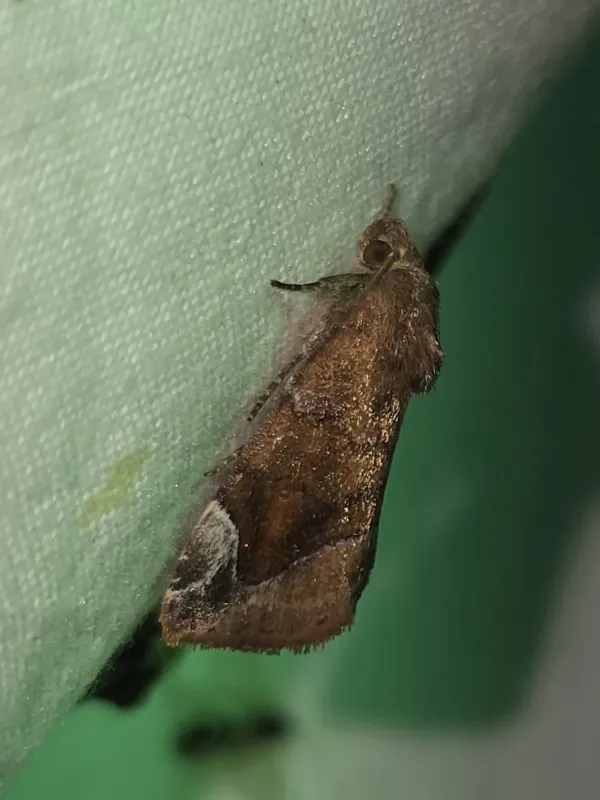
Description
How to identify
The pear moth, scientifically known as Cosmia pyralina, is a member of the Noctuidae family. It is a moth species often found in orchards across Europe and parts of Asia.
Adult moths have a wingspan ranging from 28 to 32 mm. The forewings are typically grayish-brown with darker cross-bands, providing excellent camouflage against tree bark.
The larvae, or caterpillars, reach lengths of up to 30 mm. They are generally yellowish-green with distinct white lateral lines, making them well-hidden among green foliage.
The species undergoes a complete metamorphosis. It overwinters in the egg stage, with eggs deposited by females on the bark of young twigs of host plants.
The development cycle is synchronized with the phenology of fruit trees, ensuring that emerging larvae have access to young buds and leaves during the spring.
What it damages
This pest primary affects the Rosaceae family, with apple, pear, plum, and cherry trees being the most common targets in garden settings.
Larvae feed on developing buds, young leaves, and flowers. Early season feeding can cause significant damage to the potential crop before full fruit set.
Severe infestations lead to skeletonized leaves, which reduce the tree's photosynthetic capacity and stunt overall branch growth during the vegetative season.
Young fruitlets can also be attacked, leading to fruit deformation, premature shedding, or secondary infections by pathogens entering through feeding wounds.
The cumulative damage often results in decreased yield quality and can weaken younger trees, making them more susceptible to environmental stressors.
When it appears
Adult moth flight typically occurs between late June and August. This is the period when mating and egg-laying for the next generation take place.
Larvae hatch in the spring, coinciding with the bud-burst phase of the host trees, which provides a high-nutrition food source immediately upon emergence.
Peak larval feeding activity is observed throughout May and early June, as the caterpillars grow rapidly in preparation for pupation.
After finishing their feeding cycle, the larvae drop to the ground or seek shelter in bark crevices to pupate, completing their activity for the year.
Orchard monitoring should begin at the green-tip stage of tree development to identify any presence of early-instar larvae before major foliage loss occurs.
Signs of infestation
The most common signs of infestation are ragged leaf edges and damaged buds that fail to open properly during the spring growth flush.
Caterpillars often use silk to bind leaves together, creating small shelters where they hide during the day to avoid avian predators.
- Ragged or skeletonized leaf blades.
- Deformed or partially eaten buds.
- Visible fecal pellets (frass) on leaves or branch crotches.
- Leaves rolled or tied together with fine silken webbing.
- Direct observation of larvae on young shoots during dusk.
Control measures
Cultural control practices include the removal of loose bark during winter maintenance to destroy potential overwintering sites for pupae.
Biological control using microbial insecticides, such as Bacillus thuringiensis, is highly effective against larvae while being safe for pollinators and beneficial insects.
Chemical control should be applied based on economic thresholds, using selective insecticides applied during the early larval stage if necessary.
The use of sticky trunk bands can physically impede larvae and act as a monitoring tool to determine the scale of the population present in the orchard.
Promoting habitat for natural predators, including insectivorous birds and parasitic wasps, is a key component of long-term sustainable pest management.
Taxonomy
- Latin name
- Cosmia pyralina
- Order
- Lepidoptera (butterflies)
- Family
- Noctuidae
- EPPO code
- CALYPY
Discussion
No discussions yet — be the first.