
Cosmia
Cosmia
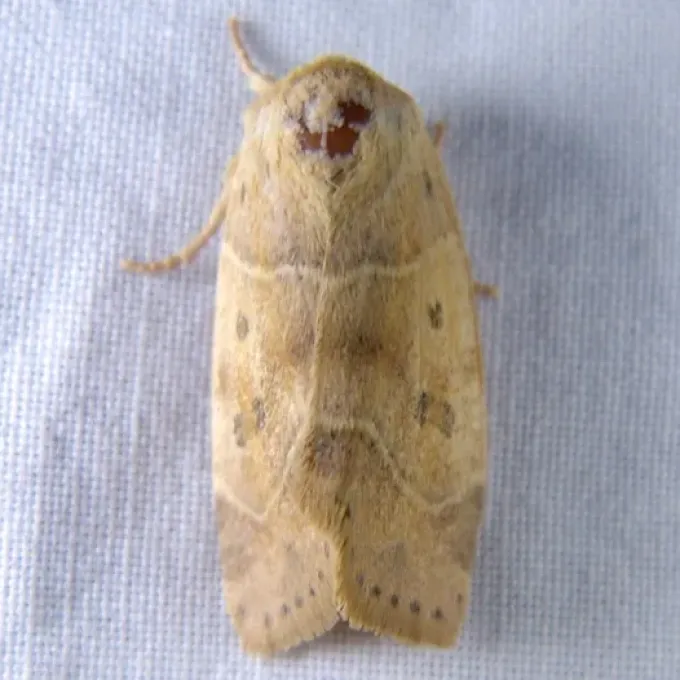
Description
How to identify
Cosmia is a genus of moths belonging to the family Noctuidae. Adult moths are characterized by their ochre to reddish-brown wing coloration, which serves as camouflage against tree bark.
The larvae, or caterpillars, have a cylindrical body typically colored in shades of green, allowing them to blend perfectly with young foliage. The head capsule is often well-defined.
Pupation usually occurs in the soil or within a dense cocoon hidden in bark crevices. These moths are strictly nocturnal, resting in canopy cover or hidden spots during daylight hours.
The life cycle undergoes complete metamorphosis, including egg, larva, pupa, and adult stages. Generally, there is one generation per year, depending on regional climatic factors.
Systematically, this genus is part of the subfamily Ipimorphinae. Identifying specific species often requires professional morphological analysis due to their outward similarity.
What it damages
Cosmia larvae are active phytophages. Their primary hosts include various deciduous trees such as oak, birch, linden, and several fruit-bearing orchard species.
Young larvae feed on buds and newly emerging leaves. During this stage, they can significantly reduce the potential growth of the plant's foliage.
Older larvae consume tougher tissue, skeletonizing leaves or creating large irregular holes. Large infestations can lead to substantial defoliation of the tree crown.
Beyond foliage, these larvae can damage flowers and fruit buds, leading to direct losses in agricultural or horticultural yields for fruit trees.
Continuous feeding stresses the tree, making it more susceptible to secondary infestations by wood-boring insects and opportunistic fungal infections.
When it appears
Adult moths typically fly during mid-to-late summer, usually between July and August, when mating and egg-laying activities take place.
The overwintering stage is the egg, which females deposit in bark cracks or near buds on young tree branches during the summer months.
Larval emergence in the spring is synchronized with budburst. This is a critical period when larvae begin their intense feeding phase.
Active feeding occurs from May through June. Once they reach maturity, the larvae descend to the ground or find sheltered areas to begin pupation.
The overall life cycle is strictly timed with the phenology of host trees to ensure the larvae have access to high-quality nutrition during their development.
Signs of infestation
The first signs of infestation include damaged buds and the presence of irregular holes in leaves that appear late in the spring.
Visual inspection often reveals caterpillar frass (excrement) accumulation on leaves directly below feeding areas, signaling their presence.
Some species may create silk webbing around damaged leaves, providing further evidence of larval activity within the canopy.
In cases of severe infestation, visible crown thinning occurs, which may be initially mistaken for drought stress or damage from other defoliators.
Using light traps during the night can help confirm the presence of adult moths in the area and monitor the start of the breeding season.
Control measures
Biological control using microbial insecticides, such as Bacillus thuringiensis, is highly recommended as it targets larvae while sparing beneficial insects.
Chemical intervention should be reserved for high-population scenarios, focusing on application during the early larval stages when they are most vulnerable.
Cultural control practices include the removal and disposal of old bark and debris where eggs may overwinter, reducing the local pest population.
Encouraging natural predators, such as birds and predatory wasps, is an essential component of an integrated pest management strategy for orchards and forests.
Early-season scouting is crucial; detecting the larvae early allows for timely intervention before they cause significant physiological damage to the host trees.
Taxonomy
- Latin name
- Cosmia
- Order
- Lepidoptera (butterflies)
- Family
- Noctuidae
- EPPO code
- COSISP
Discussion
No discussions yet — be the first.