
Cornutiplusia
Cornutiplusia
Description
How to identify
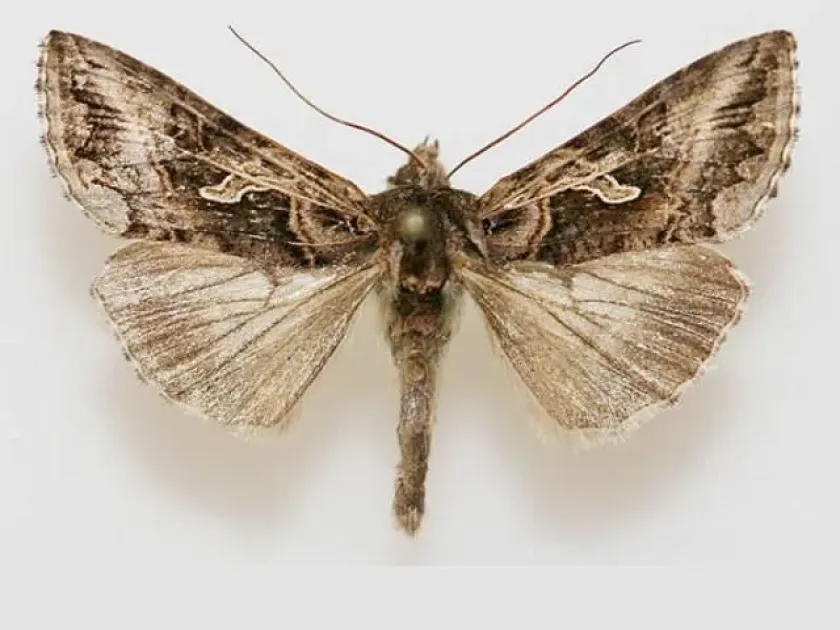
Cornutiplusia is a genus of noctuid moths (family Noctuidae) recognized as significant agricultural pests. The adult moths are typical noctuids, often featuring intricate, metallic-like patterns on their forewings for camouflage.
The larvae are commonly referred to as loopers due to their distinct locomotion style. They belong to the Plusiinae subfamily, which is characterized by having fewer prolegs compared to other moth larvae, forcing them to arch their backs as they move.
Larvae are generally green with faint longitudinal stripes, allowing them to blend perfectly with the foliage of host plants. This coloration serves as a primary defense mechanism against avian predators.
The insect undergoes a complete metamorphosis, consisting of four stages: egg, larva, pupa, and adult. Each life stage is adapted to specific environmental conditions, ensuring the species' survival throughout the year.
Accurate identification is essential for field diagnostics, as the similarity between various looper species can lead to incorrect chemical applications and inadequate control of the infestation.
What it damages
The larval stage is responsible for all the damage, as caterpillars possess voracious appetites. They feed on a wide variety of vegetable crops, flowers, and broadleaf plants.
Preferred hosts include plants from the Solanaceae, Asteraceae, and Amaranthaceae families. In many cases, these larvae can maintain their population on surrounding weeds before migrating to cash crops.
Feeding damage begins with the skeletonization of leaves, where young larvae consume the soft tissue while leaving larger veins intact. This significantly reduces the plant's photosynthetic capacity.
As larvae mature, they consume entire leaf portions and, in high-density populations, move on to consume flower buds and reproductive organs, resulting in direct yield loss and reduced crop quality.
Open wounds left by feeding larvae provide entry points for secondary pathogens, such as bacteria and fungi, which can lead to rapid plant decay and further exacerbating crop losses.
When it appears
The flight of adult moths typically begins in late spring or early summer, primarily driven by rising soil temperatures and the accumulation of thermal units required for development.
Larval activity peaks during the mid-summer months when the second generation often coincides with the most critical growth phases of major vegetable crops.
Depending on the climatic zone, the species may complete one or more generations per year. The summer generations are generally the most destructive due to the abundance of succulent foliage.
Weather conditions significantly influence the rate of development. Warm, humid conditions typically accelerate the life cycle, potentially leading to rapid population explosions if not monitored.
By autumn, larvae enter the pupal stage, seeking shelter in the soil or within plant debris to survive the winter, effectively remaining dormant until the next spring.
Signs of infestation
The first sign of an infestation is often the presence of frass (larval excrement), which appears as small dark pellets on the leaves and around the base of the plant.
Observing small, newly hatched larvae hiding on the undersides of leaves is a clear indicator that a new generation has emerged and intervention may be necessary.
Ragged leaf edges or circular «windows» consumed in the leaf surface signal that larvae have established themselves and are feeding actively across the canopy.
In some cases, larvae may spin light webbing between leaves to create a shelter, which is a specific behavior that can help identify their presence among the foliage.
Visible wilting or sudden loss of plant vigor in patches can indicate heavy larval feeding, which leads to significant leaf loss and overall stunted plant development.
Control measures
Effective management requires an Integrated Pest Management (IPM) approach that combines cultural, biological, and chemical control methods to minimize economic impact.
Cultural practices, such as deep plowing in autumn, are crucial for destroying overwintering pupae in the soil. Maintaining weed-free fields also eliminates alternative food sources.
Biological control agents, particularly egg parasitoids like Trichogramma, are highly effective in suppressing moth populations by attacking eggs before larvae can cause damage.
For larval stages, biopesticides based on Bacillus thuringiensis are excellent tools, as they provide target-specific control while preserving populations of beneficial predatory insects.
Chemical insecticides should be reserved for instances where the population density exceeds economic thresholds, always ensuring that products with short pre-harvest intervals are selected.
Taxonomy
- Latin name
- Cornutiplusia
- Order
- Lepidoptera (butterflies)
- Family
- Noctuidae
- EPPO code
- CRNISP
Discussion
No discussions yet — be the first.