
European roller
Coracias
Description
How to identify
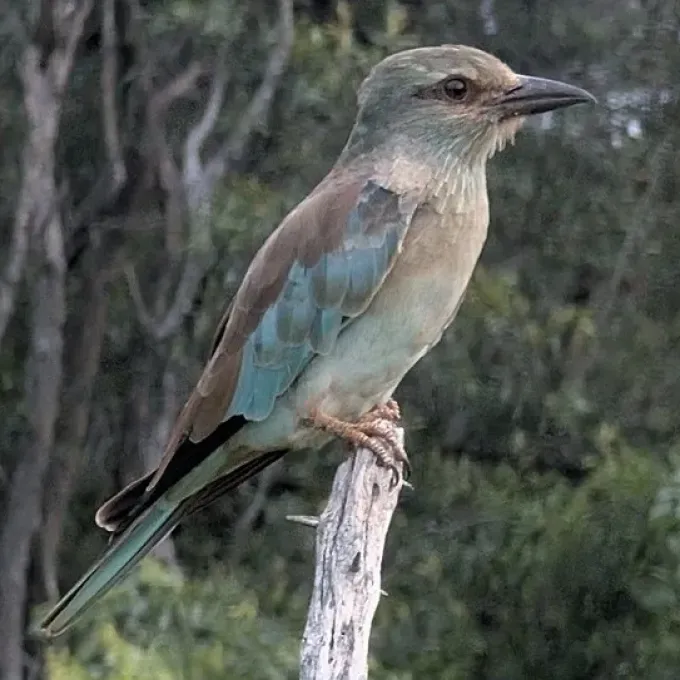
The European roller (Coracias garrulus) is a member of the Coraciidae family within the Coraciiformes order. It is a stunning bird known for its brilliant azure and rufous plumage.
Physically, the bird has a robust body and a strong, hooked beak, which is perfectly adapted for capturing insects from the ground or vegetation.
The species prefers open landscapes, such as steppes, agricultural fields, and forest edges, where it can easily spot prey from elevated perches.
Nesting typically occurs in natural cavities of old trees or abandoned burrows in earthen banks, reflecting their dependence on semi-natural habitats.
Due to its declining population across Europe, the bird is strictly protected by international and national environmental laws.
What it damages
The European roller is not a pest; on the contrary, it is an extremely beneficial species for agricultural ecosystems by serving as a natural predator of insects.
Its diet consists primarily of large insects such as grasshoppers, crickets, beetles, and sometimes small amphibians or reptiles.
The bird does not cause any damage to crops, seeds, or fruits, making it a valuable biological control agent for farmers managing pest outbreaks.
By consuming large quantities of orthopterans, rollers help prevent massive outbreaks of locusts that could otherwise devastate cereal fields.
Farmers should view the presence of these birds as a positive factor that indicates a healthy environment and efficient natural pest suppression.
When it appears
As a migratory species, the European roller spends the winter in sub-Saharan Africa and arrives in its breeding grounds in the spring.
The main period of activity in agricultural regions spans from May to August, covering the essential breeding and chick-rearing phases.
During the nesting period, the birds are highly active in the fields, providing constant pest control services to the surrounding areas.
After the chicks fledge in August, the birds prepare for their long-distance migration back to their wintering grounds in Africa.
Observing their arrival and departure is a key indicator of the seasonal cycle of biodiversity within the temperate agricultural landscapes.
Signs of infestation
Common signs of the European roller include birds sitting motionless on utility lines, fence posts, or the tops of dry trees while scanning for prey.
The distinct, harsh, and repetitive "rack-rack" call is the most reliable way to detect their presence in the vicinity of agricultural land.
Aerial displays, characterized by rolling and somersaulting in flight, are easily observable during the breeding season in early summer.
Nesting sites in tree cavities are often marked by the activity of the parents flying back and forth to feed the growing brood.
Evidence of feeding, such as remains of insect exoskeletons found below their frequent perching spots, confirms their dietary habits.
Control measures
No control measures are needed or permitted, as the European roller is an endangered species protected under strict wildlife conservation legislation.
The primary management strategy should focus on habitat preservation, including protecting old trees and forest edges that serve as nesting sites.
Integrating agricultural practices with conservation efforts, such as reducing the use of broad-spectrum insecticides, helps protect these birds.
Encouraging the presence of rollers supports an ecological approach to pest management, reducing the need for chemical intervention in the long run.
- Preserve nesting trees and field margins.
- Minimize high-toxicity pesticide use.
- Monitor the biodiversity of beneficial predators.
- Maintain ecological balance in field crops.
Taxonomy
- Latin name
- Coracias
- Family
- Coraciidae
- EPPO code
- CRCISP
Discussion
No discussions yet — be the first.