
Conomyrma insana
Conomyrma insana
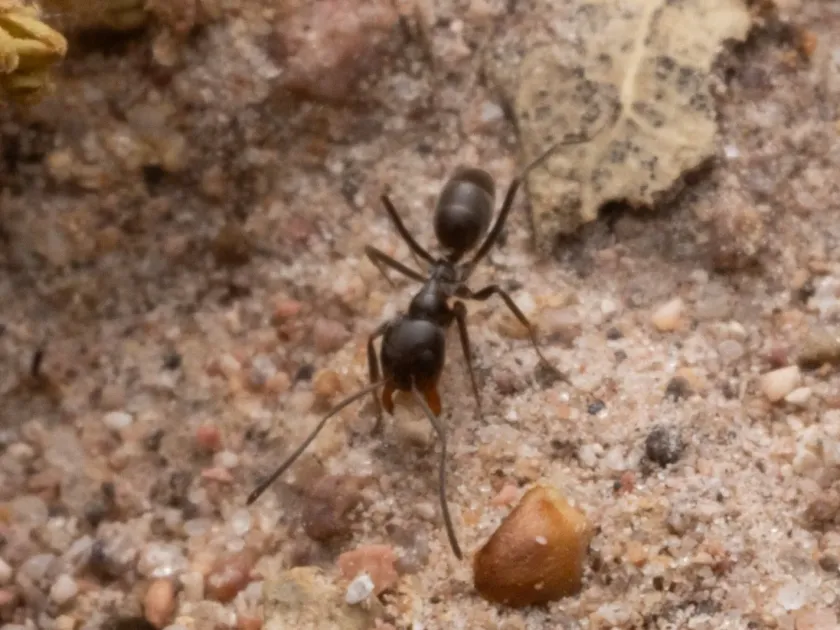
Description
How to identify
Conomyrma insana, commonly known as a type of pyramid ant or steppe nomadic ant, belongs to the Formicidae family. These ants are identified by their relatively fast movement and a distinct, small vertical projection on the epinotum (the rear part of the thorax).
They are generally dark brown to black in color and possess a matte appearance. Unlike many other species, they are highly aggressive when their nesting sites are disturbed and display very active foraging behavior.
The colony structure is organized around a queen that can produce a significant number of eggs throughout the season, leading to rapid expansion of the ant population in favorable environments.
Their nest entrances are easily recognized by small crater-like structures built from excavated soil particles, usually found in open, sunny areas of agricultural fields or gardens.
As social insects, their biology is deeply integrated into the local ecosystem, allowing them to outcompete other ant species for territory and food sources.
What it damages
The primary agricultural damage caused by Conomyrma insana is indirect, resulting from their mutualistic relationship with aphids, mealybugs, and scale insects.
The ants protect these sap-sucking pests from natural predators such as ladybugs and lacewings, enabling the pests to thrive and proliferate on various crop plants.
By protecting these insects, the ants contribute to severe plant stress, leaf deformation, and stunted growth caused by the aphids feeding on plant phloem.
Direct damage can occur when ants tunnel near the roots of seedlings or young transplants, causing root desiccation and loss of soil contact, which often leads to the death of young crops.
In addition to these issues, they can interfere with harvesting and orchard maintenance due to their aggressive behavior when humans handle the infested plants.
When it appears
Their activity begins in early spring as soon as ground temperatures rise sufficiently to trigger the awakening of the colony from winter hibernation.
The highest level of activity coincides with the budding and flowering phase of plants, which attracts large numbers of aphids, thereby drawing the ants into the canopy of fruit trees and shrubs.
During the peak of summer heat, these ants remain active in search of moisture, sometimes scavenging on ripe fruits that have slight damage or thin skin.
As autumn approaches and temperatures drop, the colony reduces surface activity and migrates deeper into the soil to ensure survival during the colder months.
Continuous monitoring during the peak growth season is essential, as the colony size can grow significantly if aphids are not controlled concurrently.
Signs of infestation
The most visible sign of an infestation is the presence of consistent ant trails leading from the ground directly up the stems or trunks of plants that are colonized by aphids.
- Crater-like soil mounds surrounding the base of plants.
- Sticky honeydew residue on foliage and stems.
- Curled, yellowing, or deformed new growth on crops.
- High presence of ants near aphid clusters on plants.
If you observe a lack of beneficial insect predators (like ladybeetles) despite a massive aphid presence, it is a strong indicator that ants are actively protecting the pests.
Frequent tunneling activity observed during weeding or soil cultivation confirms that a nest is established in the vicinity.
Control measures
Effective management of Conomyrma insana requires a two-pronged strategy: controlling the honeydew-producing pests and targeting the ant colony directly.
Applying sticky adhesive barriers to tree trunks is a highly effective mechanical control method that physically blocks access to the canopy, protecting plants from further aphid colonization.
The use of targeted bait stations containing slow-acting insecticides (such as borate or fipronil) is recommended to ensure the toxin is carried back to the nest, effectively eliminating the queen and colony.
Cultural practices, such as regular soil aeration and shallow tillage, disrupt the tunnels and micro-environments preferred by the ants, encouraging them to relocate.
Biological control using entomopathogenic fungi can also be employed to reduce the population density in a sustainable manner, minimizing the impact on non-target beneficial organisms.
Taxonomy
- Latin name
- Conomyrma insana
- Order
- Hymenoptera
- Family
- Formicidae
- EPPO code
- CONMIN
Discussion
No discussions yet — be the first.