
Conistra
Conistra
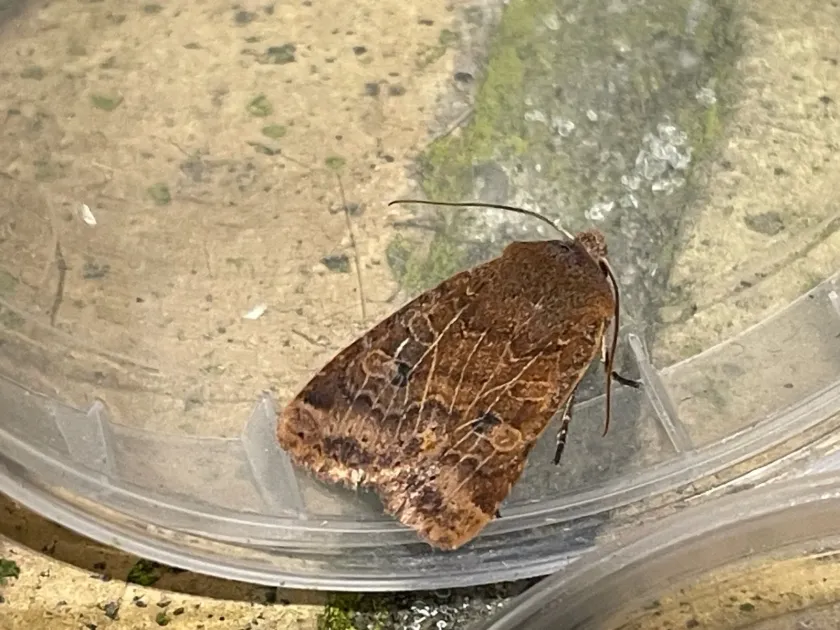
Description
How to identify
The genus Conistra belongs to the Noctuidae family, order Lepidoptera. These moths are medium-sized, typically having a wingspan of 30–35 mm, with coloration ranging from brown to ochre that perfectly mimics withered leaves.
The larvae, or caterpillars, are relatively robust and can grow up to 40 mm. Their coloration is adaptive, often shifting between shades of green and brown, allowing them to blend in seamlessly with the bark and buds of their host plants.
Unlike many other moth species, Conistra overwinter as adults. They seek shelter in leaf litter, cracks in the tree bark, or other protected areas, emerging during early spring thaw to mate and lay eggs.
The lifecycle of this pest is univoltine, meaning there is only one generation per year. Because they are nocturnal, they often escape notice during standard daytime garden inspections.
Their activity period is a key identification factor; they are among the few species that are active and potentially harmful during the late autumn and very early spring when temperatures are still quite low.
What it damages
Conistra moths are recognized as significant pests of various fruit trees, particularly those in the Rosaceae family. The larvae are the primary cause of damage, feeding on buds, young leaves, and flowers in early spring.
The main host plants include apple, pear, cherry, plum, and apricot trees. Heavy infestations can lead to substantial loss of fruit yield, as the larvae destroy the buds before they even have a chance to bloom.
Larval feeding involves hollowing out the buds, often consuming the reproductive structures within. A single caterpillar can destroy several buds as it moves through the canopy during its developmental stages.
Secondary damage occurs when larvae feed on emerging leaves, causing irregular holes and ragged edges, which stunts the overall growth of the tree and reduces its photosynthetic capacity.
The economic impact of this pest is most severe in years with slow, lingering spring weather, which extends the period that buds remain vulnerable to caterpillar grazing.
Signs of infestation
The most prominent sign of infestation is the appearance of hollowed-out or partially consumed buds in the early spring. These damaged buds often fail to develop further and may eventually dry out and drop.
At night, one can observe the larvae actively feeding on the tree canopy. During the day, they tend to remain hidden within rolled leaves or at the base of buds, making them difficult to locate without careful inspection.
The presence of frass (caterpillar excrement) on the bark or leaf surfaces beneath the feeding sites is a reliable indicator that larvae have been active in that specific area.
In cases of severe infestation, one might notice a general lack of bloom in certain parts of the tree, which corresponds to areas where the larvae have systematically destroyed the buds.
Using a flashlight to perform nighttime monitoring of the tree canopy is the most effective way to confirm the presence of Conistra larvae when suspect signs appear.
Control measures
Integrated pest management (IPM) for Conistra focuses on cultural practices such as removing leaf litter and debris from under the trees, which serves to eliminate the wintering sites for the adults.
Mechanical controls, including the use of sticky bands around the trunks of fruit trees, can effectively trap migrating larvae and prevent them from reaching the canopy buds.
Chemical control is most effective when applied at the green-tip or bud-burst stage of the tree. Broad-spectrum insecticides or specific growth regulators should be applied according to local agricultural guidelines.
Biological control methods, particularly the use of Bacillus thuringiensis (Bt) sprays, are recommended for younger larvae as they provide a selective way to manage the pest without harming beneficial insects.
- Regular orchard sanitation and removal of debris.
- Application of sticky trunk bands to block larval movement.
- Monitoring adult flight with light traps in the autumn.
- Targeted insecticide applications during critical bud development phases.
Taxonomy
- Latin name
- Conistra
- Order
- Lepidoptera (butterflies)
- Family
- Noctuidae
- EPPO code
- CONSSP
Discussion
No discussions yet — be the first.