
Comperiella lemniscata
Comperiella lemniscata
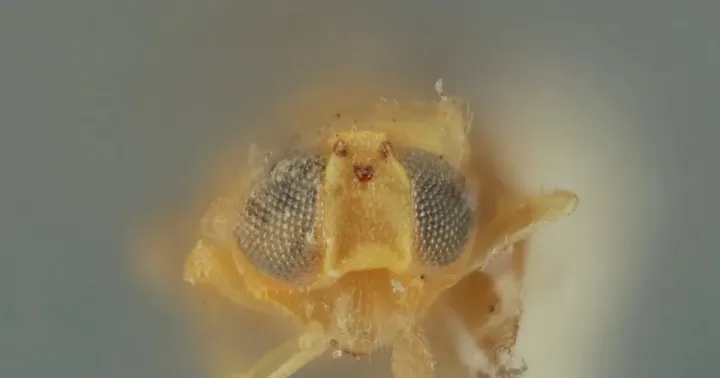
Description
How to identify
Comperiella lemniscata is a parasitoid wasp belonging to the order Hymenoptera and the family Encyrtidae. This species is highly regarded in agronomy for its specific ability to regulate populations of armored scale insects, which are major agricultural pests.
The adult wasp is very small, typically measuring between 1 and 1.5 mm in length. Its body is generally dark with a metallic sheen, allowing it to remain inconspicuous while searching for hosts on the leaves and bark of host plants.
The wings are clear and well-developed, allowing for efficient flight and navigation within dense tree canopies. Their antennae are geniculate (elbowed), which is an evolutionary adaptation for detecting the chemical signals released by host scale insects.
Larval stages are strictly endoparasitic. Once the female deposits an egg into the host, the larva consumes the scale insect from the inside, eventually killing the host before emerging as an adult through a small exit hole.
The developmental cycle of this wasp is perfectly synchronized with the phenology of its hosts. Depending on the ambient temperature and climate, multiple generations can occur annually, ensuring a consistent presence of the parasite in the field.
What it damages
This species is primarily associated with controlling armored scales, such as the California red scale, which affect citrus orchards and various ornamental plants. It acts as a natural enemy rather than a primary pest of the crop.
While the wasp itself does not damage the plants, its presence is a clear indicator of a scale infestation that the ecosystem is attempting to regulate. The economic importance of this insect lies in its role as a biological agent that prevents crop failure.
Scale insects, by contrast, cause significant direct damage by sucking sap from the foliage, twigs, and fruits. This leads to chlorosis, leaf drop, and in severe cases, the death of young shoots or entire branches.
The indirect impact of the scale insects also includes the secretion of honeydew, which promotes the growth of sooty mold, further reducing the photosynthetic capacity of the plants and lowering fruit marketability.
By effectively parasitizing the scale population, Comperiella lemniscata significantly reduces the need for synthetic pesticide applications, supporting more sustainable and cost-effective orchard management practices.
Signs of infestation
The most visible sign of successful parasitism by this species is the appearance of small, round exit holes on the dorsal side of the host scale insect's cover (test).
A reduction in the density of live scale populations on twigs and leaves over time is a positive indicator that biological control agents are actively working within the orchard.
Lack of new honeydew accumulation or reduced presence of sooty mold suggests that the scale insect population is being effectively managed by natural predators and parasitoids.
Laboratory examination of scale samples under a microscope is required to confirm the presence of larvae or pupae inside the host's body, providing a definitive assessment of the parasitism rate.
Farmers may observe clusters of shells that appear "hollowed out" or dried up, which is a classic field sign that the parasitoids have completed their cycle and successfully emerged.
Control measures
Effective management focuses on Integrated Pest Management (IPM) strategies that prioritize the preservation of existing populations of Comperiella lemniscata. Avoiding broad-spectrum pesticides is essential.
When chemical intervention is necessary, the use of highly selective insecticides or horticultural oils is recommended. These substances target the scale insects while having a minimal impact on the survival of the parasitoid wasp.
Biological augmentation programs involve releasing laboratory-reared wasps into areas where scale populations have exceeded economic thresholds. This practice is common in sustainable citrus production.
Orchard hygiene, including the removal of heavily infested, dying branches, helps to reduce the initial pest pressure while leaving enough host material for the wasp population to persist.
- Maintain low-toxicity pesticide programs.
- Conduct regular scouting for parasitism rates.
- Prioritize biological control in IPM plans.
- Use selective horticultural oils for suppression.
- Promote biodiversity around orchard borders.
Taxonomy
- Latin name
- Comperiella lemniscata
- Order
- Hymenoptera
- Family
- Encyrtidae
- EPPO code
- COMRLE
Discussion
No discussions yet — be the first.