
Comperiella
Comperiella bifasciata
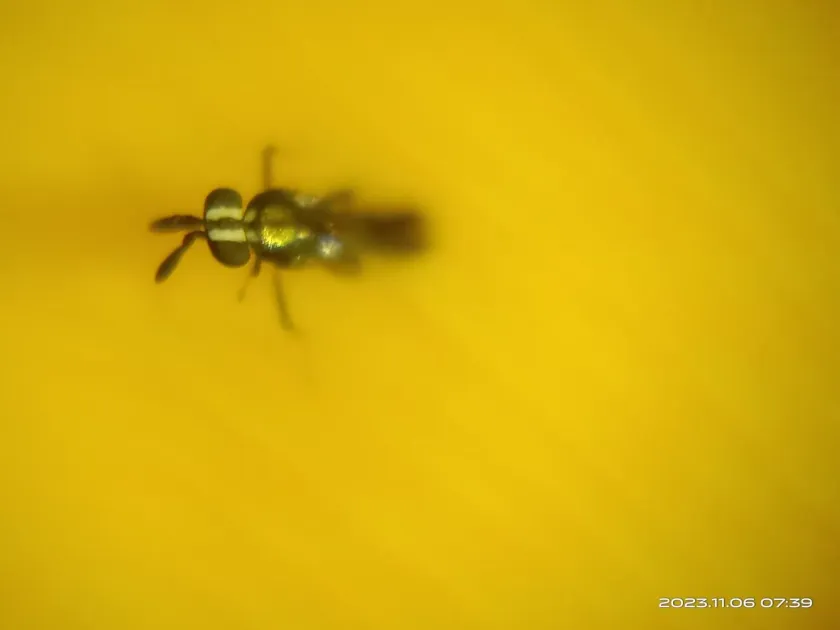
Description
How to identify
Comperiella bifasciata is a tiny parasitic wasp belonging to the family Encyrtidae, widely recognized for its role in biological control programs.
The adult wasp measures approximately 1 to 1.5 mm in length and is characterized by a dark, metallic-colored body.
The name bifasciata refers to the two distinct dark, transverse bands found on the forewings, which serve as a primary identification mark for the species.
As a specialized parasitoid, it is strictly dependent on the presence of suitable host insects to complete its life cycle.
Despite being a parasitoid, it is highly valued by agronomists and fruit growers as a powerful biological agent for suppressing scale insect infestations.
What it damages
Comperiella bifasciata specializes in parasitizing scale insects, specifically those within the family Diaspididae, including the California red scale.
The main host cultures include various citrus fruits such as oranges, lemons, and grapefruits, which are highly susceptible to scale damage.
The parasitoid is also found on various ornamental plants where scale insects form dense, localized colonies suitable for wasp development.
The wasp itself does not feed on plant tissue; its impact on the plant is exclusively positive, as it kills the pests that drain the plant's sap.
Therefore, any economic impact associated with Comperiella is indirect, resulting from the reduction of pest pressure on the host trees.
When it appears
The activity of Comperiella bifasciata is highly dependent on ambient temperatures and the developmental stages of the scale hosts.
In subtropical climates, the wasp can complete several generations throughout a single growing season.
The peak flight and parasitism periods typically align with the presence of second-instar scale nymphs on the plant surface.
The development time from egg to adult is highly temperature-sensitive, generally ranging between 30 and 50 days in field conditions.
The most favorable environment for these wasps includes moderate humidity and temperatures ranging from 20 to 28 degrees Celsius.
Signs of infestation
The most visible indicator of Comperiella activity is the presence of small, perfectly circular exit holes on the scale covers.
These holes are created by the adult wasp as it emerges from the body of the host scale after its larval development is complete.
A high density of these empty shells on branches and leaves confirms that the wasp has successfully parasitized the scale population.
Observing a reduction in the vigor and total number of live scale insects is a primary indicator of successful biological regulation.
Microscopic analysis of infested branches can reveal the larvae or pupae of the wasp inside the scale body, verifying its establishment.
Control measures
The primary control strategy is to foster an environment conducive to the natural survival and proliferation of the wasp population.
Avoiding the application of broad-spectrum contact insecticides during the wasp's peak activity periods is crucial for preservation.
Integrated Pest Management (IPM) strategies should prioritize the use of selective horticultural oils or insect growth regulators.
Maintaining biological diversity around orchards can provide essential nectar sources for adult wasps, increasing their longevity and fertility.
- Implement selective spraying to minimize harm to beneficial insects.
- Monitor scale populations to ensure that intervention is only used when thresholds are exceeded.
- Preserve natural areas that support the survival of local parasitoid populations.
Taxonomy
- Latin name
- Comperiella bifasciata
- Order
- Hymenoptera
- Family
- Encyrtidae
- EPPO code
- COMRBI
Discussion
No discussions yet — be the first.