
Compariella scale
Compariella bifasciata
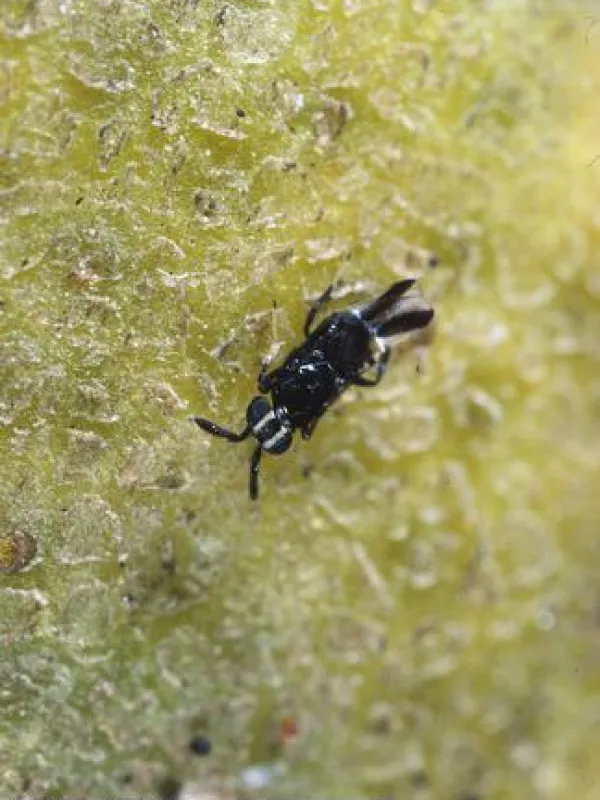
Description
How to identify
Compariella bifasciata is a scale insect belonging to the family Diaspididae. These pests are characterized by a hard, waxy covering, known as a scale, which protects their soft bodies from environmental threats and pesticides.
Adult females are typically oval-shaped, while males are more slender. They are quite small, usually measuring between 1.5 and 2 mm in length, making them difficult to spot until the infestation is well-established.
The life cycle involves sexual reproduction, where the female lays eggs beneath her scale cover. This shield serves as a protective nursery for the eggs and early-stage larvae.
The first-instar larvae, often referred to as "crawlers," are the only mobile life stage. During this phase, they actively move to find a suitable feeding site on the host plant.
Once settled, the insects insert their piercing-sucking mouthparts into the plant tissue, becoming sessile and feeding on the sap for the rest of their lives.
What it damages
This species primarily attacks citrus trees, including lemons, oranges, and mandarins. They feed by extracting nutrients from leaves, young twigs, and fruit, significantly weakening the plant.
Beyond citrus, Compariella bifasciata can infest various subtropical and evergreen ornamental plants, often causing substantial damage in greenhouses or garden settings.
Heavy infestations result in leaf yellowing, chlorosis, and, in severe cases, the premature drop of leaves and the dieback of terminal branches.
Continuous sap loss hinders the plant's ability to photosynthesize, which directly impacts fruit set, growth rate, and the overall commercial value of the crop.
Furthermore, the excretion of honeydew provides a substrate for sooty mold growth, which covers the foliage in a black film and further blocks sunlight from reaching the leaves.
Signs of infestation
Early detection is difficult, but the first signs include the appearance of tiny, brownish, slightly raised bumps on the bark of twigs or the undersides of leaves.
Yellow or pale spots on the leaves at the attachment point of the scale indicate where the insect has been feeding for an extended period.
The presence of a sticky, shiny substance on the foliage, known as honeydew, is a classic indication of an active scale infestation nearby.
Distorted growth, such as curled leaves or stunted shoots, often points to a high population density that is actively draining the tree's energy.
- Small brown scales on twigs
- Sticky honeydew residue on leaves
- Yellowing or spotted leaf tissue
- Premature leaf drop
Control measures
Effective management requires a multi-faceted approach, combining cultural practices with targeted chemical treatments to overcome the protection of the waxy scale.
Pruning out and disposing of heavily infested branches is an essential cultural practice that reduces the total pest population and improves airflow through the canopy.
Horticultural oils are highly recommended as they physically smother the insects by disrupting the waxy covering and blocking their spiracles, leading to suffocation.
Systemic insecticides, particularly those containing neonicotinoids, can be used to treat the plant systemically, ensuring the pest is exposed to the toxin while feeding on the sap.
Biological control methods, including the introduction of natural parasitic wasps or predatory beetles, can provide long-term regulation of scale populations in greenhouse environments.
Taxonomy
- Latin name
- Compariella bifasciata
- Order
- Hymenoptera
- Family
- Encyrtidae
- EPPO code
- CMPLBI
Discussion
No discussions yet — be the first.