
Cnestus pseudosolidus
Cnestus pseudosolidus
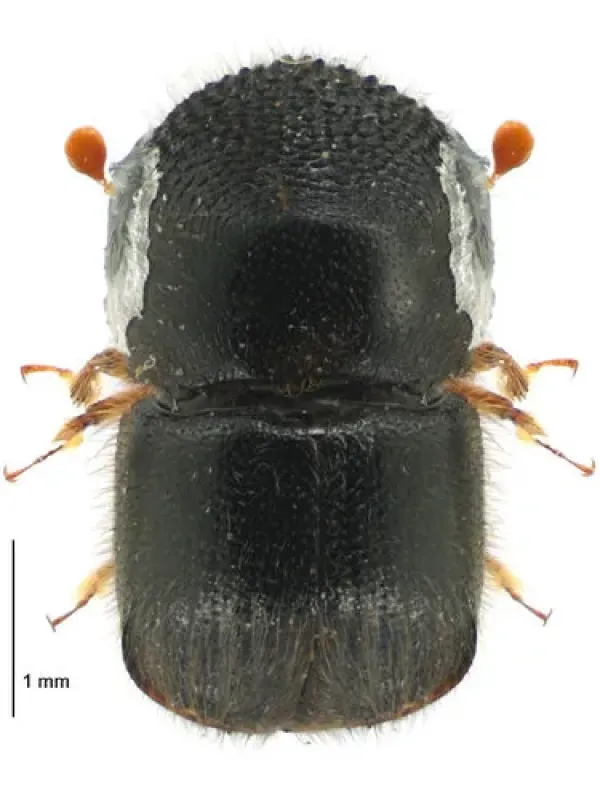
Description
How to identify
Cnestus pseudosolidus is a beetle belonging to the Curculionidae family, specifically the Scolytinae subfamily, commonly known as bark and ambrosia beetles.
Adult beetles are relatively small, typically cylindrical, and possess a dark-colored exoskeleton which provides camouflage against the dark wood background.
Identification at the species level is complex and often requires detailed examination of the pronotal and elytral structures under high magnification.
These beetles share a symbiotic relationship with specific fungi, which they carry in specialized anatomical structures to introduce into the host trees they attack.
The larval stage consists of legless, C-shaped grubs that are cream-colored and remain entirely hidden within the woody tissue until they complete their development.
What it damages
This beetle is recognized as a significant polyphagous pest, capable of attacking a wide variety of deciduous and fruit-bearing tree species in its native range.
The pest poses a severe threat to commercial orchards and tree nurseries, as it causes structural damage by tunneling deep into the trunk and branches of healthy and stressed trees.
By boring into the vascular system of the host, the beetle disrupts the flow of water and nutrients, leading to branch dieback and general decline of the tree health.
The presence of symbiotic fungi brought into the wood by the beetle leads to secondary infections, which significantly worsen the overall impact of the infestation on the plant.
In severe cases, the cumulative effect of tunneling and associated fungal growth can result in the rapid death of young or weakened saplings.
Signs of infestation
The most visible indicator of an infestation is the presence of tiny, circular entrance holes on the bark, often accompanied by fine, dust-like wood frass.
As the galleries are established, leaves on affected branches may show signs of yellowing or wilting, which is an early symptom of compromised xylem transport.
When the bark is carefully removed, internal galleries become visible, typically appearing as branching tunnels that penetrate deep into the sapwood or heartwood.
Trees may exhibit localized necrotic spots or oozing of sap, a defensive reaction intended to trap the invading beetles or contain the fungal pathogens.
Persistent presence of the pest is often indicated by a decline in the tree's vigor over several seasons if the infestation is not addressed promptly.
Control measures
Cultural practices, such as maintaining optimal tree health and removing dead or dying limbs, are the first line of defense against this wood-boring pest.
Sanitation is critical; all infested wood should be removed and destroyed by burning or chipping to eliminate potential breeding sites within the orchard area.
Monitoring using pheromone-based or ethanol-based lures is highly recommended to detect the arrival of the beetles and time the application of insecticides effectively.
Systemic insecticides may be used as a targeted treatment in areas with high pest pressure, focusing on protecting the main trunk and primary branches during the flight period.
- Regular inspection of bark for entry holes and frass deposits
- Prompt disposal of pruned wood to prevent beetle population buildup
- Application of insecticide sprays during the adult flight and colonization phase
Discussion
No discussions yet — be the first.