
Clusia flava
Clusia flava
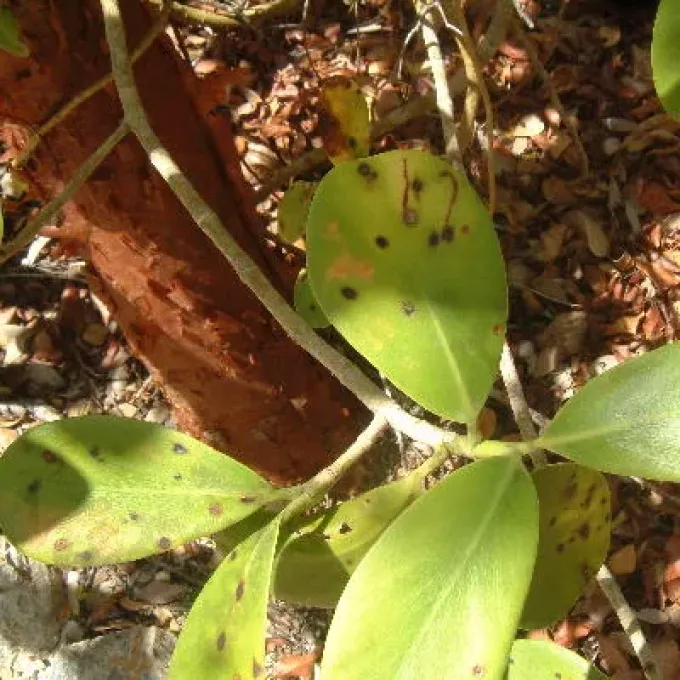
Description
How to identify
Clusia flava is a botanical species belonging to the Clusiaceae family that acts as an invasive pest in agricultural and tropical landscaping contexts.
The plant is characterized by its thick, leathery leaves and the ability to grow as a hemiepiphyte, utilizing other trees as structural supports.
It possesses a complex root system that can develop into a network capable of tightly wrapping around the trunk and branches of a host plant.
The species produces a sticky, milky latex when stems or leaves are damaged, which serves as a defensive mechanism against potential physical removal.
Morphologically, it resembles other Clusia species but is distinguished by its specific foliage shape and aggressive colonization behavior in non-native environments.
What it damages
The primary damage caused by Clusia flava is the strangulation of the host tree, which restricts the flow of nutrients and water throughout the vascular system.
It competes aggressively for sunlight by forming a dense canopy above the host tree, effectively stunting the growth and development of the main crop.
Root encroachment by the pest can physically damage the bark of the host, creating pathways for secondary pathogens and wood-rotting fungi to enter.
In productive orchards, the presence of this species leads to a measurable decrease in fruit yield and can eventually result in the death of the host tree.
The invasive growth can also disrupt the physical structure of an orchard, making harvesting and routine maintenance tasks significantly more difficult.
When it appears
Clusia flava exhibits rapid growth cycles during seasons of high humidity and rainfall, which facilitate the germination of seeds deposited by birds.
The plant can maintain its biological activity year-round in tropical climates, making it a constant threat to managed horticultural systems.
Flowering and seed production typically occur during warmer months, which triggers the next cycle of dispersal across agricultural lands.
During dry seasons, the established specimens become more resilient, making their removal harder compared to young seedlings during the rainy period.
Continuous monitoring is required because seed dispersal can occur at any time through avian vectors visiting the plantation from surrounding areas.
Signs of infestation
Early symptoms of an infestation include the appearance of non-native glossy leaves appearing in the forks of tree branches where seeds may have lodged.
Observation of small, light-colored roots creeping down the bark of a host tree is a definitive sign of early-stage colonization by the pest.
Progressive canopy thinning or the yellowing of leaves on the host tree often signals that the pest is depriving the tree of essential resources.
The discovery of sticky resinous deposits on the bark or limbs of orchard trees is frequently associated with the presence of active Clusia specimens.
Structural deformities or indentations in the bark of the host tree are indicative of long-term pressure applied by the roots of the invasive plant.
Control measures
Manual removal of seedlings is the most effective and eco-friendly control measure, provided it is performed before the root system becomes entrenched.
Pruning branches that show signs of significant infestation is necessary to prevent the plant from developing a larger and more damaging root network.
Maintaining proper spacing and tree density in orchards helps to reduce the attractiveness of host trees to seed-dispersing wildlife.
In high-density infestations, specific systemic herbicides applied directly to the cut surfaces of the stems can help eliminate the pest effectively.
Regular visual inspections of the upper canopy are critical to ensure early detection, as the pest often establishes itself in the hardest-to-reach areas.
Taxonomy
- Latin name
- Clusia flava
- Order
- Diptera (flies)
- Family
- Clusiidae
- EPPO code
- CLUSFL
Discussion
No discussions yet — be the first.