
Clubiona trivialis
Clubiona trivialis
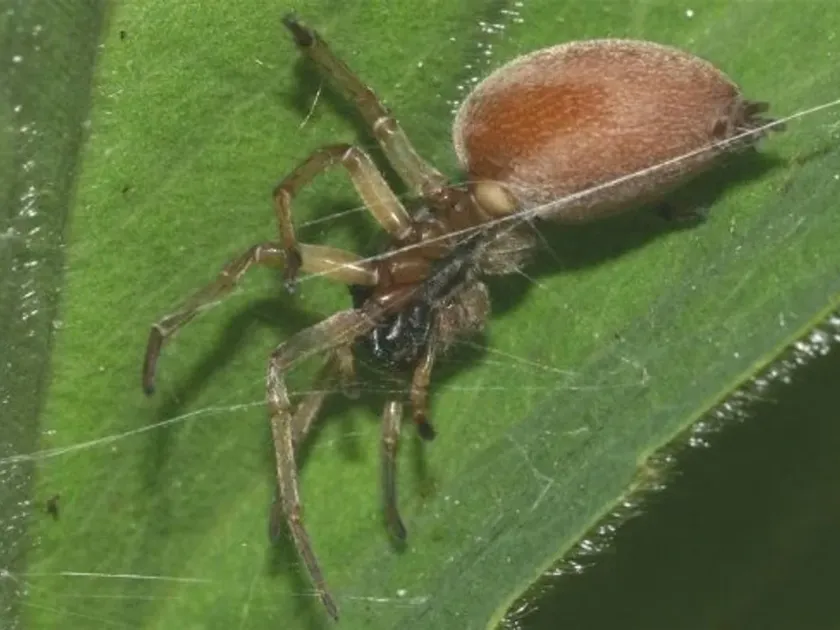
Description
How to identify
Clubiona trivialis belongs to the Clubionidae family, commonly known as sac spiders. Unlike many other spiders, they do not build traditional webs for hunting.
Adult specimens typically range from 5 to 9 mm in length. Their coloration is usually brownish or reddish-yellow, allowing them to blend perfectly with tree bark and dry foliage.
A key identifying feature is the presence of strong, forward-projecting chelicerae, which they use to subdue small insect prey during the night.
Females are known for building protective silk retreats inside folded leaves, where they guard their egg sacs throughout the developmental period.
The life cycle involves several molting stages, with adults typically overwintering in sheltered locations such as crevices or beneath bark.
What it damages
While Clubiona trivialis is primarily a predator that feeds on small insects, it can cause secondary damage to agricultural and horticultural crops.
The primary issue arises when spiders fold and tie leaves together with silk, which can distort the growth of young shoots and tender foliage.
Such activity is frequently observed in fruit orchards, berry plantations, and ornamental nurseries where the presence of silk disrupts aesthetic quality.
In dense plantings, these leaf-fold retreats can accumulate dust and moisture, inadvertently creating niches for fungal growth and other pathogens.
Although they rarely cause direct physiological damage to the host plant, their presence can interfere with commercial quality and standard nursery inspections.
When it appears
The activity of Clubiona trivialis typically commences in early spring as temperatures rise, signaling the transition from overwintering to active hunting.
Population peaks are generally observed in mid-summer, correlating with the height of the vegetation period and the availability of insect prey.
As autumn approaches and temperatures drop, spiders begin seeking protected overwintering sites, including leaf litter, mulch, and tree bark crevices.
They are primarily nocturnal hunters, becoming most active in the evening hours when they emerge from their silk retreats to forage.
Seasonal distribution is heavily dependent on microclimate conditions, with warm and humid environments promoting higher population density.
Signs of infestation
The most visible sign of infestation is the presence of leaves that have been folded or rolled and tightly secured with silk threads.
Upon closer inspection, one may find silk-lined retreats that house the spider or its egg sac, often accompanied by faint light spots on the leaf surface.
In severe cases, a cluster of such leaf folds can be found across the canopy, signaling a high level of activity within the affected plant stand.
Gardeners may observe spiders moving along stems or branches during maintenance tasks, particularly in shaded or dense canopy areas.
The accumulation of webbing, though not a hunting net, often indicates areas where these spiders have established their permanent retreats.
Control measures
Management of Clubiona trivialis rarely requires aggressive chemical intervention, as these spiders often serve as beneficial predators of other pests.
If physical damage becomes unacceptable, mechanical removal of the leaf retreats is the most effective and eco-friendly control method.
Cultural practices, such as removing debris and cleaning tree trunks during the dormant season, significantly reduce potential overwintering habitats.
If chemical treatment is deemed necessary, focus on selective insecticides rather than broad-spectrum ones to preserve other beneficial insect populations.
Integrated Pest Management (IPM) strategies should prioritize habitat modification over chemical spraying to maintain the ecological balance of the field.
Taxonomy
- Latin name
- Clubiona trivialis
- Family
- Clubionidae
- EPPO code
- CLUBTR
Discussion
No discussions yet — be the first.