
Fritillary
Clossiana
Description
How to identify
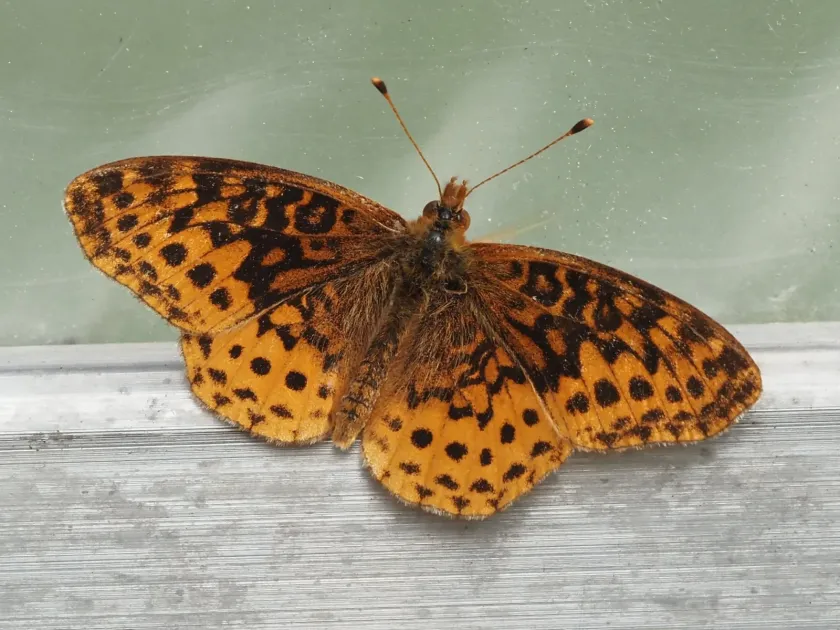
The genus Clossiana belongs to the Nymphalidae family and includes butterflies commonly known as fritillaries. Adult individuals have a characteristic wing pattern featuring a reddish-brown background with intricate black spots and lines.
On the underside of the hind wings, most species of the Clossiana genus exhibit distinctive pearly spots, which is the origin of their common name. The butterfly bodies are densely covered in hair, an adaptation that helps them thrive in cooler climates.
Fritillary caterpillars have a specific appearance: they are covered in numerous branched spines that act as a defense mechanism against predators. Larvae are often dark-colored, sometimes appearing almost black, with occasional light longitudinal stripes along their sides.
To accurately identify the species, it is essential to pay attention to the shape and localization of the wing spots, as the genus Clossiana comprises many closely related taxa. The adult size is generally medium, with a wingspan ranging from 35 to 50 millimeters.
The pupae of these insects have a unique shape and typically hang upside down from the host plants. They are often adorned with metallic, shiny spots that camouflage them effectively among vegetation and morning dew drops.
What it damages
The primary damage is caused by the larvae (caterpillars), which feed on the vegetative parts of plants. Unlike many other pests, fritillaries often specialize in wild flora but can migrate to cultivated crops if necessary.
They are particularly attracted to plants from the families Violaceae, Rosaceae, and certain grasses. If an orchard or garden is located near natural meadows, the risk of infestation in cultivated plants increases significantly.
Caterpillars are capable of completely devouring the leaf blade, leaving only the coarse veins behind, which leads to a sharp decline in the plant's photosynthetic activity. This negatively affects growth rates and overall crop yields.
Under high population density, caterpillars can damage not only the leaves but also young shoots and flower buds, leading to plant deformation. Young seedlings are particularly vulnerable during the period of active sap flow.
Damaged plants become more susceptible to secondary infections, such as fungal diseases and rot. A weakened immune system in the plant requires additional resources for recovery and the application of chemical treatments.
When it appears
The developmental cycle of fritillaries is usually univoltine (one generation per year), although in northern regions or unfavorable years, it may be extended. Adult flight is observed from late spring through mid-summer, depending on regional temperatures.
These insects most commonly overwinter at the caterpillar stage (early or middle instar), hiding in leaf litter or at the base of plant stems. In spring, as temperatures rise, the caterpillars resume active feeding.
The mass emergence of caterpillars in fields coincides with the active vegetation period of cultivated crops. This is the time when they are most voracious and pose the greatest threat to agricultural ecosystems.
Pupation occurs in late spring or early summer, and the pupal stage typically lasts for two to three weeks. This period is critical for implementing preventive measures to limit the pest population.
A second generation, if it occurs, is usually less numerous, but its impact on the condition of late-season crops still requires monitoring by agronomists.
Signs of infestation
The first sign of infestation is the presence of eaten areas on leaf edges or "skeletonization" of the foliage. Finding caterpillars with characteristic spines on the plant stems is direct evidence of the pest's presence.
On the surface of the leaves and on the soil beneath the damaged plant, one can often find caterpillar frass, which appears as small dark granules. This is an important marker for early detection of infestation hotspots.
Stunted growth and curling of young leaves are often consequences of damage to the growth point or adjacent tissues. If a plant appears depressed without obvious signs of disease, the undersides of the leaves should be inspected.
Activity can often be spotted in the evening or early morning, as caterpillars tend to hide in the shade or near the base of the stem during hot hours. Visual inspection during these cooler times is most effective.
The presence of butterflies in the field during their flight period serves as an indicator of future larval emergence. A mass flight of adults above the field is a signal to intensify monitoring of crop conditions.
Control measures
The main protection method is the implementation of proper agronomic practices, including weed control, as weeds serve as primary food sources for caterpillars. Maintaining a clean field significantly reduces the risk of pest migration.
The use of biological insecticides based on entomopathogenic fungi or bacteria allows for effective control of young larvae without causing harm to the beneficial entomofauna of the area.
The application of chemical agents (stomach or contact insecticides) is justified only when the economic threshold of damage is reached. It is recommended to apply treatments during the peak activity periods of the caterpillars.
In smaller operations, manual collection of caterpillars and mechanical destruction of nests is possible if the infestation is localized. This helps prevent the spread of the pest without the use of toxic chemicals.
Attracting natural enemies, such as parasitic wasps and predatory bugs, plays an important role in long-term control. Creating favorable habitats for these beneficial insects on field borders significantly reduces the need for pesticide applications.
Discussion
No discussions yet — be the first.