
Spruce cypress aphid
Cinaropsis fornacula
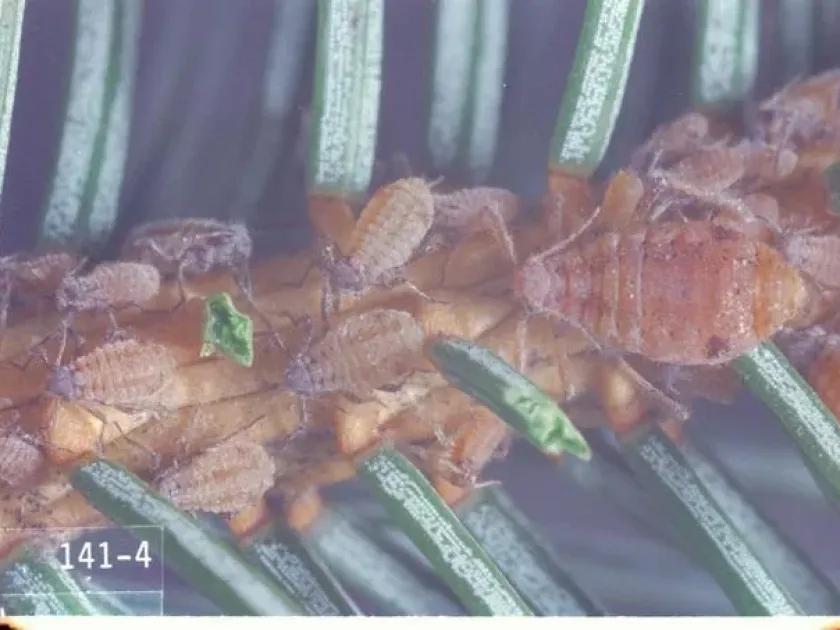
Description
How to identify
The spruce cypress aphid (lat. Cinaropsis fornacula) is a specialized insect pest belonging to the family Aphididae, order Hemiptera, known for its impact on various coniferous species.
Adult aphids are relatively small and typically exhibit a brown or greyish coloration, which provides excellent camouflage against the bark and needles of host plants.
Their life cycle includes both wingless and winged forms; the latter are crucial for the migration of the population and the infestation of new host plants nearby.
These insects prefer microclimates found within the dense inner parts of the crown, where they are protected from direct sun and excessive airflow, favoring rapid colony growth.
The overwintering stage consists of eggs laid by females in the crevices of bark or near dormant buds, ensuring the species survives cold winters to reappear in spring.
What it damages
The primary host plants affected by this pest include species of spruce and certain members of the cypress family, where they feed by sucking sap from needles and young twigs.
Infestation causes significant physiological stress to the tree, as the loss of sap disrupts photosynthesis and weakens the overall vitality of the plant.
The aphids secrete copious amounts of honeydew, which serves as a substrate for the growth of sooty mold, blocking light from the needle surfaces.
Heavy infestations often lead to premature needle drop, causing the tree to look thin and unkempt, which is particularly detrimental to ornamental landscapes.
Prolonged damage makes trees susceptible to secondary infections and opportunistic pathogens, potentially resulting in localized dieback or eventual tree mortality.
When it appears
Activity typically begins in early spring, as temperatures rise, triggering the emergence of nymphs from overwintering eggs.
Multiple generations occur throughout the growing season, allowing the aphid population to expand rapidly during favorable weather conditions.
Peak population densities are usually observed from late spring through mid-summer, when the plants produce fresh growth that is highly attractive to the aphids.
As autumn approaches and temperatures drop, the aphids begin laying eggs, preparing the colony for the winter dormancy period.
Environmental factors, especially mild winters and cool, humid springs, significantly contribute to the severity of aphid outbreaks in subsequent months.
Signs of infestation
The earliest symptom of infestation is usually the yellowing or browning of needles, which starts deep within the crown and slowly spreads outwards.
The presence of a sticky honeydew coating on needles and branches is a definitive indicator of an active aphid colony feeding on the tree.
Black sooty mold growth on the foliage is a secondary sign, confirming that the aphids have been feeding in the area for a significant amount of time.
Ant activity is often observed on infested trees, as ants are frequently attracted to the honeydew and will defend the aphid colonies from predators.
- Premature yellowing and needle drop
- Sticky honeydew residues on foliage
- Development of black sooty mold
- Increased ant traffic on branches
- Reduced vigor of young growth
Control measures
Effective management requires the application of systemic insecticides, which are absorbed by the plant and provide residual control against sap-sucking pests.
Early intervention in the spring, coinciding with the hatch of the first generation of nymphs, is critical to prevent the population from reaching destructive levels.
When spraying, it is essential to ensure thorough coverage of the entire crown, particularly focusing on the inner needles where colonies are frequently hidden.
In environmentally sensitive areas, biological controls or horticultural oils can be utilized, though they may require more frequent applications to achieve results.
Maintaining tree health through proper irrigation and balanced fertilization helps the host plant withstand aphid pressure and recover faster from damage.
Discussion
No discussions yet — be the first.