
Cypress aphid
Cinara tujafilina
Description
How to identify
The Cypress aphid (Cinara tujafilina) is a small sap-sucking insect belonging to the family Aphididae. It is a common pest of ornamental conifers, particularly in temperate climates.
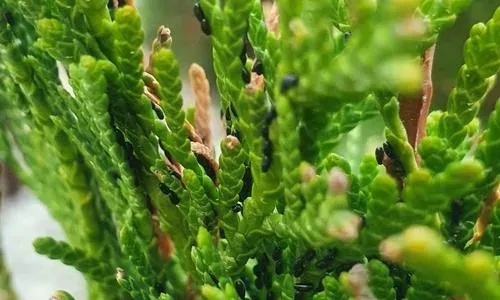
Adults are typically 2–3 mm long, with a dark brown to blackish body. They are often covered in a fine, powdery wax layer, which provides camouflage against the dark bark.
This species is known for its rapid parthenogenetic reproduction. This allows a single female to establish a large colony very quickly without the need for mating.
They are colonial insects, usually found clustered on young twigs and the underside of needles. Their dark appearance makes them difficult to spot until the population is large.
Overwintering occurs in the egg stage. Eggs are laid in rows on the needles and stems, where they remain dormant throughout the winter until spring temperatures rise.
What it damages
The primary hosts of Cinara tujafilina are plants in the Cupressaceae family. Arborvitae (Thuja species) are the most frequent targets for infestations.
Other host plants include various species of Juniper (Juniperus) and occasionally Cypress (Cupressus). The pest is particularly damaging to young or stressed trees.
By piercing the bark and needles to extract phloem sap, these aphids remove vital nutrients from the host plant, weakening its growth and overall physiological state.
Infested areas exhibit yellowing, browning, and eventually needle drop. Continuous sap extraction leads to twig deformation and, in severe cases, the death of young branches.
Heavy aphid infestations weaken the tree's immune system, making it more susceptible to secondary attacks from bark beetles and fungal pathogens.
When it appears
The activity cycle typically begins in early spring as soon as buds start to swell. This corresponds with the hatching of nymphs from the overwintering eggs.
Peak populations are generally recorded in late spring and early summer, when environmental conditions are optimal for aphid development and reproduction.
High summer temperatures can slow down reproduction, but if moisture levels are adequate, the aphids may persist throughout the entire growing season.
As autumn approaches, the aphids produce sexual generations to lay eggs for the winter season. These eggs are extremely resilient to cold weather.
Monitoring should be conducted consistently throughout the year, with a focus on early detection during the spring flush of new growth.
Signs of infestation
The most noticeable sign of a Cypress aphid infestation is the presence of honeydew, a sticky substance secreted by the aphids that coats the foliage and surrounding surfaces.
Sooty mold, a black fungal growth, thrives on the honeydew deposits. Its presence is a clear indicator that a large aphid colony is likely feeding nearby.
Ant activity is another strong indicator. Ants are attracted to the honeydew and will often protect the aphid colonies from predators, making the infestation harder to manage.
Symptoms also include the loss of the tree's natural luster, with needles turning a dull yellow and then brown as the tree dehydrates from the loss of sap.
- Sticky honeydew patches on needles and branches.
- Presence of black sooty mold on foliage.
- Visible colonies of dark aphids on young stems.
- Increased ant activity around the plant.
- Branch dieback and needle yellowing.
Control measures
Chemical control is highly effective when using systemic insecticides, such as those containing acetamiprid or thiamethoxam, which are absorbed into the plant's vascular system.
It is recommended to apply treatments when the first signs of aphids appear. Repeated applications may be necessary to target nymphs that emerge from late-hatching eggs.
Encouraging biological control agents, such as ladybird beetles (Coccinellidae) and lacewings, can help keep aphid populations below the economic damage threshold.
Adequate irrigation and proper fertilization are essential cultural practices to prevent trees from becoming stressed and thus more susceptible to pests.
For minor infestations, high-pressure water sprays combined with horticultural soaps can physically remove the aphids and clear the honeydew from the needles.
Discussion
No discussions yet — be the first.