
Maize leafhopper
Cicadulina zeae
Description
How to identify
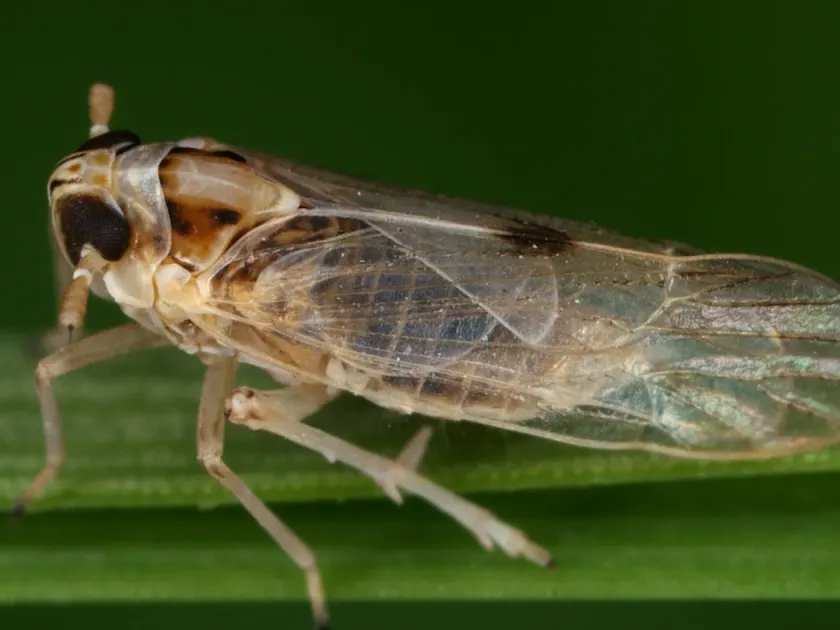
The Maize leafhopper (Cicadulina zeae) is a small insect belonging to the family Cicadellidae. Adult leafhoppers typically measure between 3 to 4 millimeters in length and are characterized by their pale yellow to greenish-yellow coloration with distinct dark spots on the vertex and pronotum.
Their bodies are slender and tapered towards the rear, which allows them to jump and fly with agility. They possess wings with visible venation, facilitating efficient movement between host plants across the field.
The nymphal stages resemble the adults in appearance but lack fully developed wings and are generally smaller in size. Nymphs often reside in the whorls or leaf sheaths of the corn plant, hiding from environmental stresses.
Monitoring these pests is challenging due to their cryptic nature. Agronomists often rely on the use of yellow sticky traps placed within the crop canopy to detect their presence early in the season.
Identification is crucial, as miscalculating the population density can lead to inadequate application of protective measures, particularly during the critical early stages of crop growth.
What it damages
The primary host for this pest is maize (corn), though it is also known to infest various other grasses, including sorghum and wild cereal species. It acts as a phloem-feeding pest, causing direct damage through sap extraction.
Direct damage occurs as both adults and nymphs pierce plant tissues to feed. While minor infestations may not cause significant mechanical yield loss, the cumulative impact of heavy feeding can reduce plant vigor.
The most severe impact of this pest is its role as a vector for various plant pathogens. Cicadulina zeae is known for transmitting viruses that cause stunting and leaf mosaic symptoms in corn plants.
Once infected with a virus, a corn plant experiences disrupted nutrient transport and reduced photosynthetic efficiency. This leads to stunted growth, leaf chlorosis, and, in severe cases, the complete failure of grain production.
Fields infested with the Maize leafhopper often exhibit uneven growth patterns, making it difficult for the crop to reach its full genetic yield potential.
When it appears
The activity of the Maize leafhopper is highly dependent on temperature and seasonal weather patterns. Adults usually emerge from overwintering sites during the first warm days of spring, seeking out young green vegetation.
In temperate climates, the pest can complete multiple generations within a single growing season. The rate of development is heavily influenced by the accumulation of heat units, which determines how quickly the population multiplies.
The peak of the infestation usually coincides with the vegetative development stages of maize. When corn plants are young, they are highly attractive to leafhoppers, which migrate from nearby grasses and weeds.
During the summer months, favorable weather conditions can lead to rapid population growth. However, when the maize crop begins to mature and dry down, leafhoppers tend to migrate back to more succulent host plants.
As the season approaches winter, the insects seek shelter in crop residues, perennial grasses, or soil debris to survive the cold, dormant period until the next planting season.
Signs of infestation
Early symptoms of leafhopper infestation include small, whitish, or yellow stippling marks on the leaves. These result from the insect's stylets piercing the leaf epidermis to consume the sap.
When the leafhopper introduces viruses into the plant, systemic symptoms appear. These include mosaic-like yellow striping on leaves, which often runs parallel to the leaf veins, and significant overall plant stunting.
Infected plants may exhibit internode shortening, leading to a bushier, stunted appearance. Some plants might also show excessive tillering at the base, which is a common stress reaction associated with viral infections.
The accumulation of honeydew secreted by the leafhoppers can lead to the growth of sooty mold, which appears as black, powdery patches on the leaves and further inhibits the plant's ability to undergo photosynthesis.
A quick test for the presence of the pest is to disturb the maize plant; if a swarm of small, pale insects suddenly disperses into the air, it indicates a high level of infestation that requires immediate attention.
Control measures
Integrated Pest Management (IPM) for the Maize leafhopper focuses on minimizing the contact between the vector and the crop. Seed treatments with systemic insecticides are effective for protecting corn during the early seedling stages.
Cultural practices are essential, including the removal of weeds around the field margins. Weeds serve as alternative hosts and reservoirs for both the leafhoppers and the viruses they transmit.
Field sanitation is a vital component of control. Removing and destroying crop residues after harvest helps reduce the population that survives until the following spring.
In cases of high infestation, foliar applications of insecticides, specifically neonicotinoids or other systemic groups, are recommended during the early development stages of the corn crop to prevent virus transmission.
- Utilizing seed-applied systemic insecticides for early-season protection.
- Implementing crop rotation to disrupt the pest's lifecycle.
- Managing weed density in and around the corn fields.
- Selecting resistant maize hybrids if available in the local market.
Discussion
No discussions yet — be the first.