
Chrysomelobia labidomerae
Chrysomelobia labidomerae
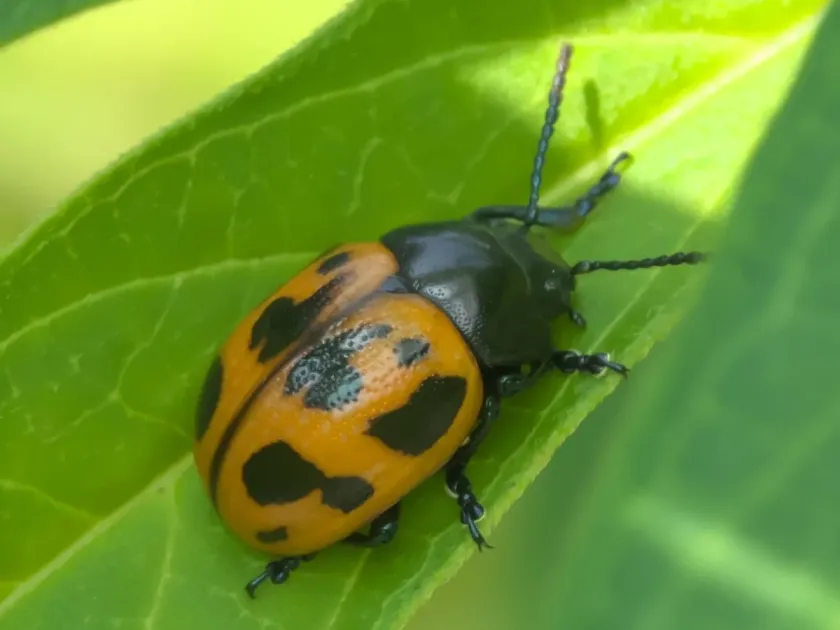
Description
How to identify
Chrysomelobia labidomerae is a specialized species of parasitic mite. Unlike many agricultural pests that consume plant tissues, this mite leads an ectoparasitic lifestyle, attaching itself to adult beetles.
The microscopic size of this organism makes it difficult to detect without specialized laboratory equipment or high-powered magnification. The mite's body is adapted for long-term residence on the host's cuticle.
Systematically, this object belongs to the family Podapolipidae, order Trombidiformes. These are highly specialized mites whose life cycles are strictly tied to specific species of host insects.
Adult females of this species exhibit significant organ degeneration, characteristic of parasites living on other arthropods. By themselves, they do not directly damage plant leaves or roots.
The primary ecological niche for this mite consists of various leaf beetles. Studying the morphology of this species is essential for understanding the mechanisms of natural biological regulation of insect populations.
What it damages
This object is classified more as a parasite of entomophages or pests than as a direct agricultural pest. Its activity directly affects the health and vitality of the beetles it parasitizes.
The primary victims are leaf beetles, specifically those that infest solanaceous crops. Insects infested with these mites often suffer from reduced reproductive potential and may die before completing their life cycle.
In an agronomic context, the "harmfulness" is indirect: reducing the population of certain insects can disrupt the balance of the field ecosystem and natural pest control dynamics.
During mass outbreaks of the mite, one can observe decreased motor activity and inhibited physiological functions in the host beetles. This limits the insects' ability to disperse and feed on crops.
For the crop itself, this mite poses no direct threat of mechanical tissue damage. Its presence is primarily a biological factor influencing the population dynamics of phytophagous insects.
When it appears
The mite's activity is entirely synchronized with the seasonal rhythms of its host beetle. In temperate climates, this coincides with the growing season of the host's primary food crops.
Overwintering typically occurs on the body of the host beetles, which enter diapause in the soil or crop residues. With the onset of spring warmth, the mites become active alongside their hosts.
The peak population density of the mites occurs during the period of maximum activity of adult leaf beetles. During this time, the most intense transfer of parasitic larvae between individuals takes place.
The summer period is the main stage of reproduction, during which the mites complete several generations. The speed of the life cycle depends on temperature and ambient humidity.
By the end of the season, the intensity of infection in the host population increases, which leads to a natural decline in the activity of harmful insects for the following season.
Signs of infestation
A visual sign of infestation is the presence of small, translucent or whitish structures on the bodies of leaf beetles. They usually congregate under the elytra or at the joints of the limbs.
There is a noticeable decrease in the overall viability of the leaf beetle population in the field. Beetles become less active and die more frequently without visible external causes.
In laboratory conditions, the presence of the mite is confirmed by microscopic examination of the insect's chitinous surface. Upon detailed inspection, attached adult female parasites are clearly visible.
Low egg production in leaf beetles found in the area can serve as an indirect sign of infestation. The parasitism leads to the physiological exhaustion of the insect.
A decrease in the percentage of leaf damage on crops in the absence of direct chemical treatment may indicate biological suppression of pests by entomoparasites.
Control measures
No specific control measures against this mite are required, as it is not a direct phytophagous pest. The application of broad-spectrum acaricides may negatively impact the natural suppression of agricultural pests.
To support the natural control of leaf beetle populations, it is recommended to avoid heavy reliance on broad-spectrum insecticides, as this preserves the population of beneficial parasites.
Agronomic methods focused on pest control, such as crop rotation and deep tillage, reduce host density, which indirectly limits the development and spread of the mites.
Biological plant protection strategies are built on acknowledging the beneficial role of such species. Integrated Pest Management (IPM) systems consider the presence of parasites as a factor in reducing pest population density.
Monitoring the state of entomofauna in the field allows for adjustments to treatment schedules. When the density of natural enemies is high, the application of chemical pesticides can be reduced or eliminated entirely.
Taxonomy
- Latin name
- Chrysomelobia labidomerae
- Order
- Mites
- Family
- Podapolipidae
- EPPO code
- CHRLLA
Discussion
No discussions yet — be the first.