
Chrysodeixis acuta
Chrysodeixis acuta
Description
How to identify
Chrysodeixis acuta is a moth belonging to the Noctuidae family, order Lepidoptera. It is a known agricultural pest found in various regions across the globe.
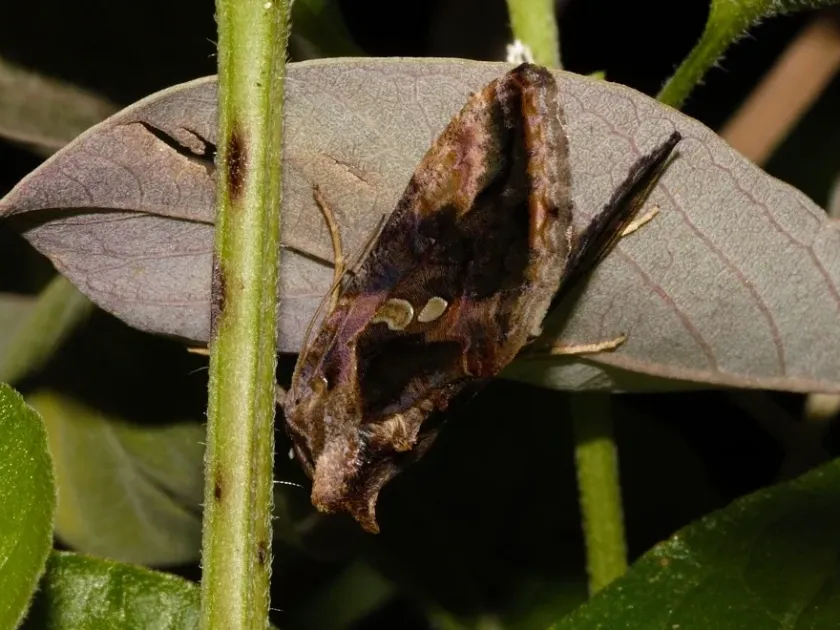
Adult moths are characterized by brownish-gray forewings that exhibit a distinct metallic sheen, making them quite distinguishable under bright light.
A key diagnostic feature is a silver-colored spot in the center of the forewing, typically shaped like a V or a comma, which is common in this genus.
The larvae are bright green with faint white longitudinal lines, providing excellent camouflage against the foliage of host plants.
Due to the reduced number of abdominal prolegs, the caterpillars move with a characteristic looping gait, similar to other looper species.
What it damages
This pest is highly polyphagous, meaning it feeds on a wide range of crops including soybeans, tomatoes, potatoes, peppers, and various ornamental plants.
The primary damage is caused by larvae consuming leaf tissues, which leads to large holes or total skeletonization of the leaves.
Extensive defoliation reduces the photosynthetic capacity of the plant, directly impacting the overall yield and quality of the harvest.
Besides leaves, the larvae may feed on buds, flowers, and developing fruit, which significantly diminishes the marketable value of crops.
Feeding wounds created by the larvae serve as entry points for various bacterial and fungal pathogens, potentially causing secondary infections.
When it appears
The life cycle of Chrysodeixis acuta is highly dependent on ambient temperatures, allowing for multiple generations during a single growing season.
Adult moths are nocturnal, and they typically lay eggs singly or in small clusters on the underside of leaves during the night.
Larval activity usually peaks during the mid-to-late growing season when the crop canopy is dense and provides shelter for the insects.
Warmer climates facilitate faster development cycles, meaning that under favorable conditions, populations can increase rapidly in a short period.
Monitoring for adult flight using pheromone traps is essential to predict larval emergence and time the application of control measures correctly.
Signs of infestation
The most visible sign of an infestation is the presence of irregular, window-like holes in the leaves where larvae have been feeding.
Frass, or caterpillar droppings, appearing as small dark pellets on the leaves beneath the feeding sites, is a clear indicator of their presence.
Careful scouting of the undersides of leaves during the early vegetative stage can reveal egg clusters or newly hatched larvae.
Some larvae may use silk threads to tie leaves together, creating a sheltered microenvironment, which serves as a visual clue for field inspectors.
- Defoliated leaf areas with only veins remaining.
- Visible holes or boreholes in fruits and vegetables.
- Presence of silk webbing on plant shoots and foliage.
Control measures
Effective management requires an integrated approach that combines cultural, biological, and chemical control strategies to reduce populations.
Cultural practices such as deep tillage after harvest can help destroy pupae in the soil, effectively reducing the carry-over for the next season.
Biological control using microbial insecticides, such as Bacillus thuringiensis, can be highly effective against young larvae while preserving beneficial insects.
Chemical control should be employed only when scouting indicates that populations have exceeded the economic threshold for the specific crop.
Rotation of insecticide modes of action is critical to prevent the development of resistance in the pest population and ensure long-term efficacy.
Taxonomy
- Latin name
- Chrysodeixis acuta
- Order
- Lepidoptera (butterflies)
- Family
- Noctuidae
- EPPO code
- PYTOAC
Discussion
No discussions yet — be the first.