
Golden twin-spot moth
Chrysodeixis
Description
How to identify
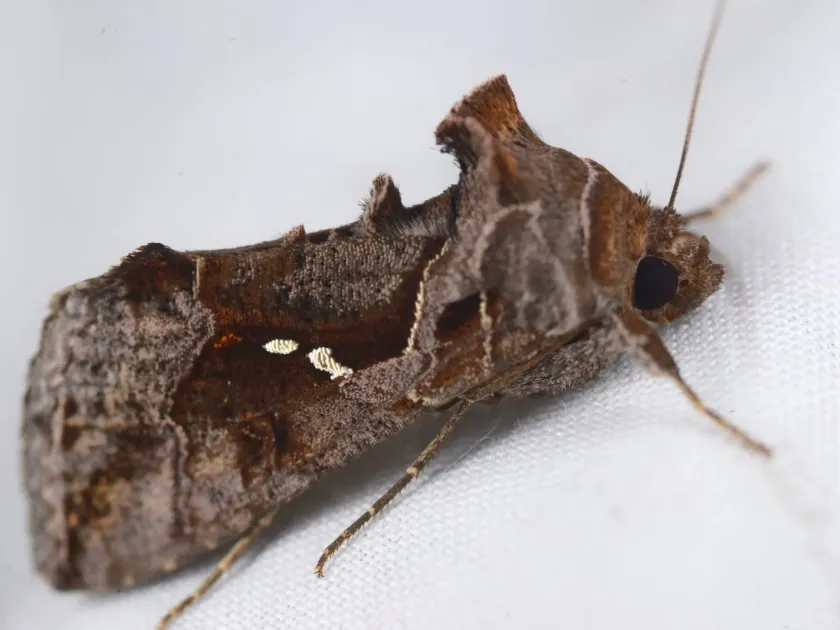
The Golden twin-spot moth (Chrysodeixis chalcites) belongs to the Noctuidae family, order Lepidoptera. The adult moth has a wingspan of up to 40 mm, with brownish-golden forewings featuring distinctive metallic spots that resemble the Greek letter 'gamma'.
The larvae are bright green with fine pale lateral lines running along their bodies. A key feature of these caterpillars is that they possess only two pairs of abdominal prolegs, forcing them to move in a characteristic looping motion, similar to inchworms.
The pupa develops within a thin, white silken cocoon, usually attached to the underside of a host plant leaf. Depending on ambient temperatures, the pupal stage lasts between 10 to 20 days before the next generation of adults emerges.
This species is a highly adaptable polyphagous insect capable of thriving in various environmental conditions. In warmer climates, it can complete multiple generations within a single growing season, making it a persistent agricultural threat.
Adult moths are primarily nocturnal or crepuscular, flying mainly at night to feed on nectar and locate suitable host plants for oviposition. Females deposit eggs singly or in small clusters on the undersides of leaves.
What it damages
The Golden twin-spot moth poses a major risk to a wide range of vegetable, technical, and ornamental crops. Common hosts include tomatoes, potatoes, soybeans, cucumbers, cabbages, and various legumes and greenhouse flowering plants.
Damage is caused by the larvae, which initially create small holes in the foliage, resulting in a skeletonized appearance. As the larvae mature, their feeding intensity increases dramatically, often leading to total defoliation and damage to floral buds and fruits.
Under conditions of high infestation, the pest causes significant yield losses by impairing the plant's photosynthetic capacity. This leads to stunted growth, poor fruit development, and a substantial decrease in marketability of the produce.
In greenhouses, this moth can be active year-round if proper quarantine protocols for new plant material are not followed. Feeding damage on young seedlings is particularly critical and often results in plant mortality.
Beyond direct tissue consumption, the feeding sites often act as entry points for secondary pathogens, such as fungi and bacteria, which can cause rotting and further degrade the crop health.
When it appears
First-generation adults typically emerge in late spring or early summer when night temperatures stabilize. Pest activity persists well into late autumn, provided favorable climatic conditions continue to support development.
The optimal conditions for rapid population growth are temperatures ranging from +20°C to +28°C combined with adequate humidity. While extreme heat may slow down development, irrigated crops often provide a stable refuge for the population.
The high migratory potential of the adults allows them to cover significant distances, facilitating the rapid colonization of new areas. Regular monitoring using pheromone traps is essential for tracking population dynamics throughout the season.
Emergence from overwintering pupae depends on soil warming thresholds. In controlled environments like greenhouses, the timing of outbreaks is governed strictly by the internal microclimate rather than seasonal external factors.
The number of annual generations varies significantly by region: from one or two in cooler areas to five or more in subtropical climates, necessitating a sustained management approach.
Signs of infestation
The primary indicators of an infestation include the presence of loopers on the underside of leaves and visible signs of feeding. Leaves typically show irregular holes or patches where only the leaf veins remain.
The accumulation of small, dark fecal pellets on the soil surface or lower leaf surfaces is a clear signal that a larval population is actively feeding and requires immediate management action.
White silken cocoons located on the undersides of leaves indicate the completion of one generation and the impending arrival of a new, potentially larger larval cohort. Frequent inspection is vital for early detection.
Observers should focus on the growing tips and developing floral clusters, as these are preferred feeding sites. Heavily infested plants may show signs of wilting or visible stress due to severe disruption of their vegetative tissues.
- Irregular holes in leaf blades.
- Skeletonized areas on leaves.
- Dark frass (fecal pellets) near the plant base.
- White silken cocoons on leaves.
- Wilting of terminal shoots and flowers.
Control measures
Agronomic strategies include deep autumn plowing to expose and destroy overwintering pupae in the soil. Maintaining field hygiene and removing alternative weed hosts is critical for preventing population buildup.
Biological control methods involve the use of Bacillus thuringiensis-based insecticides or the release of biological agents like Trichogramma wasps, which parasitize the moth's eggs before larvae emerge.
Chemical control should be implemented once economic thresholds are exceeded. Products containing pyrethroids, organophosphates, or insect growth regulators are generally effective when applied at the appropriate larval growth stage.
Using light or pheromone traps for monitoring is crucial to determine the optimal timing for interventions. This targeted approach helps minimize the overall use of pesticides while maintaining control effectiveness.
Integrated pest management also emphasizes crop rotation and maintaining proper planting density. Good aeration and plant spacing improve the coverage of insecticides during spray applications, significantly enhancing control results.
Taxonomy
- Latin name
- Chrysodeixis
- Order
- Lepidoptera (butterflies)
- Family
- Noctuidae
- EPPO code
- CHRXSP
Discussion
No discussions yet — be the first.