
Chorizagrotis
Chorizagrotis
Description
How to identify
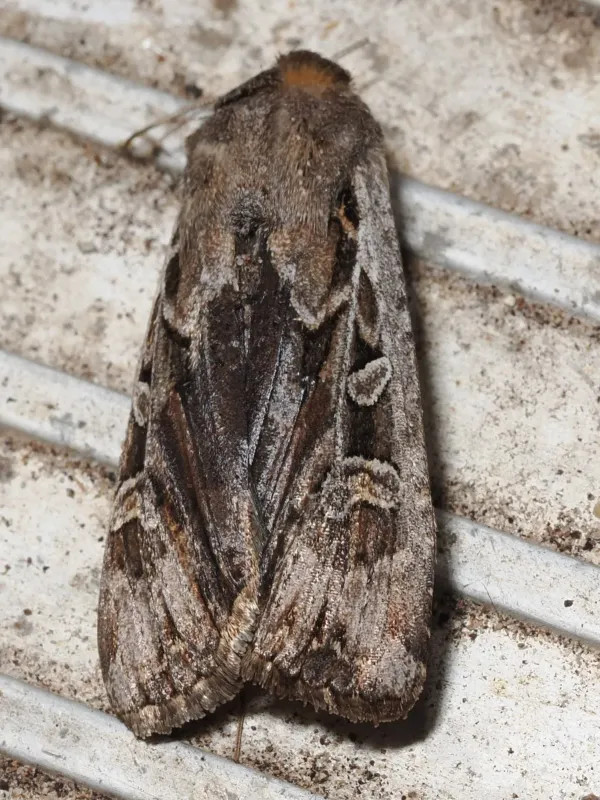
Chorizagrotis is a genus of moths belonging to the family Noctuidae. The most well-known species is Chorizagrotis auxiliaris, commonly referred to as the army cutworm. Adults have a wingspan of approximately 40–45 mm, with gray-brown forewings featuring intricate patterns that provide excellent camouflage among plant debris.
The larvae, known as cutworms, reach lengths of up to 40 mm. Their coloration varies from gray-brown to nearly black. Their skin has a velvety appearance due to dense hair, and they often possess lighter longitudinal stripes along their body.
The life cycle consists of four distinct stages: egg, larva, pupa, and adult (imago). These moths are typically univoltine, meaning they have one generation per year, although their behavior can vary depending on regional migration patterns and climatic conditions.
Pupation occurs in the soil, where larvae construct earthen cells a few centimeters below the surface. The pupae are brown and have a typical noctuid structure, allowing them to successfully overwinter in the soil under favorable conditions.
Identifying this species can be challenging due to its similarity to other Noctuinae members. Agronomists often use pheromone traps to monitor adult moth populations and predict the timing of larval emergence.
What it damages
Chorizagrotis is a generalist pest that targets a wide range of agricultural crops. Susceptible plants include cereal grains (wheat, barley), technical crops (sugar beets, sunflowers), and various vegetables such as potatoes and cabbage.
Older larvae are nocturnal and lead a cryptic lifestyle. During the day, they hide in the surface layer of the soil near the base of host plants, which makes early detection difficult for field managers.
The primary damage is caused by larvae cutting through the stems of young plants at or just below the soil surface. This leads to massive seedling loss and significant thinning of plant stands during early vegetative stages.
In addition to cutting stems, the larvae may feed on leaves and buds, weakening the plant and increasing its susceptibility to secondary fungal and bacterial infections. Severe root damage can lead to the complete death of the plant.
The economic impact of Chorizagrotis is severe, especially when replanting is required late in the season. In outbreak years, yield losses can reach 30–50% across affected fields.
When it appears
Adult flight typically occurs during the spring and summer. Females lay eggs in clusters on weeds or directly onto the soil surface, preferring areas with adequate moisture to ensure larval survival.
Larval feeding activity peaks during the night in spring and early summer. Moisture in the soil is crucial for the development of larvae as they prepare for pupation by rapidly accumulating biomass.
During hot, dry summers, larvae may enter diapause and burrow deeper into the soil to escape harsh conditions. This behavioral adaptation makes them resilient and difficult to target with contact insecticides mid-season.
The development cycle concludes with the emergence of adults in the autumn or the following spring. Monitoring fields during these transitions is essential for anticipating potential infestations.
Temperature serves as a primary driver of population dynamics. A mild, wet spring encourages mass emergence, while prolonged cold snaps can significantly slow larval development and reduce overall population pressure.
Signs of infestation
The first sign of an infestation is the appearance of bare patches in the field, where seedlings suddenly begin to wilt and wither. Inspection often reveals stems that have been severed at the ground level.
Finding larvae curled into a C-shape near damaged plants is a definitive diagnostic sign. If the soil is disturbed in the affected area, larvae of various instars can typically be recovered.
Feeding damage on leaves can also occur, characterized by irregular holes. However, because the larvae are primarily stem-cutters, root and basal stem injuries remain the most prominent indicators of their presence.
Light traps are highly effective for monitoring moth activity. A sudden increase in trap captures serves as a warning for farmers to initiate scouting and protective measures.
A high density of weeds in the field acts as an attractant for egg-laying females. Consequently, fields with poor weed management are significantly more likely to develop severe cutworm infestations.
Control measures
Cultural control methods involve deep fall tillage, which destroys pupation sites and exposes larvae to predators such as birds and to extreme weather conditions, significantly reducing overwintering populations.
Effective weed control throughout the season eliminates alternative food sources and removes preferred sites for egg-laying. Maintaining clean fields is a fundamental strategy for minimizing cutworm pressure.
Chemical control focuses on the application of contact and stomach insecticides. For maximum efficacy, treatments should be applied in the evening when larvae emerge from the soil to feed.
- Application of pyrethroid and organophosphate-based insecticides.
- Deployment of poisoned baits in crop rows to target larvae during feeding.
- Biological control using egg parasitoids like Trichogramma during the peak oviposition period.
- Implementation of crop rotation patterns that include non-host species to disrupt life cycles.
The use of biological insecticides, such as those based on Bacillus thuringiensis or fungal pathogens, provides an environmentally sustainable option that reduces chemical residues while maintaining effective population management.
Taxonomy
- Latin name
- Chorizagrotis
- Order
- Lepidoptera (butterflies)
- Family
- Noctuidae
- EPPO code
- CHOZSP
Discussion
No discussions yet — be the first.