
Green leafhopper
Chlorita formosa
Description
How to identify
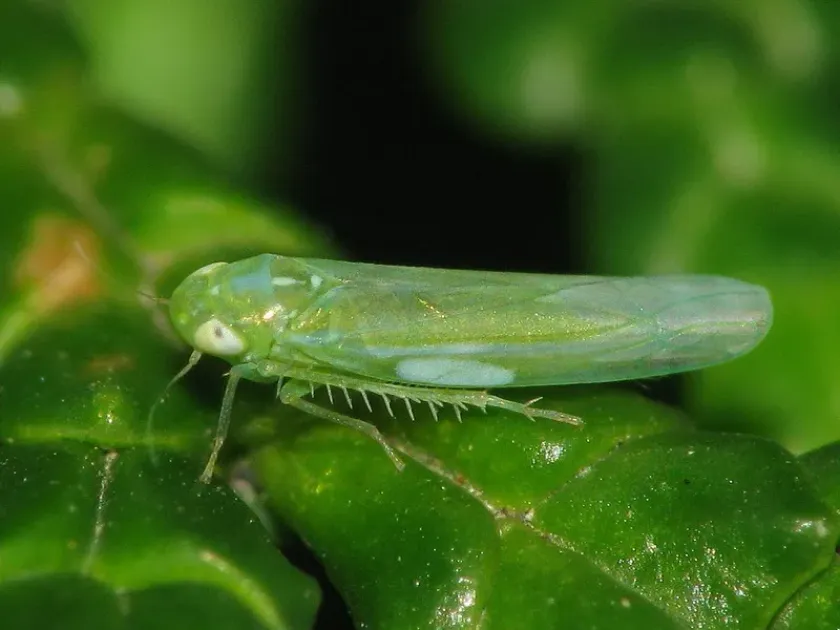
The green leafhopper (Chlorita formosa) is a small insect belonging to the family Cicadellidae. Adult specimens are typically 3 mm long and possess a bright green color, which acts as camouflage against vine leaves.
These pests are characterized by their ability to jump and fly short distances when disturbed. Both nymphs and adults inhabit the underside of foliage, making them difficult to detect in the early stages of infestation.
What it damages
This insect primarily infests grapevine species, causing physiological stress. By piercing the leaf epidermis and sucking sap, they deplete the plant of essential nutrients and moisture.
Besides direct damage, the feeding sites become entry points for secondary infections. In severe cases, the damage to photosynthetic tissues can significantly reduce the vine's vitality and crop quality.
When it appears
The life cycle begins in spring when overwintering adults move from hiding spots to budding grapevines. Egg-laying occurs within the leaf tissues, and the subsequent nymphs go through several molting stages.
The pest typically produces multiple overlapping generations during a single growing season. Populations tend to explode in mid-summer, coinciding with warmer temperatures which accelerate the development of all life stages.
Signs of infestation
Initial symptoms include the appearance of pale, yellow-green spots on the leaves, a condition often referred to as stippling. As the infestation progresses, these spots coalesce, leading to widespread chlorosis.
Severely infested leaves exhibit tissue necrosis and premature curling along the margins. This loss of functional leaf area forces the plant to divert energy, resulting in stunted vine growth and lower sugar accumulation in the grapes.
Control measures
Effective management requires an integrated approach. Sanitation is crucial: remove leaf litter and weeds near the vineyard to eliminate overwintering sites for the adult population.
When monitoring confirms that the population has reached an economic threshold, chemical intervention is required. Use selective insecticides that target the leafhopper while minimizing impact on beneficial insects, and ensure thorough coverage of the foliage.
Discussion
No discussions yet — be the first.