
Cotton leafhopper
Chlorita biguttula
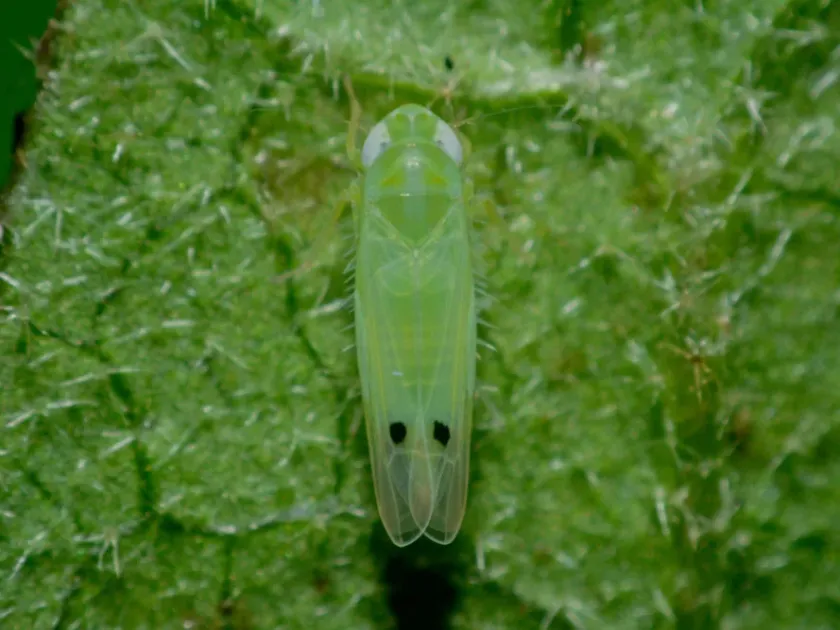
Description
How to identify
The cotton leafhopper (Chlorita biguttula) belongs to the order Hemiptera and the family Cicadellidae. It is a small insect, typically measuring 2–3 mm in length, characterized by its pale green or yellowish body color.
Adults are highly active and can fly short distances, while nymphs are wingless and tend to scuttle quickly across the undersides of leaves when disturbed. This movement pattern is key for visual identification in the field.
The life cycle is rapid, particularly in warm and humid conditions, which allows the population to multiply significantly within a single season. Eggs are embedded into the leaf tissue, making them protected from many contact treatments.
Depending on the climatic zone, this pest can complete multiple generations annually. The ability to survive as adults in debris or wild hosts ensures their presence at the beginning of each planting season.
Monitoring the undersides of leaves during the early morning or late afternoon is essential for identifying the presence of nymphs, as they are the primary cause of sustained damage to the plants.
What it damages
The cotton leafhopper primarily attacks cotton plants, but it is also known to feed on various crops like okra, eggplant, and other members of the Malvaceae and Solanaceae families.
By using their piercing-sucking mouthparts, the leafhoppers drain the cell sap from the leaves. This causes cellular damage that disrupts photosynthesis and reduces the overall vigor of the host plant.
Infected leaves exhibit a characteristic curling downwards at the margins, followed by yellowing and eventually turning brown. This symptom is frequently referred to as "hopper burn" by agronomists.
Severe infestations lead to defoliation, which hampers the development of bolls and significantly reduces the final yield quality and quantity for the farmer.
In addition to direct physiological damage, leafhoppers serve as vectors for various plant pathogens, including mycoplasmas and viruses, which can devastate a crop even if the pest population is managed.
Control measures
Integrated Pest Management (IPM) strategies for the cotton leafhopper emphasize regular scouting and the use of yellow sticky traps to track adult migration and population density levels.
Cultural control methods such as maintaining clean field borders and removing alternative weed hosts are highly effective in delaying the early colonization of the main crop.
It is recommended to balance nitrogen applications, as excessive vegetative growth can attract higher numbers of leafhoppers to the fields, complicating the management process.
Chemical control remains a necessary tool when populations exceed economic thresholds. Systemic insecticides are often preferred, provided they are used in accordance with local regulations and resistance management plans.
- Utilization of resistant crop varieties where available.
- Encouraging natural predators such as ladybugs and lacewings in the field.
- Post-harvest tillage to destroy overwintering sites in crop residues.
Discussion
No discussions yet — be the first.