
Chloridea
Chloridea
Description
How to identify
The genus Chloridea belongs to the family Noctuidae, which includes some of the most destructive agricultural pests worldwide. Previously classified under Helicoverpa, these moths are known for their high adaptability and wide host range.
Adult moths of this genus typically have a wingspan of 35-40 mm. Their coloration varies from light tan to olive-brown, often with dark markings on the forewings. Adults are nocturnal, active mostly during the night and evening twilight.
The life cycle undergoes complete metamorphosis, consisting of the egg, larva (caterpillar), pupa, and adult stages. The larval stage is responsible for all feeding damage, while pupation generally occurs underground.
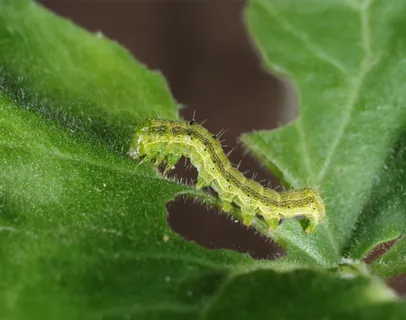
The larvae are highly variable in color, ranging from green to yellowish, reddish-brown, or nearly black, which serves as a camouflage strategy depending on the environment.
Proper identification of specific Chloridea species often requires laboratory examination due to their morphological similarity to other closely related noctuid moths.
What it damages
Chloridea species are notorious polyphagous pests, attacking a vast array of crops including corn, cotton, tomatoes, soybeans, and legumes. The larvae cause significant economic losses by attacking reproductive structures.
In corn, larvae burrow into the ears to feed on developing kernels, which often opens the door for secondary infections such as fungal rot, further compromising the quality of the harvested grain.
When feeding on tomatoes, peppers, and other fruiting vegetables, larvae bore directly into the fruit. This makes the affected produce unmarketable and susceptible to rapid decay.
In cotton, the damage focuses on squares and bolls, leading to the shedding of reproductive parts and reduced fiber yields. A single larva can damage multiple fruiting points during its development.
Because they feed internally, the larvae are protected from many environmental stressors and conventional chemical treatments, making them particularly difficult to manage.
When it appears
Adult activity usually begins in the late spring as temperatures rise, typically starting when soil temperatures at pupation depth exceed 18°C.
The pest follows a multivoltine cycle, meaning multiple generations occur within a single growing season, depending on the climate and geographical location.
Egg-laying by females is continuous, leading to overlapping generations in the field, which complicates the timing of pest control applications.
Development speed is highly temperature-dependent; warm, humid conditions significantly shorten the life cycle, leading to explosive population growth during mid-summer.
Monitoring the flight patterns of adult moths is crucial, as it provides the necessary warning for potential larval infestations within the next few weeks.
Signs of infestation
Field detection is best achieved by identifying the physical signs of larval feeding rather than spotting the elusive nocturnal moths.
- Dark, pellet-like frass (excrement) found on leaves or at the base of plants.
- Entrance holes on the surface of fruits, pods, or corn husks.
- Tattered leaves or holes in floral buds caused by young larvae feeding.
- Webbing often present around the damaged parts of the plant.
- Premature dropping of flowers or small fruits from the plant.
Careful scouting of terminal buds and reproductive organs is necessary to catch the larvae when they are still in the early instars and most vulnerable to control measures.
Control measures
Successful management relies on an Integrated Pest Management (IPM) approach that combines cultural, biological, and chemical strategies to reduce pressure on crops.
Cultural practices, such as deep plowing after harvest, are highly effective in disrupting the pupal stage by exposing larvae and pupae to predators and winter conditions.
Biological control agents, such as egg parasitoids (e.g., Trichogramma species) and Bacillus thuringiensis sprays, offer sustainable options when used early in the infestation cycle.
Chemical control should be strictly timed based on economic thresholds and scouting data, focusing on applying products when larvae are in the first or second instar stages.
Rotating insecticides with different modes of action is essential to prevent the development of pesticide resistance, a common issue with these highly adaptable moth species.
Taxonomy
- Latin name
- Chloridea
- Order
- Lepidoptera (butterflies)
- Family
- Noctuidae
- EPPO code
- CHLSP
Discussion
No discussions yet — be the first.