
Guinea pig fur mite
Chirodiscoides caviae
Description
How to identify
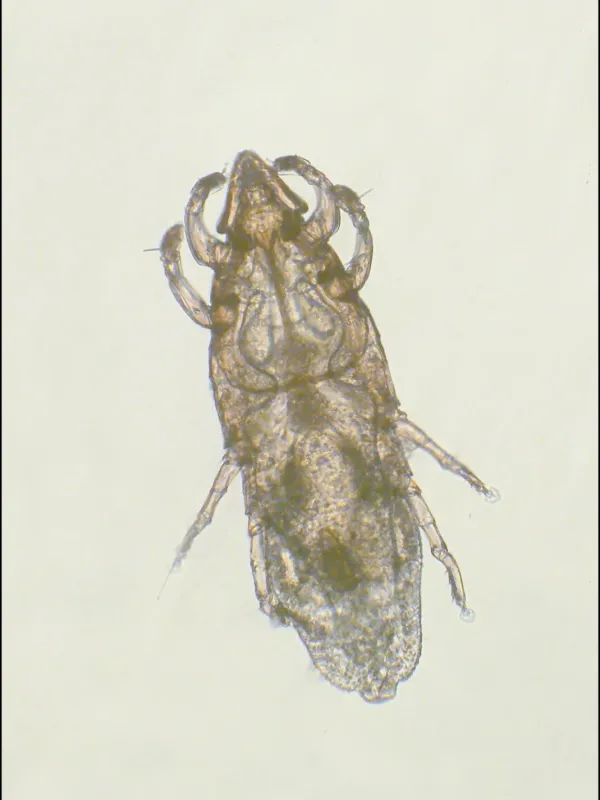
Chirodiscoides caviae is a microscopic parasitic mite belonging to the Atopomelidae family, order Acariformes. It is a highly specialized parasite that lives entirely on the host.
Adult mites have an elongated body, perfectly adapted for gripping the hair shafts of guinea pigs. They are extremely small and cannot be seen with the naked eye.
The life cycle includes eggs, larvae, nymphs, and adults, all of which occur directly within the animal's coat, ensuring a continuous presence on the host.
Unlike many other mites, this species does not leave the host, making direct physical contact the only method of transmission between animals.
Diagnosis is usually performed by a veterinarian using microscopy of skin scrapings or hair samples, where the mites are often found attached to the hair.
What it damages
This mite affects only guinea pigs. It is important to note that it is not a plant pest and does not cause damage to crops or agricultural vegetation.
In animal breeding facilities, the presence of these mites can significantly impact the health and welfare of the rodent colony.
The parasite feeds on lymph and skin cells, which triggers localized irritation and discomfort for the animal.
A severe infestation can lead to chronic dermatitis, causing the animal significant distress and potential secondary health issues.
Since it is a zooparasite, its harm is strictly limited to the health status of guinea pigs within a breeding or pet-keeping environment.
Signs of infestation
The most common symptom is intense itching, leading to restless behavior, scratching, and potential skin damage from constant grooming.
Hair loss, dandruff, and the formation of crusts in the dorsal and rump areas are classic signs of a mite infestation.
The coat often appears dull and greasy due to the accumulation of mite debris and the animal's inability to groom properly.
Severe itching often leads to self-inflicted wounds, which can become infected with bacteria if not treated promptly.
A definitive sign discovered during a check-up is the presence of white eggs or mites attached directly to the base of the hair shafts.
Control measures
Treatment involves the use of acaricidal products specifically approved for use on guinea pigs to avoid accidental poisoning.
Quarantine is essential for all infected individuals to prevent the spread of mites to other animals in the colony.
A successful treatment plan typically requires multiple applications of medication over a few weeks to break the mite's reproductive cycle.
- Deep cleaning and disinfection of cages and accessories.
- Replacing all bedding materials frequently during treatment.
- Preventative screening of any new animals introduced to the group.
Always seek professional veterinary advice, as improper use of pesticides can be fatal to small rodents due to their sensitivity to certain chemicals.
Taxonomy
- Latin name
- Chirodiscoides caviae
- Order
- Mites
- Family
- Atopomelidae
- EPPO code
- CHDICA
Discussion
No discussions yet — be the first.