
Black willow scale
Chionaspis salicis-nigrae
Description
How to identify
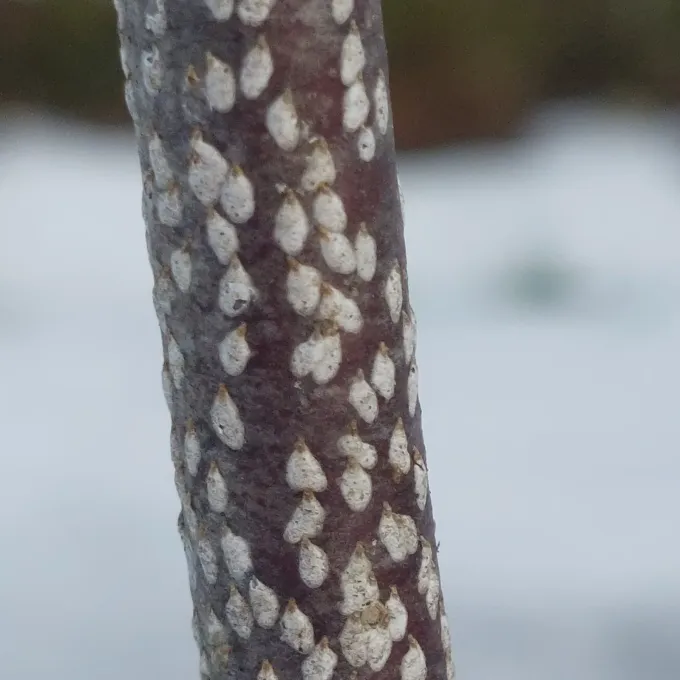
The Black willow scale (Chionaspis salicis-nigrae) is a member of the Diaspididae family within the Hemiptera order. It is a common insect pest that thrives on bark surfaces.
Adult females are characterized by a white or grayish-white, pear-shaped scale (the protective cover). They are sedentary and remain fixed to one spot throughout their adult life.
Males are significantly smaller than females, featuring a narrow, elongated scale with three longitudinal ridges. Unlike females, adult males are winged and mobile for breeding purposes.
The insect possesses piercing-sucking mouthparts, which it uses to penetrate the host's bark and feed directly on the vascular tissues.
Due to their coloration and sedentary nature, identifying scale insects can be difficult until the infestation reaches a noticeable density on the tree trunks.
##damage##This pest targets a range of deciduous species, including willow, poplar, ash, and aspen. It settles primarily on limbs, branches, and main trunks of younger trees.
By constantly withdrawing nutrients and sap, the scale insects drain the host's energy reserves, causing general decline and decreased vigor.
Heavy infestations can lead to physical damage, such as bark splitting and necrosis, which further weakens the tree's defensive systems against external stressors.
Reduced sap flow often results in canopy thinning, stunted foliage, and the dieback of small twigs or larger branches over multiple seasons.
Severe, unchecked populations can result in significant mortality for susceptible hosts, especially if the tree is already stressed by drought or poor environmental conditions.
##season##The life cycle is closely linked to the seasonal development of the host tree. Overwintering occurs as fertilized females or eggs beneath old, dead scale covers.
The emergence of "crawlers" (the mobile nymph stage) typically happens in late spring, coinciding with the tree's active growth and bud burst phases.
Once crawlers find a suitable location, they settle and begin secreting their protective scale, transitioning into the sedentary stage for the remainder of the summer.
The number of generations per year depends on the geographic region and the length of the growing season, with one generation being typical in colder climates.
Monitoring the specific timing of the crawler emergence is the most critical component of a successful integrated pest management program for this species.
##signs##The most prominent sign is the appearance of white, crusty, or powdery patches on the bark, which represents a dense congregation of individual scale insects.
Tree decline, often manifesting as yellowing or wilting leaves in the middle of summer, may suggest that the internal vascular system is being compromised by the pest.
Stunted growth or missing new shoots on previously healthy branches can also indicate a high concentration of scales draining the plant's resources.
In advanced cases, the bark may peel away from the wood, showing signs of underlying rot or tissue death as the tree loses its ability to heal properly.
- White flaky buildup on bark surfaces.
- General loss of tree vitality.
- Premature yellowing of leaves.
- Dieback of twigs and smaller branches.
Cultural control involves pruning and destroying heavily infested branches to reduce the overall population pressure in the immediate environment.
Systemic insecticides are generally effective because they are absorbed by the plant and ingested by the insects, providing protection for a longer duration.
Contact insecticides should be applied during the crawler emergence phase, as this is the only time the pest is vulnerable to sprays before forming a shield.
Horticultural oils can be used as a dormant spray in early spring to smother the overwintering stages and provide a clean start for the growing season.
Maintaining optimal tree health through regular watering and appropriate fertilization improves the plant's ability to resist and recover from minor scale infestations.
Discussion
No discussions yet — be the first.