
Cheyletiella yasguri
Cheyletiella yasguri
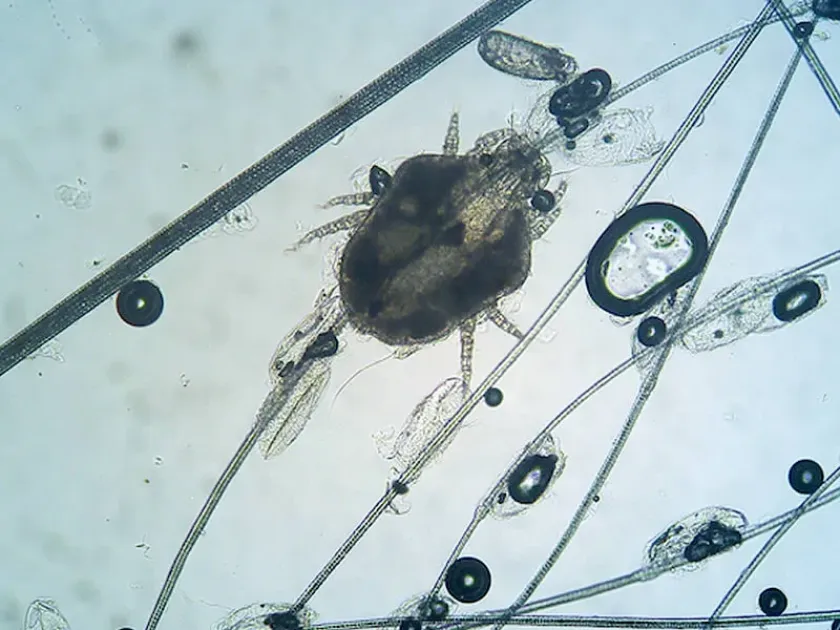
Description
How to identify
Cheyletiella yasguri belongs to the family Cheyletidae, order Trombidiformes. It is a microscopic mite characterized by large, hook-like palps that allow the parasite to attach firmly to the host's skin.
Unlike plant-feeding mites, this species is an obligate parasite of mammals. Its anatomy is specifically adapted for living on the skin surface and feeding on epidermal debris rather than plant tissues.
The life cycle of the mite lasts approximately 21 days and is completed entirely on the host animal. Females attach their eggs to hair shafts using a sticky secretion, which prevents the eggs from being shed.
The mite passes through egg, larva, protonymph, deutonymph, and adult stages. This developmental process requires the constant warmth of the host's body, which is essential for successful reproduction.
Mites of this species have limited mobility and cannot survive for long periods away from their host. Transmission typically occurs through direct physical contact between infested and susceptible animals.
What it damages
It is crucial to clarify that Cheyletiella yasguri is not a plant pest. It does not attack agricultural crops, greenhouse plants, or any form of vegetation. Its biological niche is strictly limited to the skin of dogs.
Confusing this mite with phytophagous species like spider mites can lead to inappropriate and harmful application of pesticides in an agricultural setting. Such efforts are ineffective against this specific parasite.
The damage caused by this organism is purely clinical in nature, affecting animal health. It induces a condition known as cheyletiellosis, which is characterized by dry, crusty, and scaly skin lesions.
The common name "walking dandruff" refers to the movement of the mites beneath the scaling skin of the host. This causes significant irritation and distress to the animal, requiring veterinary intervention.
Since the organism does not pose a threat to plant health or economic crops, it is not monitored within agronomic surveillance programs or integrated pest management systems for plants.
Control measures
Management of Cheyletiella yasguri is strictly limited to veterinary practices. Agricultural insecticides are not indicated for use against this parasite and may be toxic to household pets.
Effective control measures include the use of topical acaricides such as spot-on treatments, medicated shampoos, or sprays specifically formulated for veterinary use. Always consult a veterinarian for appropriate product selection.
Environmental sanitation is a critical component of control. Regular cleaning and disinfection of animal bedding and grooming tools help to eliminate any stages of the mite that may exist in the immediate surroundings.
Avoiding the use of agricultural-grade pesticides is essential, as these products are designed for crops and pose serious health risks if applied in an environment where animals reside.
Proactive care, including routine health inspections and isolation of newly acquired animals, is the best strategy to prevent the spread of the infestation within a domestic or kennel setting.
Taxonomy
- Latin name
- Cheyletiella yasguri
- Order
- Mites
- Family
- Cheyletidae
- EPPO code
- CHYLYA
Discussion
No discussions yet — be the first.