
Rabbit fur mite
Cheyletiella parasitivorax
Description
How to identify
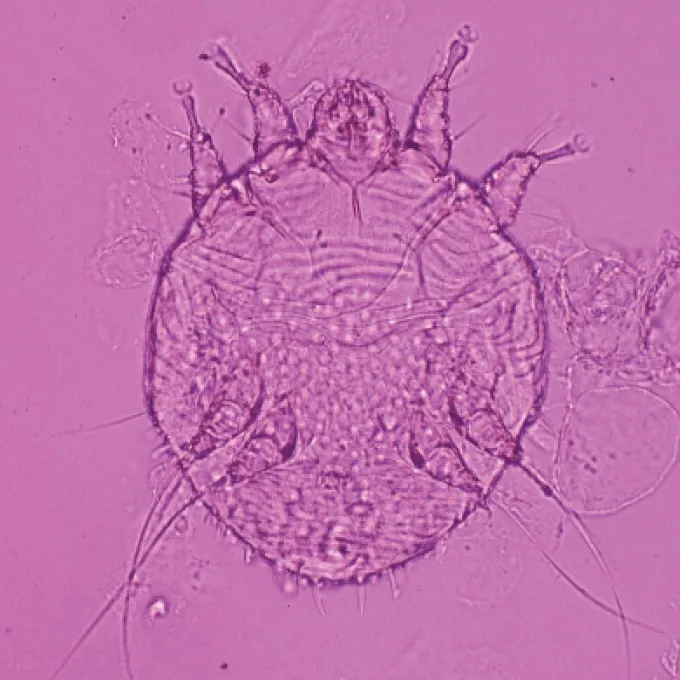
Cheyletiella parasitivorax is a microscopic mite belonging to the family Cheyletidae. It is exclusively an ectoparasite of mammals.
The body of the mite is characterized by a distinct "waist" and large hook-like palps used to latch onto the hair shafts of the host animal.
Adult mites are approximately 0.3 to 0.5 millimeters in length, making them very difficult to observe without magnification.
The entire life cycle of this parasite is dependent on the host, as it cannot survive for extended periods away from the rabbit's skin.
It is crucial to note that this organism is not a plant pest and has zero impact on crops or garden vegetation.
What it damages
This mite does not feed on plant tissues, cellular sap, or roots, and therefore poses no threat to agriculture or horticulture.
The damage caused by Cheyletiella parasitivorax is strictly limited to the skin and hair of rabbits and other small mammals.
By feeding on tissue fluids and skin debris, the parasite causes significant dermatological distress to the host.
There are no known biological or ecological pathways where this mite could interact with or damage plant anatomy.
Any observations of plant damage attributed to this mite are scientifically inaccurate and likely caused by other arthropods.
Signs of infestation
The most common symptom of infestation is "walking dandruff," where skin flakes appear to move across the rabbit’s coat due to the mite's activity.
Rabbits often exhibit patchy hair loss, skin inflammation, and intense itching, particularly along the mid-dorsal line.
Chronic infestation may lead to the formation of crusts and thickened skin, which makes the host susceptible to secondary infections.
Using a magnifying glass, one might observe tiny white mites moving slowly on the surface of the fur or skin.
In humans, direct contact with infested rabbits may result in transient skin irritation or localized rashes known as cheyletiellosis.
Control measures
Treatment involves the use of specific veterinary-approved acaricides, such as selamectin or ivermectin, administered under professional supervision.
Environmental control is essential; all bedding, cages, and grooming tools must be thoroughly cleaned or discarded to prevent re-infestation.
Quarantine measures are necessary when introducing new animals into a group to ensure they are free from parasites.
Since this mite is not an agricultural pest, there is no need for pesticide application on plants or within farming fields.
Consult a veterinarian for the diagnosis and management of this condition, as plant protection products are entirely ineffective and unsafe for this purpose.
Taxonomy
- Latin name
- Cheyletiella parasitivorax
- Order
- Mites
- Family
- Cheyletidae
- EPPO code
- CHYLPA
Discussion
No discussions yet — be the first.