
Cheyletiella mite
Cheyletiella blakei
Description
How to identify
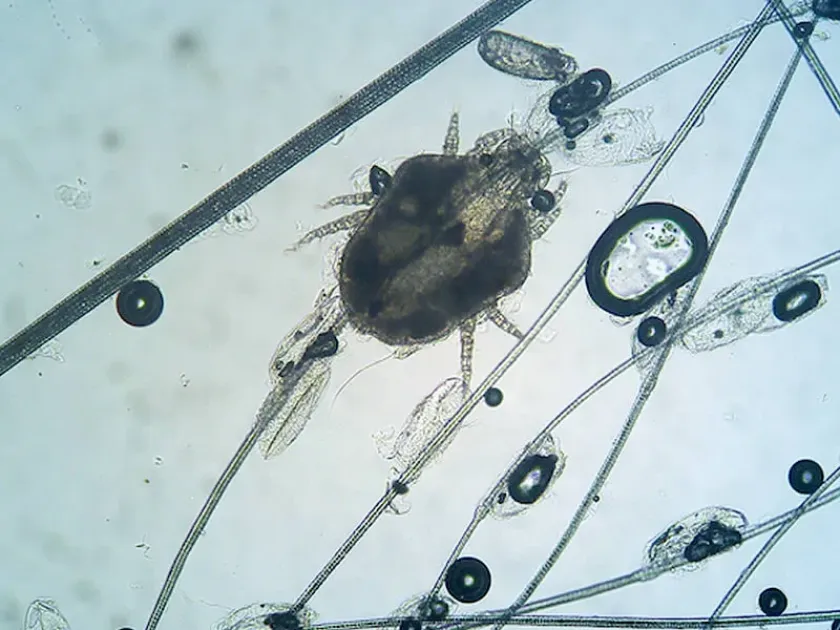
Cheyletiella blakei, commonly known as the feline fur mite, belongs to the family Cheyletidae. These microscopic ectoparasites are highly host-specific and live exclusively on the surface of the skin.
The mite is characterized by a distinct body shape and large, hook-like palps that allow it to grasp onto hairs and epidermal scales. Females are notably larger than males and are often the ones primarily identified during diagnostic screenings.
The entire life cycle of Cheyletiella blakei occurs on the host, encompassing the stages of egg, larva, two nymphal stages, and adult. This direct cycle ensures that the parasite population can grow rapidly under favorable conditions.
Eggs are attached to the host's hair shafts with a specialized adhesive secretion. Once the eggs hatch, the larvae move to the skin surface to feed on tissue fluids and keratinous debris, which supports their development into adults.
These mites are highly mobile compared to other skin parasites. This behavior is a key adaptation that allows them to move between hosts during direct grooming or social interaction, facilitating the spread of the infestation.
What it damages
The primary host for Cheyletiella blakei is the domestic cat. Although highly specialized, these mites can occasionally infest other species, including humans, causing temporary and self-limiting pruritic skin eruptions.
Damage is caused by the mite’s mouthparts puncturing the skin surface to ingest lymph and cellular fluid. This process disrupts the skin barrier and triggers an inflammatory response in the epidermis.
Unlike agricultural pests that impact crop yields, this mite affects animal health and welfare. Chronic infestation leads to increased irritability, restlessness, and secondary bacterial infections due to excessive scratching.
The mites' activity often results in the production of excessive dry, flaky skin, which is the hallmark of the condition. Over time, the host may suffer from alopecia and hair thinning due to constant grooming and trauma to the follicles.
While not lethal, the infestation significantly degrades the quality of the animal's life. In sensitive or young individuals, the constant irritation can lead to systemic stress and a weakened immune response to other opportunistic pathogens.
Signs of infestation
The most recognizable sign is the presence of "walking dandruff," which is large, white, moving flakes on the cat’s back and dorsal region. This phenomenon occurs as the mites carry scales of debris across the coat.
Cats usually exhibit varying degrees of pruritus, ranging from mild to severe. In some cases, the skin may show signs of erythema, crusts, and papules, particularly in areas like the neck and along the spine.
Close inspection of the coat may reveal the eggs attached to individual hairs. These eggs are smaller than louse eggs and have a characteristic shape that aids in clinical differentiation.
Secondary dermatological complications often mask the presence of the parasite. Inflamed and crusty skin patches are frequently observed in untreated animals, making it difficult to distinguish from other allergic skin diseases without proper diagnostic tools.
Veterinarians often use a superficial skin scraping or an acetate tape test to collect and identify the mites under a microscope. This simple procedure is highly effective for confirming the presence of Cheyletiella blakei.
Control measures
Control strategies for Cheyletiella blakei rely on the administration of topical or systemic acaricidal agents. Medications such as selamectin or fipronil are commonly prescribed to eliminate the parasite population.
It is essential to treat all animals in the household simultaneously, even those showing no symptoms. Since the mites can survive briefly in the environment, treatment should be repeated as directed to interrupt the life cycle.
Environmental management is a critical component of successful control. Bedding, grooming tools, and soft furniture should be thoroughly cleaned or disinfected to remove any mites or eggs present in the vicinity.
- Routine brushing to remove debris and dead mites.
- Use of veterinary-approved anti-parasitic shampoos.
- Quarantine and screening of new pets before introduction.
- Professional veterinary follow-up to ensure full eradication.
Hygiene is important during the treatment period. Owners should minimize direct contact if signs of sensitivity occur and ensure that all cleaning protocols are followed to prevent re-infestation of the household environment.
Taxonomy
- Latin name
- Cheyletiella blakei
- Order
- Mites
- Family
- Cheyletidae
- EPPO code
- CHYLBL
Discussion
No discussions yet — be the first.