
Leafy spurge clearwing
Chamaesphecia erythrucephala
Description
How to identify
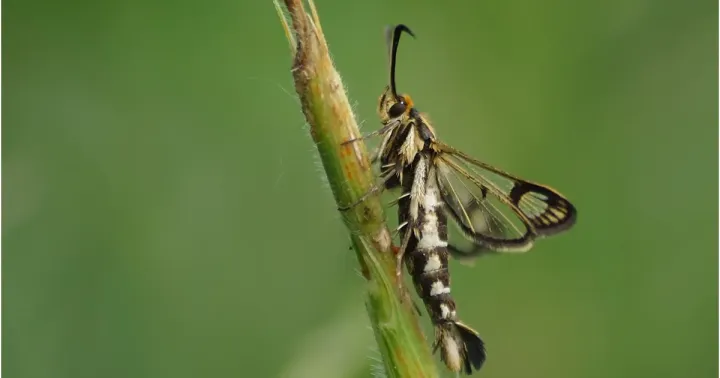
The leafy spurge clearwing (Chamaesphecia erythrucephala) is a moth belonging to the Sesiidae family. This species is widely known for its mimicry, appearing very similar to wasps or hornets, which acts as a defense mechanism.
Adult moths feature narrow, transparent wings with dark borders, making them difficult to spot at rest. Their abdomen is marked with yellow or orange bands, further enhancing the wasp-like appearance.
The larvae are small, light-colored caterpillars with a dark head. They spend almost their entire life cycle hidden inside the host plant, specifically focusing on the roots and the lower stem area.
The life cycle is univoltine, meaning there is one generation per year. The larvae overwinter inside the root tissues, protected from cold temperatures and most environmental stresses.
Adults emerge during late spring and early summer. Mating and oviposition occur during the daytime when the insects are highly active in warm, sunny weather conditions.
What it damages
The primary host plants for this pest are species of the Euphorbia genus. The larvae feed on the internal tissues of the roots and the root crown, creating extensive galleries.
This internal feeding severely disrupts the plant's vascular system, leading to stunted growth. The plant loses its ability to transport water and nutrients efficiently from the soil to the leaves.
Affected plants often display signs of chlorosis, premature wilting, and reduced vigor. In many cases, the plant may fail to bloom or produce seeds, significantly reducing its reproductive success.
The damage caused by the larvae also facilitates the entry of various soil-borne pathogens. This makes the plant susceptible to secondary infections, such as root rot, which often causes systemic decay.
In agricultural settings, particularly where leafy spurge is a target weed, this insect is viewed as a potential biocontrol agent, although its impact can be inconsistent depending on the environment.
Signs of infestation
The most visible sign of infestation is the decline in plant health, including yellowing leaves and stunted stems. Such symptoms are often mistaken for nutrient deficiencies or drought stress.
Close inspection of the root crown may reveal entry or exit holes created by the larvae. Small piles of frass (larval excrement) near the base of the stem are a key indicator of active infestation.
Stems that seem abnormally fragile or have irregular swelling at the base usually indicate internal damage from larvae. Tissues in these areas often become necrotic and brittle.
Finding pupal cases protruding from the root crown or the soil surface is a definitive sign that the moth has completed its development and the adult has successfully emerged.
If you observe adult moths hovering near host plants during bright, sunny hours, it is a strong indicator that an active population is present in the area and further scouting is required.
Control measures
Biological control remains a priority for managing this species. The use of specific pathogens or predatory organisms that target the larval stage in the root zone is highly recommended.
Good agricultural practices, such as maintaining healthy soil conditions and balanced fertilization, can help plants withstand minor damage, although they do not eliminate the pest.
Removing and destroying infested host plants is a critical mechanical control step, especially in the early stages of a population outbreak, to prevent larvae from completing their development.
The use of systemic insecticides, while occasionally effective, is often limited by the larvae's habit of staying deep within the root tissues where chemicals cannot easily reach.
- Regular monitoring of host plant populations.
- Avoid over-application of nitrogen which might favor larval feeding.
- Integrated Pest Management (IPM) strategies incorporating multiple tactics.
- Public awareness and reporting of sightings to local agricultural authorities.
Discussion
No discussions yet — be the first.