
Common chameleon
Chamaeleo chamaeleon
Description
How to identify
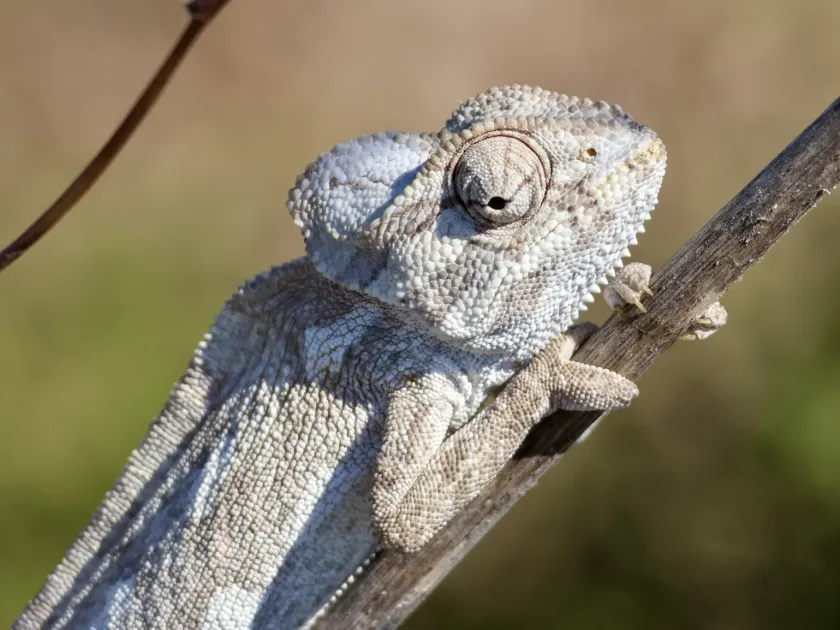
The common chameleon is a reptile belonging to the order Squamata and the family Chamaeleonidae, characterized by its specialized morphology.
Key identification features include zygodactyl feet, a prehensile tail used for gripping branches, and independently rotating eyes for wide-field vision.
Adult specimens typically reach up to 30 centimeters in length and possess a dorsal crest, which is a diagnostic feature for distinguishing this species.
Their skin texture is granulated, and they exhibit remarkable color-changing abilities driven by physiological status, light, and temperature conditions.
As an egg-laying species, their reproductive success is highly dependent on the quality of soil substrate available for nesting during the breeding season.
What it damages
The common chameleon is primarily an insectivore, meaning it does not feed on plant tissues and is not considered a direct pest to agricultural crops.
Potential damage is strictly incidental, occurring when large individuals traverse fragile shoots, blossoms, or young fruit clusters while hunting prey.
In high-density nurseries or greenhouses, their presence might interfere with routine horticultural tasks, though this is rarely an economic issue.
The species provides a net benefit to agriculture by consuming various pest insects, including locusts, beetles, and agricultural fly species.
Their presence is often an indicator of a healthy, pesticide-free environment, as they are highly sensitive to chemical pollutants in the ecosystem.
When it appears
Active periods are strongly correlated with ambient temperature, as chameleons are ectothermic and require warmth for metabolic activity.
Spring and summer months correspond to the breeding season, during which individuals are most mobile and likely to be encountered in gardens.
During peak heat in mid-summer, they tend to retreat into the dense, shaded canopy of trees to regulate their body temperature and avoid dehydration.
As temperatures drop in autumn, activity levels decline as the reptiles seek protected microhabitats to prepare for the dormant winter phase.
Winter activity is minimal, with individuals spending significant time in sheltered locations to survive periods of cold weather.
Signs of infestation
Detection is difficult due to their excellent camouflage, but observing sudden eye movement or a rapid tongue strike during hunting is a clear sign.
Droppings found at the base of shrubs or beneath tree branches can serve as a diagnostic indicator of their presence in the immediate vicinity.
Minor mechanical damage to thin twigs or small blossoms in the middle canopy may suggest the passage of a heavier reptile through the plant.
Shed skin (exuviae) left on stems or leaves during the molting process is a definitive piece of evidence that a chameleon resides on the site.
Localized bird alarm calls can occasionally indicate the presence of a chameleon, which may be perceived as a predator by smaller garden birds.
Control measures
No formal pest control measures are required as the common chameleon is a beneficial predator that helps regulate insect pest populations.
If their presence is unwanted, landscape management is the best approach; thinning dense vegetation reduces the habitat suitability for these reptiles.
Maintaining clear aisles and pruning back overly dense shrubbery near infrastructure will naturally encourage them to move to wilder areas.
The application of broad-spectrum insecticides will inevitably drive chameleons away by eliminating their insect food sources and causing toxic stress.
Manual relocation is the recommended method if an individual must be removed from a specific high-value plant area, ensuring no harm to the animal.
Taxonomy
- Latin name
- Chamaeleo chamaeleon
- Family
- Chamaeleonidae
- EPPO code
- CHMLCH
Discussion
No discussions yet — be the first.