
Golden willow flea beetle
Chalcoides aurata
Description
How to identify
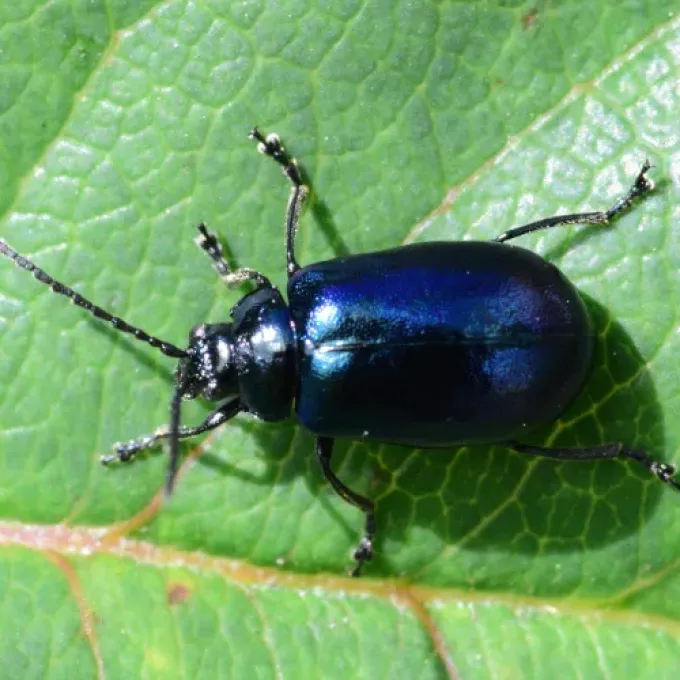
The golden willow flea beetle (Chalcoides aurata) is a species of leaf beetle belonging to the family Chrysomelidae within the order Coleoptera.
These beetles are small, typically measuring between 2.5 and 3.5 mm in length, characterized by a shiny, metallic exterior that catches the light.
Their color is highly variable, often displaying brilliant shades of green, bronze, copper, or purple, which gives them their common name.
Equipped with specialized hind legs, these beetles are capable of jumping significant distances when disturbed, making them difficult to catch or monitor.
The larvae are typically light-colored and tend to live in more concealed environments, often feeding on foliage or within plant tissues.
What it damages
The primary hosts for this beetle are trees within the Salicaceae family, specifically various species of willow and poplar trees.
In nursery settings, they can also cause damage to other ornamental trees and certain fruit species, affecting their aesthetic and health value.
Adult beetles feed on the leaves, creating small, distinct holes that give the leaf a characteristic shot-hole or peppered appearance.
Severe infestations can lead to heavy defoliation, which severely stresses the tree and hampers its ability to photosynthesize effectively during the growing season.
Larval activity can also compromise the integrity of young shoots, potentially causing stunted growth and increasing the tree's susceptibility to secondary infections.
When it appears
Adults overwinter in protected areas, including leaf litter, cracks in the tree bark, or just beneath the soil surface, awaiting the return of spring.
Emergence generally coincides with the warming weather of spring, starting as soon as temperatures remain consistently suitable for beetle activity.
Feeding and mating typically occur throughout the late spring and summer months, corresponding with the peak vegetative growth of host trees.
New generations of beetles appear in mid-to-late summer, continuing the cycle of herbivory until the onset of autumn cooling.
As the weather cools down, the adults seek out their winter quarters to hibernate through the colder months of the year.
Signs of infestation
The most prominent sign of an infestation is the presence of numerous small, clean-cut holes in the leaves, often clustered together.
Close inspection during the day, especially in warm weather, often reveals the beetles quickly jumping away when a branch is shaken.
If the infestation is significant, premature leaf yellowing and the dropping of leaves before the end of the season can be observed.
Weakened, damaged branch tips that fail to develop properly are another indication that beetle activity is interfering with the plant's health.
- Widespread shot-hole damage on leaves.
- Presence of metallic-colored insects on foliage.
- Reduced vigor and delayed growth in young specimens.
Control measures
Sanitation is key to managing this pest; removing and destroying leaf litter and plant debris in the autumn removes prime overwintering sites.
Cultivating the soil around the base of trees in late autumn can expose overwintering adults to cold and predators, reducing their survival rate.
In cases of high beetle density, the application of appropriate insecticides, applied during the peak feeding periods, can provide effective control.
Using sticky yellow traps can help monitor population levels and may help reduce the number of adult beetles present in the vicinity of susceptible plants.
Maintaining high plant vigor through proper watering and fertilization ensures that trees can better withstand the stress caused by minor leaf beetle attacks.
Discussion
No discussions yet — be the first.