
Poplar aphid
Chaitophorus populi
Description
How to identify
The poplar aphid, scientifically known as Chaitophorus populi, belongs to the family Aphididae and is a common pest affecting poplar trees.
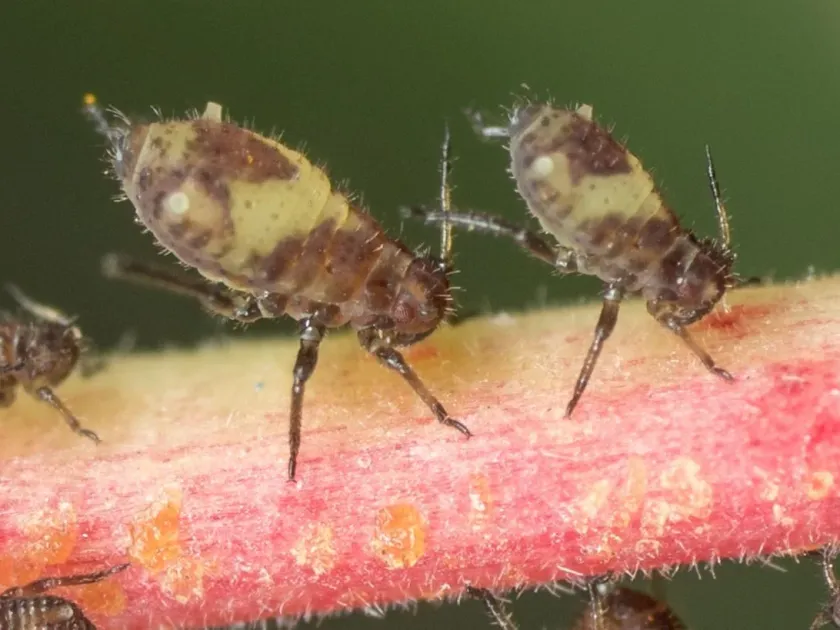
Adult insects are small, typically ranging from 2 to 3 mm in length, with a body coloration that shifts between green, brown, and dark shades.
These aphids possess distinct characteristics such as hairy bodies and well-developed siphunculi, which are essential for identifying the species.
The population consists of both apterous (wingless) and alate (winged) forms, allowing for efficient colonization and dispersal between nearby host plants.
The overwintering stage consists of small, black, glossy eggs that are firmly attached to the bark near the dormant buds of the tree.
What it damages
The primary host plants are species of the Populus genus, including black poplar and balsam poplar, as well as the closely related aspen.
Aphids feed gregariously, creating large colonies mainly on the underside of leaves and on tender young stems of the current year's growth.
By constantly extracting plant sap, the aphids rob the tree of essential nutrients, leading to decreased vigor and overall health decline.
Young trees in nurseries are particularly vulnerable to heavy infestations, which can lead to severe stunting of growth and developmental issues.
Mature trees also suffer, often showing reduced photosynthetic capacity and increased susceptibility to secondary fungal infections due to aphid secretions.
When it appears
The life cycle begins in early spring, synchronized with the bud burst of host trees, when the first generation of larvae emerges from overwintering eggs.
Throughout the spring and early summer, the population grows exponentially through asexual reproduction, with multiple generations overlapping.
The activity of the aphids usually peaks in late spring and early summer, when environmental conditions are optimal for rapid growth and feeding.
As summer temperatures rise, the aphids may produce winged forms to migrate to other suitable host plants to continue their reproductive cycle.
By autumn, sexual forms are produced, resulting in the deposition of fertilized eggs that serve as the overwintering stage for the following year.
Signs of infestation
Leaf curling and deformation are the most common early symptoms, as the feeding action disrupts the normal development of the leaf lamina.
The presence of honeydew on the foliage is a telltale sign, which often leads to the growth of sooty mold, giving the leaves a blackened appearance.
Ant activity is frequently observed, as ants farm the aphids to collect the sugary honeydew, providing protection to the aphid colonies in return.
Closer inspection of the underside of leaves often reveals dense patches of small insects clustered along the leaf veins.
In cases of severe infestation, premature leaf drop and yellowing of the foliage become noticeable, affecting the aesthetic value of the tree.
Control measures
Systemic insecticides are considered highly effective for long-term control, as they are absorbed by the plant and target the aphids during feeding.
For smaller trees, horticultural oils or insecticidal soaps can be used as a contact treatment to manage early-season populations effectively.
Biological control is supported by promoting natural predators such as lady beetles, hoverflies, and lacewings that feed on aphid colonies.
Proper pruning practices, including the removal of heavily infested shoots, can help to reduce the overall aphid population density in the crown.
Ensuring trees receive adequate water and nutrients helps maintain their resilience, making them less susceptible to significant damage from aphids.
Discussion
No discussions yet — be the first.