
Cestum veneris
Cestum veneris
Description
How to identify
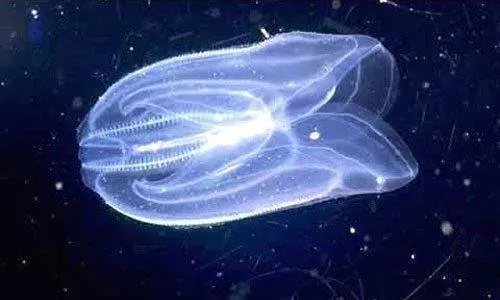
Cestum veneris, commonly known as Venus's Girdle, is a marine invertebrate belonging to the phylum Ctenophora (comb jellies).
This organism is characterized by a ribbon-like, transparent body that can grow up to one and a half meters in length.
It lives exclusively in the pelagic zone of tropical and subtropical oceans, moving through the water using rows of cilia.
There is no morphological or physiological link between this organism and terrestrial pests that affect agricultural crops.
It is fundamentally a marine life form that cannot survive in soil, greenhouses, or on land-based vegetation.
What it damages
Cestum veneris does not damage any crops, plants, or agricultural products because it is a marine predator.
Its diet consists strictly of marine zooplankton, such as copepods, fish larvae, and other microscopic aquatic organisms.
No part of a terrestrial plant, including roots, stems, or leaves, serves as a food source for this comb jelly.
It lacks the mouthparts required to feed on plant tissues or pierce plant cells to extract sap.
Therefore, it poses no economic or physical threat to farming operations or agricultural yields.
When it appears
The distribution and population density of Cestum veneris are governed by oceanic currents, water temperature, and salinity levels.
Since the species is strictly marine, it does not have seasonal cycles that correlate with planting, cultivation, or harvesting schedules.
There is no seasonal timing for monitoring this organism in the context of plant protection or field management.
Its life cycle is purely aquatic and independent of seasonal changes on land.
As it is not an agricultural pest, tracking its "seasonality" is irrelevant for agronomists.
Signs of infestation
There are no signs of "infestation" by Cestum veneris on any type of crop, as the two biological systems do not overlap.
Any damage observed on crops should be attributed to actual plant pests such as aphids, mites, caterpillars, or pathogenic fungi.
Identifying this species as a plant pest is scientifically incorrect and indicates a mistake in taxonomy or database categorization.
Farmers should focus on established plant health monitoring techniques to identify real threats to their produce.
Trying to find this marine creature on farmland is futile and indicates a misunderstanding of agricultural science.
Control measures
No pest control measures are required for Cestum veneris, as it is not a threat to agricultural productivity.
The use of insecticides, fungicides, or any other chemical crop protection agents against marine organisms is prohibited and illogical.
Agronomists should prioritize identifying and managing real threats that cause damage to crop vitality and yield.
If you encounter Cestum veneris in an agricultural pest database, please treat the information as a factual error.
Effective plant protection involves focusing on verified pests and diseases that directly impact your specific cropping system.
Taxonomy
- Latin name
- Cestum veneris
- Family
- Cestidae
- EPPO code
- CESTVE
Discussion
No discussions yet — be the first.