
Cerococcus
Cerococcus
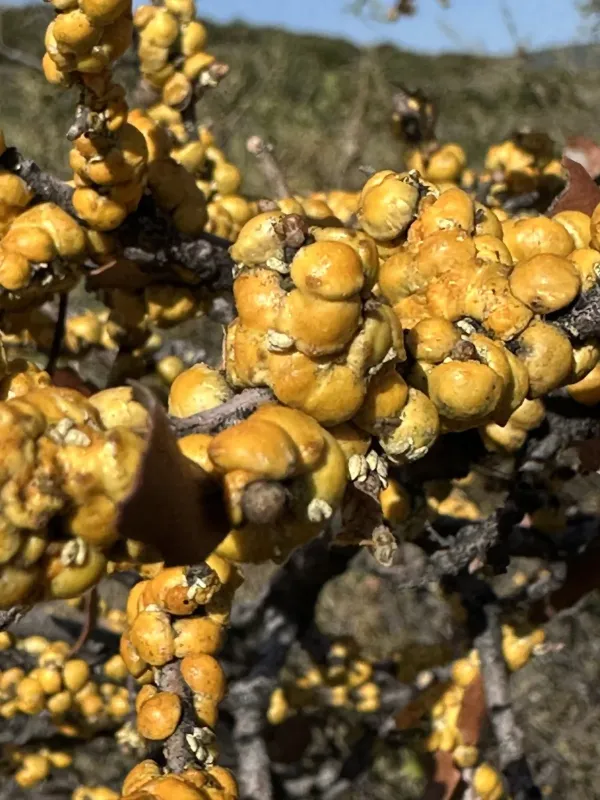
Description
How to identify
Cerococcus is a genus of scale insects within the family Cerococcidae. These insects are sedentary and are characterized by their ability to secrete protective tests made of wax or resin, which cover their bodies and make them difficult to detect.
Adult females are typically globular or oval in shape. They remain fixed to the host plant for the duration of their life cycle, using their piercing-sucking mouthparts to feed on plant sap.
Their reproduction is often parthenogenetic, meaning females can produce offspring without mating. This reproductive strategy allows populations to explode in size under favorable environmental conditions.
Identification at the species level usually requires microscopic examination of the dorsal and ventral cuticular structures, including the arrangement of various glands and setae.
These pests are highly specialized in their habitat selection, often preferring specific niches on the branches or trunks of their host plants to minimize exposure to external threats.
What it damages
Cerococcus species are known to infest a wide variety of woody ornamentals and fruit-bearing trees. Their feeding process directly drains the plant of vital nutrients and water.
By constantly extracting sap, these insects weaken the host plant's overall vigor. In young plants or nursery stock, a heavy infestation can lead to significant growth retardation.
The damage is compounded by the injection of saliva during the feeding process, which may cause local tissue irritation, leading to cracking or abnormal growth of the bark.
Indirect damage occurs due to the secretion of honeydew, a sugary substance that coats the leaves and stems, creating a perfect environment for the growth of sooty mold fungus.
Severe infestations can eventually lead to branch dieback, premature leaf drop, and in extreme cases, the total death of the tree if left untreated over several seasons.
Signs of infestation
The most visible sign of an infestation is the appearance of wax or resinous bumps on the bark. These bumps are often mistaken for natural lenticels or plant growth abnormalities.
The presence of sticky, shiny surfaces on foliage is another telltale sign. This indicates the accumulation of honeydew, which often leads to a black, powdery coating known as sooty mold.
Leaves on infested branches often exhibit chlorosis, curling, and early senescence. The overall structure of the canopy may become sparse as twigs and smaller branches wither.
Increased ant activity is a strong indicator of Cerococcus presence. Ants are attracted to the honeydew and will actively protect the scales from natural predators.
Closer inspection of the bark reveals the insects huddled in groups, particularly near branch junctions where they are protected from wind and direct sunlight.
Control measures
Effective management of Cerococcus involves an integrated pest management (IPM) approach. The goal is to weaken the population density and prevent further spread to healthy plants.
Mechanical control is effective for localized infestations. Scraping off the encrusted insects from the bark using a soft brush, followed by horticultural soap treatment, can provide immediate relief.
Chemical control is most successful when timed with the crawler stage, which is the mobile juvenile phase. Systemic insecticides are preferred as they ensure the active ingredient reaches the feeding sites.
Biological control plays a crucial role in suppressing these pests. Encouraging the presence of natural predators like ladybird beetles and parasitic wasps can keep populations at low levels.
- Prune and destroy heavily infested branches immediately.
- Apply horticultural dormant oils to suffocate the overwintering stages.
- Monitor for crawler activity using double-sided sticky tapes.
- Manage ant populations to allow natural enemies to attack the scales.
Taxonomy
- Latin name
- Cerococcus
- Order
- Hemiptera (bugs, aphids, leafhoppers)
- Family
- Cerococcidae
- EPPO code
- CEROSP
Discussion
No discussions yet — be the first.