
Antler Moth
Cerapteryx graminis
Description
How to identify
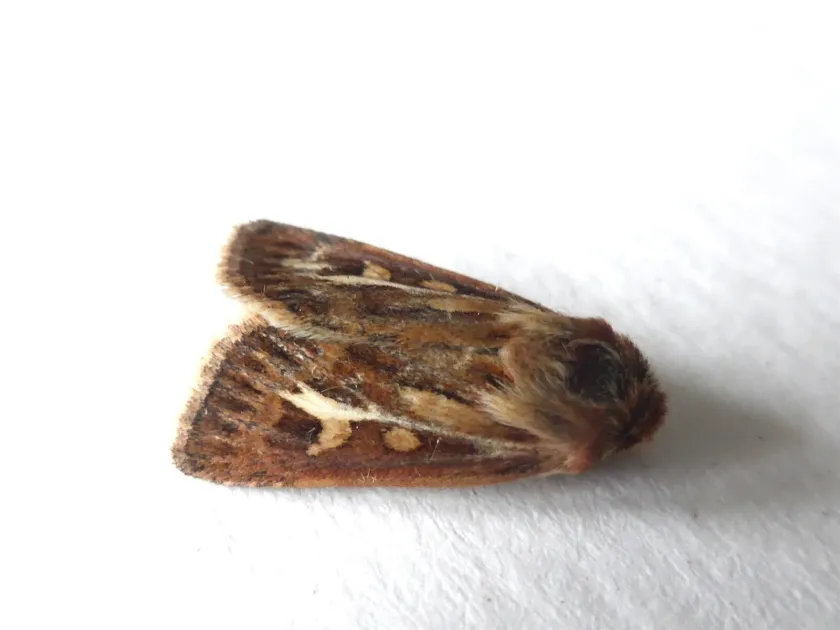
The Antler Moth (Cerapteryx graminis) is a moth of the family Noctuidae, characterized by a wingspan typically ranging from 35 to 40 mm.
The forewings exhibit a variable color pattern, usually ranging from light brown to dark chocolate, featuring a distinctive white, antler-like mark.
The hindwings are generally lighter, showing a brownish-grey tone with a darker marginal band that provides camouflage when the moth is at rest.
Larvae are terrestrial, reaching a length of 30-35 mm, and possess a dull greyish-brown body with five thin, light longitudinal stripes along the back.
The head of the caterpillar is distinctively brown and glossy, enabling it to penetrate dense grass root systems and feed effectively on plant stalks.
What it damages
The primary damage is caused by the larvae, which feed on the basal stems and roots of various grasses, often causing the plant to wither and collapse entirely.
Cereal crops such as wheat, barley, and oats are highly susceptible to infestation, as are various species of permanent pasture grasses and forage crops.
By severing the connection between the root system and the stem, the larvae cause immediate plant mortality, which can leave vast areas of land barren.
In outbreaks, entire meadows or fields can be decimated, leaving behind patches of exposed, dead organic matter and significantly reducing forage yields.
Damage is often most severe in damp, low-lying areas where the larvae thrive during the spring, leading to patchy growth and uneven field density.
When it appears
The Antler Moth completes one generation per year, a life cycle adapted to withstand cooler climates and elevated habitats where other pests might fail.
Hibernation occurs at the larval stage, usually during the first or second instar, with the larvae remaining dormant in the soil or under surface litter.
Activity resumes in the spring as temperatures rise, leading to a period of intense feeding and growth that persists until the larvae reach maturity.
Pupation takes place within a loose cocoon buried in the soil during the early summer, lasting for several weeks before the adult moths emerge.
The flight period for adults is restricted to mid-to-late summer (July and August), during which mating and oviposition occur on or near host plants.
Signs of infestation
Early warning signs of infestation include the appearance of localized yellowing patches in the grass, which rapidly expand if left unchecked.
Inspecting the base of the stems often reveals ragged feeding marks and small, granular excrement pellets left by the larvae in the soil surface.
Plants affected by the larvae can be pulled from the soil with minimal effort, as the root crown is usually completely severed by the pest's activity.
High larval activity is visible during damp nights or overcast days when the caterpillars surface from their soil burrows to forage for fresh vegetation.
An unusual concentration of birds or predators on a specific plot can sometimes indicate a significant infestation of larvae beneath the surface layer.
Control measures
Cultural control remains the most effective management strategy, particularly deep autumn plowing to disrupt the hibernation sites and expose larvae to predators.
Crop rotation practices that move away from continuous cereal or grass production can break the lifecycle of the moth and reduce population density.
Maintaining proper grazing levels and regular mowing help keep the grass short, which limits the moisture and shelter required by the larvae for survival.
Chemical control via approved insecticides may be necessary during severe outbreaks to prevent widespread destruction of high-value forage or crop land.
- Regular monitoring using soil excavation samples.
- Encouraging natural predators such as ground beetles and birds.
- Strategic cutting of vegetation to disturb larval micro-environments.
Taxonomy
- Latin name
- Cerapteryx graminis
- Order
- Lepidoptera (butterflies)
- Family
- Noctuidae
- EPPO code
- CERXGR
Discussion
No discussions yet — be the first.