
Cerapteryx
Cerapteryx
Description
How to identify
Cerapteryx is a genus of moths belonging to the family Noctuidae, order Lepidoptera. These insects are widely known for their cryptic coloration and nocturnal lifestyle.
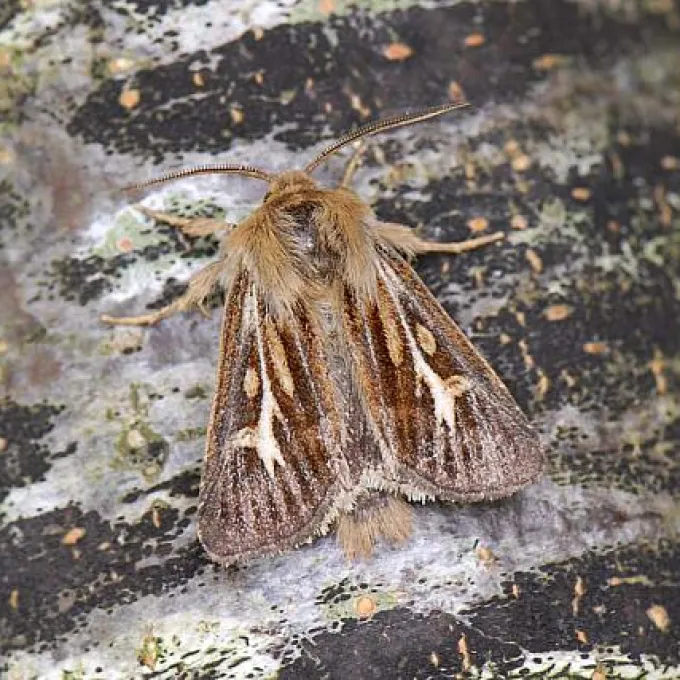
The adult moths exhibit a robust body structure covered with dense hairs, and their forewings feature complex, mottled patterns that provide excellent camouflage against soil or bark backgrounds.
Larvae, or caterpillars, are characteristic of "cutworms." They typically have a cylindrical, smooth, or slightly hairy body, often colored in shades of grey, brown, or green.
The life cycle follows a complete metamorphosis: egg, larva, pupa, and adult, with development speed largely dependent on ambient temperatures and moisture levels.
Field identification is often difficult due to their nocturnal behavior, necessitating the use of specialized traps or night-time inspections for monitoring population density.
What it damages
The primary economic damage is caused by the larval stage, which feeds on both the underground parts and the stems of plants.
Host plants primarily include cereal crops such as wheat, barley, rye, and oats, which are most vulnerable during the early seedling stage.
Older larvae are capable of severing the main stem at the base, resulting in the rapid wilting and eventual death of the entire plant.
Heavy infestations can lead to significant gaps in the field, reducing plant density and ultimately causing substantial yield losses for the farmer.
Additionally, the feeding damage often serves as an entry point for various secondary phytopathogenic fungi and bacteria, further weakening the crop.
When it appears
The flight period for adult moths typically spans from early summer through late summer, depending on the geographical region and local climate.
Overwintering usually occurs in the larval stage, where the caterpillars hide in the soil or beneath dense plant residues to survive cold weather.
Spring activity begins as soon as soil temperatures rise, with larvae emerging to feed voraciously on the developing cereal crops.
Environmental factors like spring moisture play a critical role in the survival rate of the larvae, with wetter seasons often favoring higher pest populations.
Late summer generations may also emerge, posing a threat to newly planted winter grain crops during their initial establishment phase.
Signs of infestation
The first noticeable sign of an infestation is often a patchy appearance in the field, with plants appearing wilted or suddenly collapsed.
Close examination of the root zone will frequently reveal the larvae hidden just below the soil surface, especially during the daylight hours.
The presence of insect frass (droppings) near the base of the stalks is a clear indicator of active feeding in the vicinity of the plant.
Plants may show clear signs of being cut at the soil line, which is a classic symptom of cutworm-type damage associated with this genus.
In cases of severe outbreaks, large areas of the crop may disappear or show signs of severe defoliation within a few days.
Control measures
Integrated Pest Management (IPM) is essential for controlling Cerapteryx, with crop rotation serving as a primary defense strategy.
Deep plowing during the autumn season is highly effective as it exposes hibernating larvae to predators and harsh climatic conditions, reducing overall survival.
Chemical control involving systemic insecticides is recommended when larval populations cross the Economic Injury Level (EIL) in the field.
- Use of pheromone or light traps for accurate population monitoring.
- Rigorous weed control to eliminate alternative feeding sources.
- Application of seed treatments to protect young seedlings.
Combining cultural practices with targeted insecticide applications ensures effective suppression of Cerapteryx populations and protects crop yields.
Taxonomy
- Latin name
- Cerapteryx
- Order
- Lepidoptera (butterflies)
- Family
- Noctuidae
- EPPO code
- CERXSP
Discussion
No discussions yet — be the first.